


Canada Strengthens Immigration and Asylum System with Bill C-12
Date Posted:March 31, 2026
Last Updated:March 31, 2026
Index
On March 26, 2026, the Government of Canada announced that Bill C-12 (the Strengthening Canada’s Immigration System and Borders Act) received royal assent and officially became law. The bill introduces major changes aimed at tightening and improving the efficiency of Canada’s immigration and asylum system.
The reform focuses on four key areas:
- New eligibility requirements for asylum claims
- Modernization of the asylum process
- Enhanced domestic information sharing
- New authorities to manage immigration documents and applications
Reform #1: Stricter Eligibility for Asylum Claims
One of the most significant changes concerns eligibility for asylum claims.
- For individuals who first entered Canada after June 24, 2020, asylum claims submitted more than one year after entry will generally not be referred to the Immigration and Refugee Board (IRB), even if the person has left and re-entered the country.
- Individuals who enter Canada between official ports of entry along the Canada–U.S. land border and submit a claim more than 14 days after entry will also not have their claim referred to the IRB.
These measures are designed to reduce pressure on the asylum system, prevent sudden surges in claims, close loopholes, and discourage the use of asylum as an alternative to regular immigration pathways.
Affected individuals, including unaccompanied minors, will still have access to a Pre-Removal Risk Assessment (PRRA) to ensure they are not sent to countries where they face risks such as persecution, torture, or other serious harm.
The Safe Third Country Agreement remains unchanged. Individuals making a claim at a Canada–U.S. land border port of entry or within 14 days of irregular entry will continue to be returned to the U.S., unless they qualify for an exception or exemption.
Reform #2: Modernized Asylum Process
In the coming months, Canada will update the Immigration and Refugee Protection Regulations to streamline how asylum claims are received, processed, and decided. Key changes include:
- Simplifying the online application process and reducing duplicate questions and multiple forms
- Referring only complete, “schedule-ready” claims to the IRB to accelerate decision-making
- Ensuring the IRB decides claims only while the applicant is physically present in Canada; claims will be considered abandoned if the applicant voluntarily returns to their country of alleged persecution before a decision is made
- Removing inactive cases from the system
- Speeding up voluntary departures by making removal orders effective on the same day a claim is withdrawn
- Supporting vulnerable applicants, such as minors or those unfamiliar with the process, by appointing representatives during certain IRCC and Canada Border Services Agency (CBSA) proceedings
Combined with the new eligibility rules, these reforms are expected to make the asylum system more efficient, sustainable, and well-managed.
Reform #3: Enhanced Domestic Information Sharing
IRCC now has clear legal authority to share certain personal information within the department and with domestic government partners. This is intended to improve security, consistency, and collaboration between federal and provincial/territorial governments.
The new authorities allow IRCC to:
- Share identity, status, and IRCC-issued documents with federal, provincial, and territorial partners through formal written agreements
- Share client information between internal programs, for example using permanent residence application data to process citizenship applications
- Develop regulations to allow information sharing across federal departments and agencies for cooperation purposes
Privacy and Charter rights are strictly protected. Information may only be shared with partners legally authorized to collect it for specific purposes and under formal written agreements. Provinces and territories cannot share this information with other countries without written IRCC permission, and any disclosure must comply with Canada’s international obligations.
Within IRCC, Privacy Impact Assessments (PIAs) are required for any new use of personal information, specifying what can be shared, why, and limiting staff access to what is necessary for their work.
Reform #4: New Authorities for Managing Immigration Documents and Applications
Canada now has new tools to better manage immigration documents—such as visas, electronic travel authorizations (eTAs), work permits, and study permits—and related applications. These measures allow the government to respond quickly to emergencies or unexpected situations while maintaining fairness, transparency, and accountability.
When in the public interest, IRCC may:
- Cancel, suspend, or modify a large group of immigration documents
- Pause application intake
- Cancel or suspend application processing
“Public interest” may include fraud, administrative errors, or risks to public health, safety, or national security. Decisions cannot be made by a single minister and require Cabinet recommendation and approval by the Governor in Council. Decisions are published in the Canada Gazette and reported to Parliament. This process must be followed every time these authorities are exercised.
The new authorities also allow regulations enabling case-by-case actions, for example, reviewing document holders outside Canada to confirm they remain admissible or eligible.
These powers do not affect asylum claims and do not grant authority to issue, change, or revoke permanent or temporary resident status.
Impact for Applicants
While the primary focus of Bill C-12 is tightening asylum procedures, the reforms have indirect implications for international applicants of all nationalities.
- The stricter asylum eligibility rules make it less feasible for anyone to use asylum as a fallback after long-term residence in Canada, reinforcing the need to plan immigration pathways carefully.
- The new authority to suspend or cancel applications and documents may be applied in cases of systemic issues or risks, although the likelihood of being directly affected remains low for most applicants.
- Enhanced information-sharing means that past application history and current status will be more accurately verified, emphasizing the importance of providing complete and consistent information.
Overall, the reforms signal a shift toward a more planned and structured immigration system, where applicants are expected to prepare and follow proper immigration pathways rather than rely on ad hoc or emergency measures.
Related Columns


Date Posted:April 23, 2025
A Case of False Information on Visa Applications Leading to Court Proceedings

Date Posted:April 23, 2025
What to Do if You Encounter Issues with Your Visa Application: 4 Ways to Contact the Immigration, Refugees and Citizenship Canada (IRCC)

Related News
Looking to obtain permanent residence or a visa?
Consult with us now!

Applying for permanent residence or a visa to Canada on your own can be overwhelming due to the large number of required documents, and you may feel uncertain about whether everything is correct. However, if you're serious about immigrating to Canada, we strongly recommend seeking the support of an immigration consultant. There are many pathways to obtaining permanent residence, depending on factors such as your age, occupation, and family status. With the help of an expert, you can ensure that you plan the right approach tailored to your specific situation.
A professional immigration consultant will help solve your concerns
Get a free Counseling now
From immigration planning to application submission,
everything is completed with Visa JP Canada
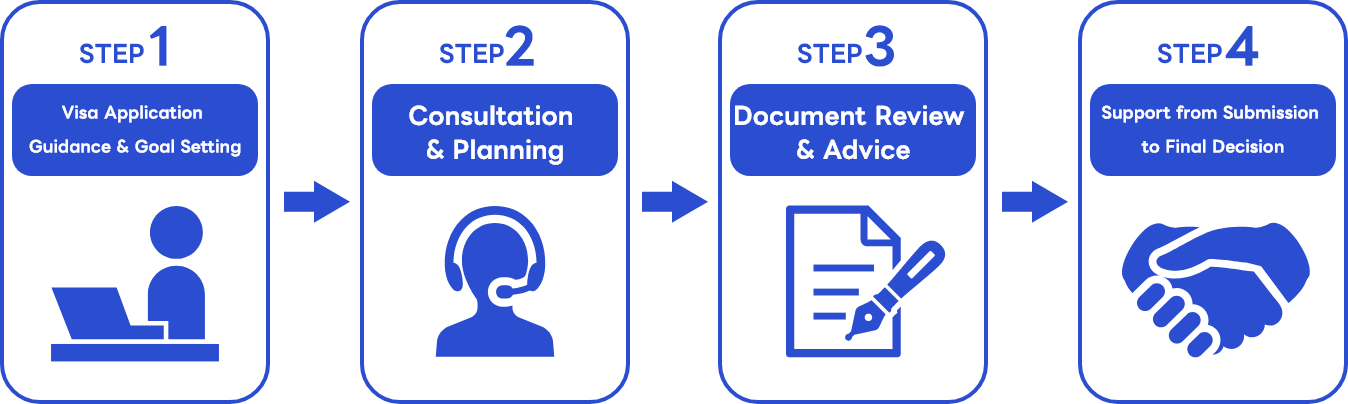
Consulting with an immigration consultant makes the process clearer and much smoother. You’ll feel more confident with document submissions and procedures, significantly reducing the risk of mistakes. Take the first step toward your Canadian dream with the guidance of an expert.