

Last Updated:September 24, 2026
Supervised by Yuki Shiraishi (Immigration Consultant)
What is an LMIA-Based Work Permit?
This is a work permit obtained with sponsorship from an employer, allowing employment only with a specific employer and in a specific job. This type of work permit is referred to as an “employer-specific work permit” by Immigration, Refugees and Citizenship Canada (IRCC). To obtain this work permit, the employer must apply for and receive a Labour Market Impact Assessment (LMIA) from Employment and Social Development Canada (ESDC). A positive LMIA is required for the visa application to IRCC.
What is LMIA?
LMIA stands for Labour Market Impact Assessment, which is a document that Canadian employers must obtain from ESDC before hiring foreign workers. If the employer passes the assessment, a positive LMIA letter is issued. This indicates that the employer needs to hire a foreign national temporarily because no Canadian worker or permanent resident is available for the job. Once the employer has obtained a positive LMIA, the foreign national can apply for a work permit. For more information, please refer to this link: LMIA
Types of LMIA
There are five types of LMIAs depending on the purpose and conditions. For more detailed requirements and application processes for each stream, please visit our LMIA Details Page.
High-Wage Stream
Hires foreign workers at an hourly wage equal to or above the provincial median hourly wage.
Low-Wage Stream
Hires foreign workers across a wide range of occupations at an hourly wage below the provincial median hourly wage.
Global Talent Stream
Hires highly skilled individuals with unique talent or workers in designated in-demand occupations to support business growth and expansion.
Caregiver Stream
Hires foreign workers to provide care for children, seniors, or individuals with medical needs in private households.
Agricultural Stream
Temporarily hires foreign agricultural workers for occupations and activities related to primary agriculture.
【Note】Differences in Employer Requirements by Stream
The application requirements that employers must meet vary significantly depending on the stream selected. For example, the High-Wage Stream requires the submission of a Transition Plan to transition to Canadian workers in the future. In contrast, the Low-Wage Stream imposes a cap on the proportion of temporary foreign workers a business can hire, alongside mandatory requirements such as covering round-trip transportation costs and providing affordable housing.
LMIA Work Permit Application Requirements
- Have a job offer from an employer that complies with labour standards
- The employer has obtained a positive LMIA for the employment position
- Have the ability to perform the work in the occupation specified in the positive LMIA
Application process for LMIA-Based Work Permit

01Obtain a job offer
A job offer that complies with Canadian labour standards is prepared by the employer and signed by both parties. The job offer includes the position, job duties, number of work hours, salary, and location of employment.
02Post job advertisements
Job advertisements will be posted for a minimum of 28 days, with content that complies with ESDC regulations.
03Employers apply for LMIA
Employers apply for the LMIA online by paying an application fee to ESDC. The application must include the content and results of a prior job advertisement, details of employment conditions, proof that the company is operating in compliance with the law, and evidence that the company is financially capable of hiring the foreign national.
04Review by ESDC
ESDC will review LMIA applications according to the review criteria.
05Issuance of Positive LMIA
If the LMIA application is approved by ESDC, ESDC will issue a Positive LMIA Confirmation Letter to the employer.
06Apply for a work permit
The applicant must submit a Positive LMIA Confirmation Letter along with the required application documents and pay an application fee to IRCC to apply for a work permit. The application process varies depending on the applicant’s current location and immigration status at the time of application.
07Review by IRCC
IRCC will review the application and determine if the applicant meets the requirements.
08Obtain a work permit
If your application is approved, you will be issued a work permit. The permit may be mailed to you, or you may present the approval letter upon arrival and have the work permit issued at the port of entry.
Free Consultations and Inquiries
Feel free to get in touch!



Immigration Consultant
Yuki Shiraishi
Born in Japan. After earning a Bachelor's degree from the University of Michigan, she worked for six years in New York as a marketing consultant at a major travel agency, while also studying in an MBA program at the City University of New York. After returning to Japan, she managed the visa center of the same travel company, handling various international visa applications for foreign clients.


Related Columns




Related News
Looking to obtain permanent residence or a visa?
Consult with us now!
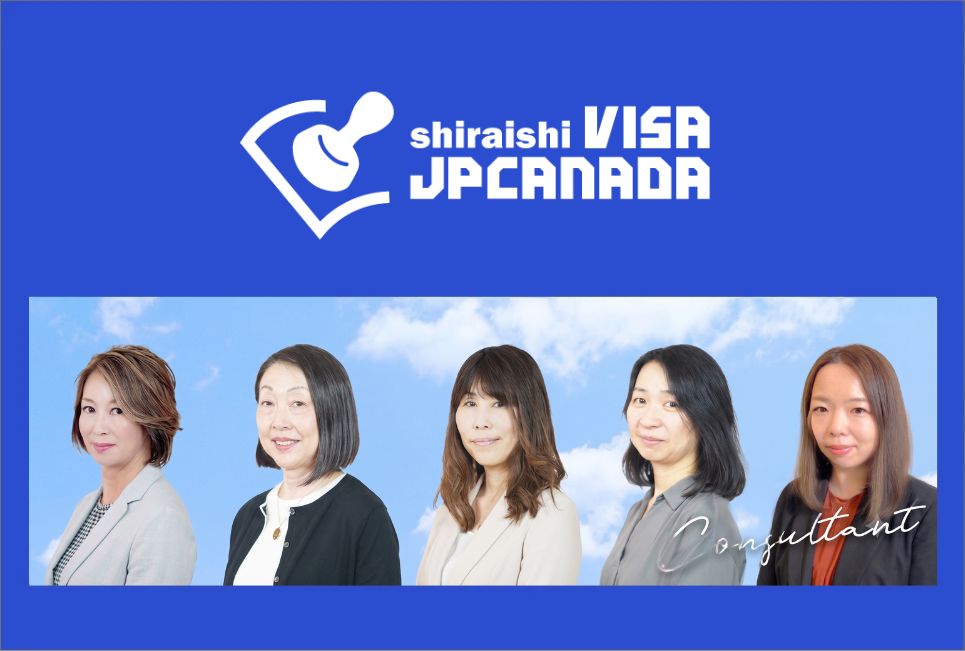
Applying for permanent residence or a visa to Canada on your own can be overwhelming due to the large number of required documents, and you may feel uncertain about whether everything is correct. However, if you're serious about immigrating to Canada, we strongly recommend seeking the support of an immigration consultant. There are many pathways to obtaining permanent residence, depending on factors such as your age, occupation, and family status. With the help of an expert, you can ensure that you plan the right approach tailored to your specific situation.
A professional immigration consultant will help solve your concerns
Get a free Counseling now
From immigration planning to application submission,
everything is completed with shiraishi Visa JP Canada
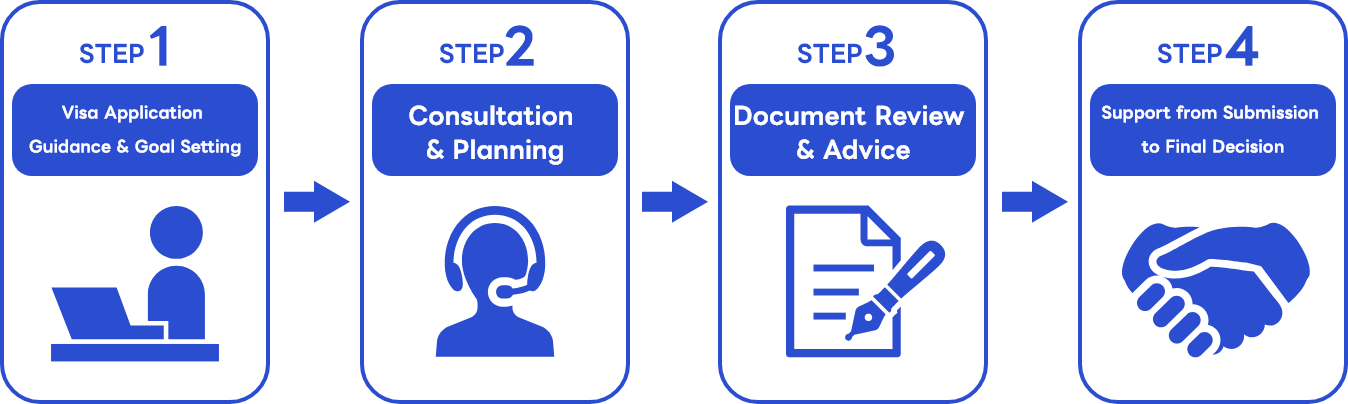
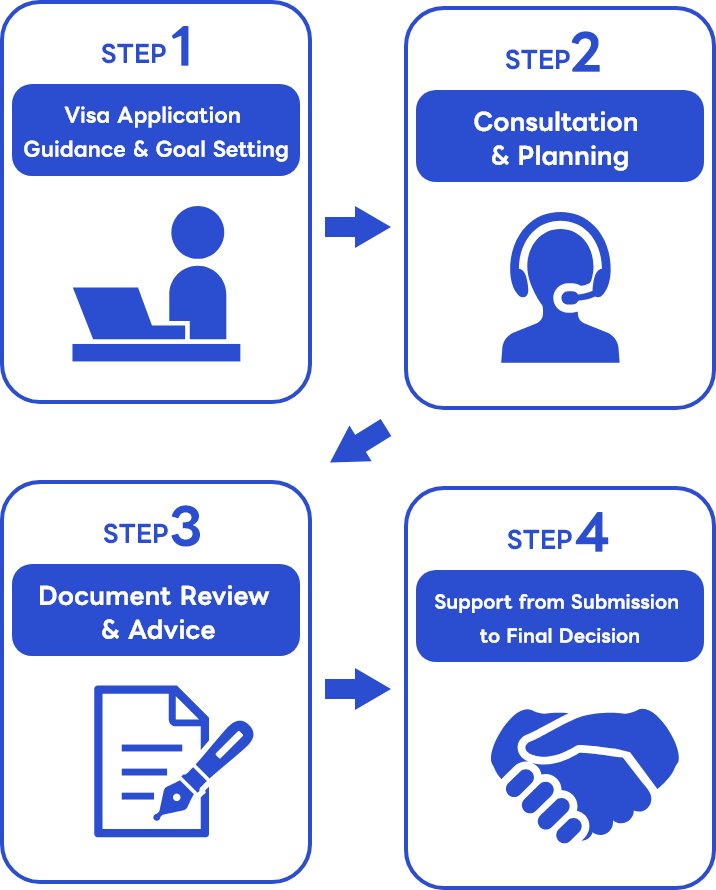
Consulting with an immigration consultant makes the process clearer and much smoother. You’ll feel more confident with document submissions and procedures, significantly reducing the risk of mistakes. Take the first step toward your Canadian dream with the guidance of an expert.