


Canada Expands LMIA Work Permit Flexibility in Rural Communities:Cap 10%→15%
Date Posted:March 13, 2026
Last Updated:March 13, 2026
Index
- 1 Government Raises Rural LMIA Cap to 15 Percent
- 2 New LMIA Measures Take Effect April 2026
- 3 Existing Exceptions
- 4 Background: Targeted Exception Within Overall Foreign Worker Controls
- 5 Balancing Regional Immigration Policies and Workforce Needs
- 6 This latest announcement highlights several trends in Canadian immigration and labour policy:
On March 13, 2026, the Government of Canada announced temporary special measures for LMIA-based work permits to support employers in rural communities facing persistent labour shortages. This initiative is intended to address urgent workforce needs while preserving the principle that Canadians should be first in line for available jobs.
LMIA-based work permits allow employers to hire foreign workers only when Canadian citizens or permanent residents are not available to fill job vacancies. Employers must demonstrate that they have actively tried to recruit Canadians and permanent residents but were unable to secure sufficient local talent.
Currently, workers employed under LMIA-based work permits make up approximately 1% of Canada’s workforce, and they play a crucial role in industries such as agriculture, food processing, construction, and healthcare.
Government Raises Rural LMIA Cap to 15 Percent
Under the new measures, which take effect upon formal requests from provinces or territories, employers in eligible rural communities will be able to benefit from the following:
Temporary 15 Percent Foreign Worker Cap
Under normal rules, the share of foreign workers that an employer may hire under the Low Wage LMIA stream is capped at 10% of the total workforce. Under the new measures, this cap will be temporarily raised to 15% for employers in rural communities.
Maintenance of Current Workforce Numbers
Employers who currently employ foreign workers under the Low Wage LMIA stream will be allowed to retain their existing foreign workforce without reduction throughout the period the measures are in place.
New LMIA Measures Take Effect April 2026
These measures will be implemented once a province or territory submits a formal request to the federal government.
- Implementation can occur in as little as two weeks from the request.
- The earliest possible start date is April 1, 2026.
- The temporary measures are set to remain in place until March 31, 2027.
Existing Exceptions
Certain industries already benefit from higher caps on the proportion of foreign workers under LMIA-based work permits:
- Healthcare
- Construction
- Food processing
In these sectors, the foreign worker cap remains at 20%.
Additionally, the following seasonal industries continue to be exempt from standard caps under existing policies:
- Fish and seafood processing
- Tourism
Background: Targeted Exception Within Overall Foreign Worker Controls
The new rural community measures are not intended as broad expansion of foreign worker intake. Instead, they are targeted exceptions within a wider policy framework aimed at controlling the overall number of temporary foreign workers in Canada.
In recent years, the Canadian government has pursued measures to limit the growth of temporary residents, including foreign workers, international students, and other temporary permit holders. This has included policies such as lowering the cap on low–wage LMIA positions and adjusting eligibility and duration rules under the Temporary Foreign Worker Program.
However, many rural communities continue to face labour shortages driven by:
- Low unemployment rates
- Population decline
- Outmigration of younger workers to urban centres
These factors make it difficult for local employers to find sufficient Canadian workers to fill available jobs, prompting the government’s decision to allow temporary flexibility for rural employers.
Balancing Regional Immigration Policies and Workforce Needs
The announcement reflects the broader direction of Canada’s immigration policy, which is currently focused on:
- Controlling the growth of temporary residents, and
- Encouraging settlement and economic development in rural communities
Examples of complementary policies include the Rural Community Immigration Pilot (RCIP) and various Provincial Nominee Programs (PNPs) designed to attract immigrants to settle and work in rural areas. These initiatives aim to strengthen local labour markets and support long-term community sustainability.
This latest announcement highlights several trends in Canadian immigration and labour policy:
- Persistent Rural Workforce Challenges
Persistent labour shortages in rural communities are expected to remain a key policy focus, with the government maintaining flexibility where needed to ensure employers can access the workers they need. - Controlled Foreign Worker Intake
The government continues to manage the intake of foreign workers carefully, limiting access except where there are genuine labour market gaps that cannot be filled locally. - Work Permit to PR Transition
At the same time, the government is advancing policies to help temporary workers transition to permanent residence, reinforcing the importance of long-term integration of foreign workers into Canadian communities. One recent example is the federal initiative to provide a pathway to permanent residence for up to 33,000 temporary workers in high-demand sectors, especially those in rural areas.
In essence, Canada continues to implement an immigration model that supports both temporary workforce needs and long-term settlement pathways.
Related Columns

Date Posted:December 16, 2025
10 Critical Mistakes That Can Jeopardize Your PGWP Application— The 180-Day Rule and the Reality of Processing Delays

Date Posted:September 11, 2025
BC Premier Calls for Temporary Foreign Worker Program to Be Abolished or Fundamentally Reformed — Industry Pushback and What Lies Ahead

![[Co-op Work Permit in Canada] How long can you work? Employment conditions and points to be cautious of to avoid illegal employment](https://en.visajpcanada.com/wp-content/uploads/2025/04/Blog-Thumbnail-94.webp)
Related News
Looking to obtain permanent residence or a visa?
Consult with us now!

Applying for permanent residence or a visa to Canada on your own can be overwhelming due to the large number of required documents, and you may feel uncertain about whether everything is correct. However, if you're serious about immigrating to Canada, we strongly recommend seeking the support of an immigration consultant. There are many pathways to obtaining permanent residence, depending on factors such as your age, occupation, and family status. With the help of an expert, you can ensure that you plan the right approach tailored to your specific situation.
A professional immigration consultant will help solve your concerns
Get a free Counseling now
From immigration planning to application submission,
everything is completed with Visa JP Canada
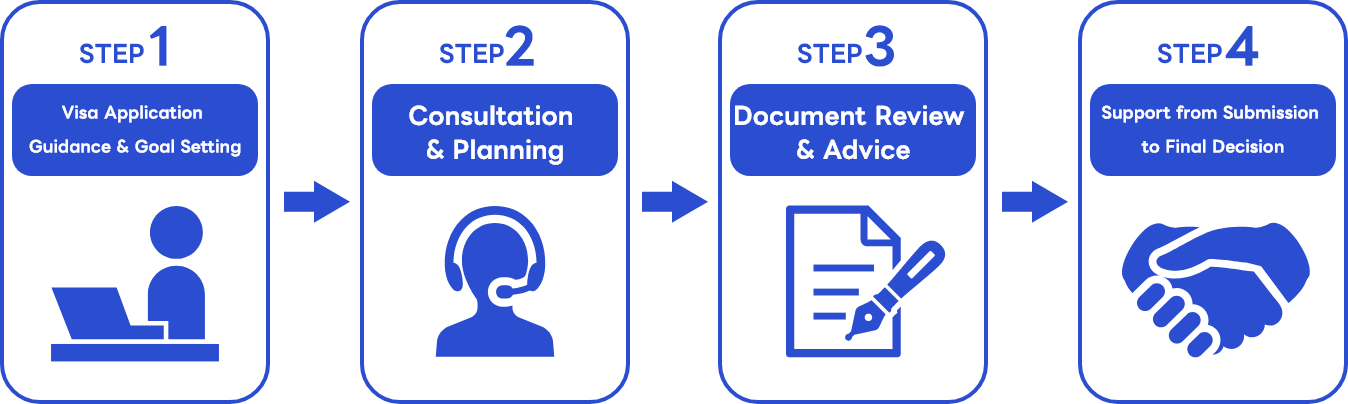
Consulting with an immigration consultant makes the process clearer and much smoother. You’ll feel more confident with document submissions and procedures, significantly reducing the risk of mistakes. Take the first step toward your Canadian dream with the guidance of an expert.