


International Students in Co-op Programs No Longer Require a Work Permit
Date Posted:April 9, 2026
Last Updated:April 9, 2026
Index
- 1 Co-op Work Permit Exemption from April 2026
- 2 What is a Work-Integrated Learning Placement?
- 3 Eligibility for Work-Integrated Learning Placements
- 4 If Your Study Permit Lacks the Required Condition
- 5 If You Have Already Applied for a Co-op Work Permit
- 6 Employers and Placement Locations
- 7 Working Hour Regulations for Placements
Effective April 1, 2026, international students participating in co-op, internship, or practicum programs included in college, university, or graduate school programs no longer need a separate Work Permit. Students can now work with a valid Study Permit under a school-approved employer as part of their academic program.
Co-op Work Permit Exemption from April 2026
Previously, students were required to hold both a Study Permit and a Work Permit. This change reduces the visa requirement to just one, simplifying administrative procedures. The change will not increase the number of students allowed to work in Canada or affect the number of temporary residents; it only removes the need for a separate Work Permit application.
Students who are currently waiting for a co-op Work Permit application decision do not need to take any action. Immigration, Refugees and Citizenship Canada (IRCC) will automatically cancel all in-progress co-op Work Permit applications that meet the eligibility criteria.
Note: High school students participating in co-op programs still require a Work Permit.
What is a Work-Integrated Learning Placement?
A work-integrated learning placement is a required, school-approved practical experience included in a student’s academic program. This includes, but is not limited to:
- Co-op placements
- Internships
- Practicums
- Mentorship programs
These placements are available only to students enrolled in a Canadian Designated Learning Institution (DLI). Students enrolled at schools outside Canada are not eligible.
Eligibility for Work-Integrated Learning Placements
To participate, the placement must be a mandatory requirement of the academic program. Students must meet all the following criteria:
- Their initial Study Permit includes the condition allowing on-campus employment.
- The school issues written confirmation that the placement is a required component of the program.
- The student holds a valid Study Permit or has applied for an extension before the current permit expires.
- They are enrolled full-time at a DLI.
- The academic program is at least six months in duration, at the college, university, or graduate level, and leads to a degree, diploma, or certificate.
- High school students must check specific co-op participation requirements.
- The placement accounts for no more than 50% of the total program duration.
Schools may require proof that all students must complete the placement to obtain their credential.
Depending on the type of work required, a Social Insurance Number (SIN) may also be necessary.
If Your Study Permit Lacks the Required Condition
Even if eligible for work-integrated learning, students cannot work unless their Study Permit includes one of the following conditions:
“May accept employment on or off campus if meeting eligibility criteria as per R186(f), (v) or (w). Must cease working if no longer meeting these criteria.”
“This permit does not authorize the holder to engage in off-campus employment in Canada. May accept employment only on campus if meeting eligibility criteria as per R186(f). Must cease working if no longer meeting these criteria.”
If missing, students must submit an Amend application to add the condition. No fee is required.
Amendment (Amend) applications refer to a process used to correct or update errors or omissions in documents issued by Canadian immigration authorities, such as study permits or work permits, when the mistake was made by the immigration office.
If You Have Already Applied for a Co-op Work Permit
If a co-op Work Permit application is in progress but is no longer required due to this change:
- The application can be withdrawn.
- IRCC may cancel the application and provide a letter explaining that a Work Permit is no longer necessary for Study Permit holders in co-op programs.
Employers and Placement Locations
Students may work with any employer approved by the school’s work-integrated learning program, including off-campus locations.
For placements in hospitals or other locations where public health protection is critical, a medical exam may be required.
Working Hour Regulations for Placements
There is no weekly hour limit for co-op or practicum participation. However, total placement hours cannot exceed 50% of the program’s duration.
Related Columns

Date Posted:March 18, 2026
Stricter Screening for the Significant Benefit Work Permit (C10), Including the Entrepreneur Work Permit| Policy Changes and Application Strategies

Date Posted:December 16, 2025
10 Critical Mistakes That Can Jeopardize Your PGWP Application— The 180-Day Rule and the Reality of Processing Delays

Date Posted:September 11, 2025
BC Premier Calls for Temporary Foreign Worker Program to Be Abolished or Fundamentally Reformed — Industry Pushback and What Lies Ahead

Related News
Looking to obtain permanent residence or a visa?
Consult with us now!

Applying for permanent residence or a visa to Canada on your own can be overwhelming due to the large number of required documents, and you may feel uncertain about whether everything is correct. However, if you're serious about immigrating to Canada, we strongly recommend seeking the support of an immigration consultant. There are many pathways to obtaining permanent residence, depending on factors such as your age, occupation, and family status. With the help of an expert, you can ensure that you plan the right approach tailored to your specific situation.
A professional immigration consultant will help solve your concerns
Get a free Counseling now
From immigration planning to application submission,
everything is completed with Visa JP Canada
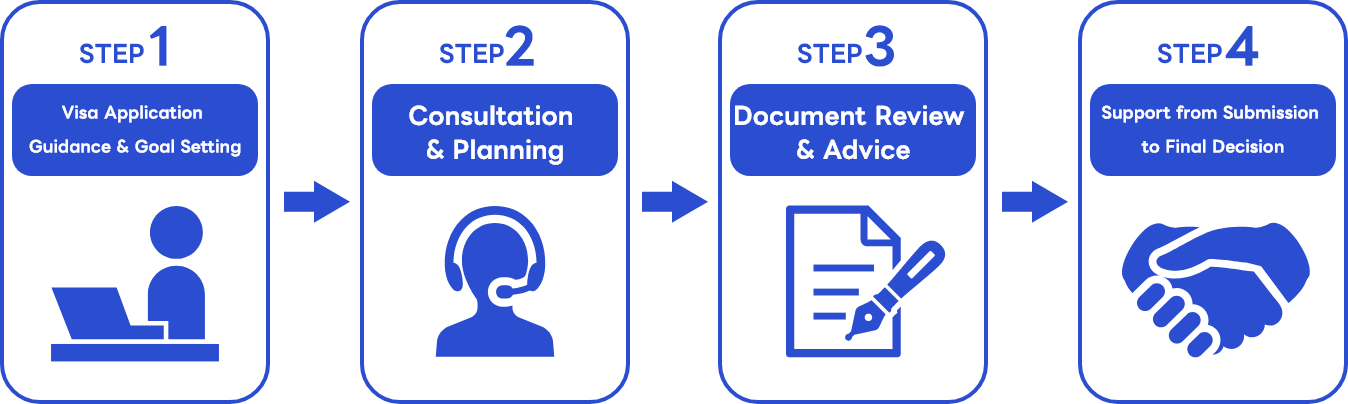
Consulting with an immigration consultant makes the process clearer and much smoother. You’ll feel more confident with document submissions and procedures, significantly reducing the risk of mistakes. Take the first step toward your Canadian dream with the guidance of an expert.