Last Updated:September 15, 2026

Permanent Residence Application: Federal Skilled Worker
N/A
Web Developer
Approx. 21 months
At the very last moment I was able to get a job, and somehow I made it this far. Through the world of visas, I came to know the consultants at Visa JP Canada. They always pushed me forward from behind and gave me peace of mind. On the day I became an immigrant, on the train from airport immigration back to my apartment, it suddenly struck me once again that being a visa consultant is a truly wonderful job that lets you touch people's lives.
Why did you decide to pursue Canadian permanent residency?
I originally worked in IT in Tokyo for 6 years, as a programmer.
There wasn’t just one reason I decided to leave Japan, but the main ones were that I grew fed up with the contradictions I saw as I moved from workplace to workplace, and that I wasn’t making full use of my abilities. When I graduated from university, I think the IT industry had the harshest working conditions after the media industry and the medical field.
I joined a company as a full-time employee in an industry completely different from my university major, but in order to build a consistent career in a short time and become top-notch, I quit my full-time job and chose the path of contract work (as a sole proprietor). That way, I would be sent from one project to the next during their busiest periods.
What I felt after experiencing many workplaces was that the seniority system was still in place, management was practically nonexistent, long working hours were taken for granted, and work-life balance was out of the question. To put it bluntly, the system was set up so that honest, earnest, capable, hard-working people lost out the most.
Also, since my work was mainly developing in-house systems for domestic companies, I never used English at all, and I couldn’t make any use of the abilities I had spent so much time, money and effort on as a student, including studying abroad. Of course, I also earned many IT qualifications, but by the time I left Japan, partly because of my position as an outside contractor, I was using less than half of what I was capable of at work, and I found the work unfulfilling.
On the other hand, if I went back to being a full-time employee, at nearly 30 I would very likely be moved into management, and I faced the dilemma that I might have to leave hands-on development.
To break out of this situation, I came up with two options: change the environment I was in, or leave it.
I chose the latter and bet on it. In other words, I decided to become part of Japan’s brain drain.
I was looking for an environment where I could use English, keep developing systems, be paid according to my abilities, and go home early if I worked efficiently. At the time there were several countries actively accepting immigrants, but I came up with about five options at the city level, considered them one by one, and settled on Vancouver by process of elimination.
The miscalculation I discovered after coming to Canada was that, for someone like me who hates the cold, Vancouver’s cold season is a little longer than I expected – and that Vancouver is actually the warmest place in Canada. I can never move anywhere else now. lol
The Path to Permanent Residency
My path to permanent residency went: student visa, Post-Graduation Work Permit, then permanent residence application (plus renewing my work permit while the application was in process).
While working as a programmer, I became interested in web design, and I thought that a programmer who could also design would be able to build anything alone, from design to development, which would surely be fun. So I decided to go to Vancouver as a web design student and find a way into work from there.
While searching for schools, I learned about Jinzai Canada, and that was the start of my long relationship with them. Jinzai Canada advised me on everything from choosing a school to my student visa, and I was able to board a plane just two and a half months after deciding to leave Japan.
After graduating from design school in Vancouver, I asked a visa consultant I happened to meet to handle my Post-Graduation Work Permit application, but right after I found a job, I decided to turn to Jinzai Canada again for my permanent residency application. I also needed to renew my work permit once before getting permanent residency, so I asked Jinzai Canada to handle that as well.
The permanent residence category I aimed for was Federal Skilled Worker, one of the most difficult. My company’s position was that, in principle, it would not support immigration because it is a personal life choice, so the only option left for me was to be recognized by the federal government as a skilled worker.
I had anticipated this situation, so I had laid the groundwork in advance so that I would already have enough points to apply as long as I had a job.
After I applied, there were many worrying moments, such as the closure of the Tokyo office I had applied to and boycotts by visa officers at various offices, but the immigration review was completed successfully. On my way back from a day trip to Seattle, I presented the immigration approval documents I had received to immigration at the airport and officially became an immigrant.
Whether it’s a student visa, a work visa or an immigration application, every visa is a ticket that has a huge impact on your life and values. I think the people who know that importance best are none other than the staff at Jinzai Canada, who have met so many people and take pride in their work. That is exactly why the staff give the best advice with the latest information. That’s what I believe.
Hearing “congratulations” from the Jinzai Canada staff, who had known my journey since the very first step, really made me happy.
I spent my late twenties struggling with a sense of being stuck, and with my resolve to immigrate, I set off for Canada after turning 30. It was the biggest challenge of my life and a gamble with no way of knowing the outcome.
I used up all the savings I had desperately built up on tuition, and in the end the only thing supporting me was a sum my late grandmother had left me. Again and again, I pictured myself giving up broken-hearted, thinking “this is as far as I can go,” and heading back to Japan.
But at the very last moment I was able to get a job, and somehow I made it this far.
Through the world of visas, I came to know the consultants at Jinzai Canada. They always pushed me forward from behind and gave me peace of mind. On the day I became an immigrant, on the train from airport immigration back to my apartment, it suddenly struck me once again that being a visa consultant is a truly wonderful job that lets you touch people’s lives.

What was the hardest part of the process?
The hardest part was finding a job. To apply for permanent residency I absolutely needed to have a job lined up, but I couldn’t find one for almost half a year after graduating. In the end I got a job at the Japanese company I work for now, but local companies were really slow to respond, which was frustrating. They were so unresponsive that they wouldn’t even let me know whether they had received my resume.
With the recession and a city full of students, it was completely an employer’s market. When I, a grown adult with 6 years of work experience, was asked something like “Wouldn’t you consider starting as an intern?”, I felt they were completely taking advantage of my situation, and my pride was hurt.
On the other hand, some companies gave me interview opportunities right away, but there were also times I failed the interview. And having to watch my savings visibly shrink day by day was also very hard mentally.
After I finally got a job, a Jinzai Canada consultant helped me with my immigration application. I gathered all the documents I needed to submit to Jinzai Canada in a short time, and I was able to submit my immigration application less than three months after joining the company.
Future Goals
I went to design school, but in the end I never became a web designer; I work as a programmer, the same as before. Design was interesting to study, but I realized that as a profession it didn’t suit my personality. Programming is more fun for me after all. Nothing was wasted, though. In one year I was able to both sharpen the skills from my previous job and study design thoroughly.
My goal from now on is to keep building my abilities in my current job. I now sometimes use English at work, and I get to use much of what I’m capable of. Everything I envisioned before leaving Tokyo has come true at my current company.
I also have plenty of private time. However, I don’t have many chances to converse in English, so I’d like to improve my English conversation skills. And my secret goal is probably to get a girlfriend. I’m not popular with women, so it’s a struggle. lol
Message
Whether you find a job is partly a matter of luck, so I can’t speak with much authority myself, but here is what I’d like to tell those who are aiming to immigrate as Federal Skilled Workers.
◆ For Students
Even if you don’t like studying, at least study English. They say it takes 10 years to learn a language. Being able to speak, read and write English will come in handy in all sorts of ways later on.
Even if you want to quit university, make sure you graduate. There’s no harm in having credentials on your record. If your parents allow it, I think studying abroad at least once is a good experience, even if you’re not interested.
Professional occupations can be an advantage for immigration, so when you change jobs, it may be a good idea to choose an occupation that could be used for immigration.
◆ For Those a Few Years into Their Careers
Keep studying English even if you’re busy. I think many people stumble here. Even if it doesn’t work out at this point, have a long-term vision so you can try again around the age of 30.
◆ For Those Approaching 30
Don’t give up – keep studying English. I think this is the time when you have some work experience, your life is stable, and you start to have things to lose.
You’ll probably start to hesitate about taking on a challenge overseas. Ideally, by this time you’ll have built up work experience and language skills. Any shortfall in language ability can probably be made up for with your work skills, so go ahead and take on the challenge without hesitation.
◆ For Those Over 30
I was in the same position, and honestly, being a struggling student at this age is tough. Some of you may be married with children.
Even so, if there is a reason you absolutely must be overseas, or a reason you can’t stay in Japan, give it a try. It’s better than regretting not doing it. I don’t think it’s impossible.
Looking to obtain permanent residence or a visa?
Consult with us now!

Applying for permanent residence or a visa to Canada on your own can be overwhelming due to the large number of required documents, and you may feel uncertain about whether everything is correct. However, if you're serious about immigrating to Canada, we strongly recommend seeking the support of an immigration consultant. There are many pathways to obtaining permanent residence, depending on factors such as your age, occupation, and family status. With the help of an expert, you can ensure that you plan the right approach tailored to your specific situation.
A professional immigration consultant will help solve your concerns
Get a free Counseling now
From immigration planning to application submission,
everything is completed with shiraishi Visa JP Canada
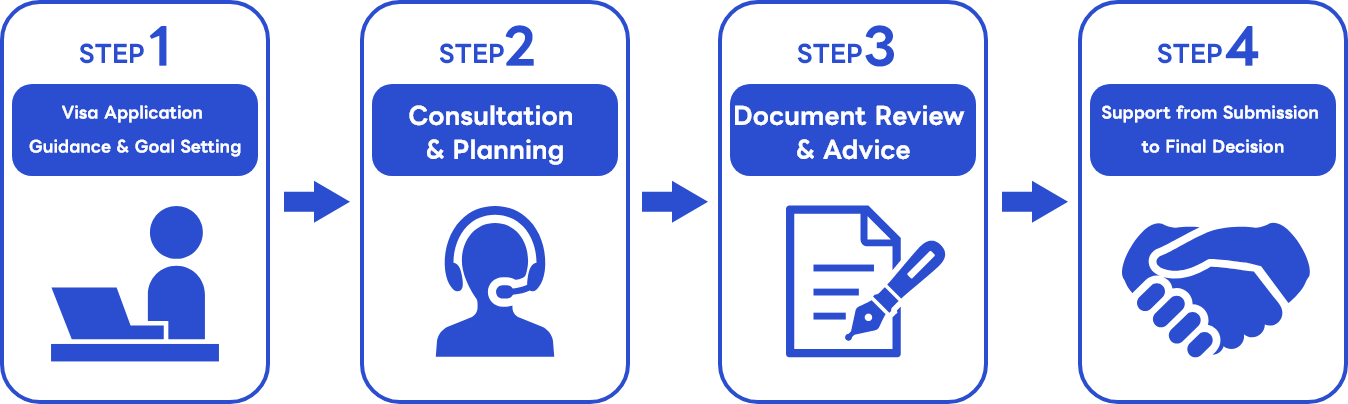
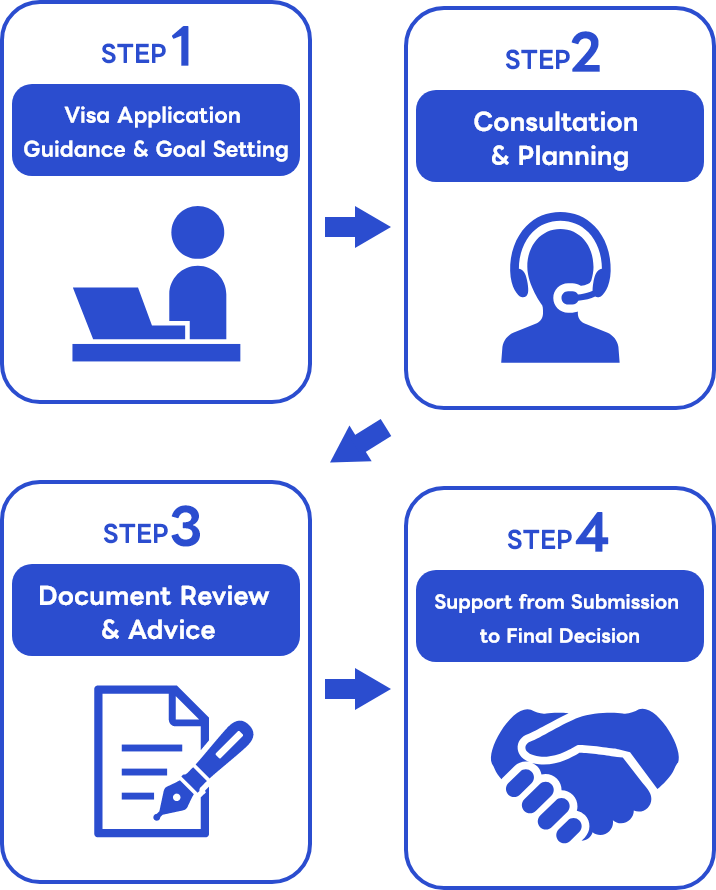
Consulting with an immigration consultant makes the process clearer and much smoother. You’ll feel more confident with document submissions and procedures, significantly reducing the risk of mistakes. Take the first step toward your Canadian dream with the guidance of an expert.