

Last Updated:September 15, 2026
Supervised by Yuki Shiraishi (Immigration Consultant)
If you have a criminal record, you may not be allowed to enter Canada. However, in some cases travel or immigration becomes possible by going through the appropriate procedures. Only Canadian citizens can enter Canada regardless of a criminal record. If you do not have Canadian citizenship, Canadian authorities may deem you inadmissible because of your criminal record, even if you hold permanent residence.
This page explains in detail how a criminal record affects entry into Canada and what you can do if you are deemed inadmissible because of it.
What Is Criminal Inadmissibility?
The state of not being allowed to enter or remain in Canada because you have committed a crime or been convicted of one is called “Criminal Inadmissibility.” This applies to criminal records from both inside and outside Canada.
Immigration, Refugees and Citizenship Canada considers the following factors to determine whether an individual is criminally inadmissible.
- The seriousness of the offence.
- The sentence imposed.
- How much time has passed since the offence was committed, or since the sentence was completed.
How Canadian Immigration Classifies Crimes: Understanding the Seriousness of an Offence
Under immigration law, Canadian authorities classify offences as either “Criminality” or “Serious Criminality,” and treat them differently when determining Criminal Inadmissibility. To determine the seriousness of an offence, a foreign offence must be compared with the equivalent Canadian offence under Canadian federal law.
Most offences are assessed against the Criminal Code of Canada. The Criminal Code sets out three categories of offences.
Summary Offences
Similar to minor offences in Japan, these are the less serious offences in Canada. They are minor offences characterized by quick procedures and lower penalties. If you have a single minor offence and it is equivalent to a summary offence under Canadian law, you may be allowed to enter.
To determine whether an indictable offence counts as “Criminality” or “Serious Criminality,” immigration authorities look at the maximum penalty for that offence under Canadian law. If an offence committed in Japan would carry a maximum sentence of 10 years or more of imprisonment had it been committed in Canada, it falls under “Serious Criminality.”
Examples of summary offences include causing a disturbance, indecent exposure and loitering.
Indictable Offences
These are more serious offences in Canada, similar to serious crimes in Japan. They are equivalent to serious crimes, and if an offence falls under serious criminality, entry becomes difficult. Examples include robbery and aggravated assault.
Examples of indictable offences include robbery, drug trafficking and aggravated assault.
Hybrid Offences
Despite differences in criminal justice systems, for immigration purposes Canadian authorities treat hybrid offences in the same way as indictable offences. They have aspects of both minor and serious offences, and Canadian immigration treats them as serious offences.
Refusal of Entry to Canada: Who Cannot Enter Canada?
If you have a criminal record, it is important to understand under what conditions entry to Canada is restricted. Below are the main cases in which a person is deemed criminally inadmissible and refused entry.
Cases of Criminal Inadmissibility
In general, foreign nationals who do not hold Canadian citizenship or permanent residence are deemed criminally inadmissible in cases such as the following.
- Conviction for an indictable offence in Canada: You committed an act constituting an indictable offence in Canada and were convicted.
- An offence outside Canada that is equivalent to an indictable offence in Canada: You were convicted of a criminal act in another country that would be considered an indictable offence in Canada.
- Committing an act outside Canada that constitutes an indictable offence in Canada: Even if you were not actually convicted, the act would constitute an indictable offence under Canadian law.
Cases Deemed Inadmissible Even Without a Conviction
After an arrest: Even if you have been arrested abroad and are awaiting formal charges or a final verdict, you may be deemed criminally inadmissible.
Multiple Summary Offences
If you have been convicted of two or more summary offences (not arising from the same incident), you may be deemed inadmissible.
How Canadian Immigration Learns About Past Criminal Records Abroad
If you have a criminal record, Canadian immigration can learn about it in various ways, such as those below. It is important to understand these processes before you travel.
Information Sharing with the U.S. Government
Canada and the United States share criminal record information through travel documents. People travelling from the U.S. to Canada must present their passport or visa to a border officer at the port of entry.
These documents give border officers access to criminal records, and you may be questioned or refused entry. If you have a criminal record, you may be flagged and pulled aside when entering Canada.
When Applying for an eTA
Travellers from visa-exempt countries such as Japan who have a criminal record must declare it when applying for an eTA, and may not be able to obtain an eTA. Making a false declaration may result in serious penalties later.
Submitting Police Certificates
When applying for Canadian permanent residence, you must submit the following documents.
- A police certificate from the country where you currently live.
- Police certificates from any country where you have lived for 6 months or more in a row since the age of 18.
These police certificates provide immigration authorities with details of your criminal record.
When Applying for a Visa
When applying for a work permit or study permit, you are required to declare your criminal record. Applicants from some countries must submit a police certificate, and applicants from other countries may be asked to submit a police certificate as a supporting document during processing.
[Important]
- If you have any history of arrests, charges or convictions, you must declare them. If you hide them and your criminal record is discovered later, you will face even more serious penalties for “misrepresentation.” To avoid such consequences, you must always disclose your criminal record.
Criminal Inadmissibility for Permanent Residents
If a Canadian permanent resident commits an offence that falls under Serious Criminality, they may be deemed inadmissible and become subject to removal from Canada.
On the other hand, foreign nationals without permanent residence may be refused entry if their offence falls under either general Criminality or Serious Criminality. For example, the following two are considered serious criminality and may result in the loss of permanent residence.
- A permanent resident commits theft over $5,000
- Driving under the influence of alcohol
How to Find Out How an Offence Abroad Is Assessed in Canada
To find out how an offence committed abroad would be treated in Canada, the foreign law must be compared with Canadian federal law. As this requires specialized knowledge, we recommend consulting an immigration lawyer.
How to Overcome Criminal Inadmissibility: Can You Enter or Immigrate to Canada with a Criminal Record?
Even if you have a criminal record, you may be able to overcome inadmissibility through the following options.
Temporary Resident Permit (TRP)
If you are not allowed to enter because of your criminal record, you must apply for a Temporary Resident Permit (TRP), which allows you to enter Canada temporarily and as an exception.
To be issued a TRP, you must prove that you have a legitimate reason to enter Canada. You must also prove that your need to enter or stay in Canada outweighs the risk to Canadian society.
A TRP is usually issued for the length of your stay in Canada, but it may be issued for up to 3 years. However, applying for a TRP does not guarantee that one will be issued.
Deemed Rehabilitation
Even if you have a criminal record, you may be deemed rehabilitated if immigration authorities determine that you are “no longer a threat.”
Number and Type of Offences Committed
Normally, deemed rehabilitation only applies if you have just one conviction. If you have multiple convictions, you may not qualify for deemed rehabilitation unless they are all summary offences.
Seriousness of the Offence
Deemed rehabilitation does not apply to “Serious Criminality.” Only non-serious offences are eligible.
Time Elapsed Since Completing the Sentence
For indictable offences, you must wait until 10 years have passed since completing your sentence (including probation). If you only have summary convictions, you must wait until 5 years after your last summary conviction.
No Further Offences
If you have not committed any further offences after completing your sentence, you do not need to apply for deemed rehabilitation. If you meet the criteria, you are automatically “deemed rehabilitated” and are no longer considered criminally inadmissible to Canada.
Because the criteria are complex, we recommend confirming with an immigration lawyer whether you qualify for deemed rehabilitation before attempting to enter Canada. We also recommend having a lawyer prepare a legal opinion letter explaining why you are deemed rehabilitated, to avoid being turned away at the airport or border.
Applying for Criminal Rehabilitation
If your offence falls under “Serious Criminality,” or if you cannot enter Canada because you have been convicted of multiple indictable offences, deemed rehabilitation does not apply no matter how much time has passed, so you must apply for Criminal Rehabilitation.
Eligibility Requirements
At least 5 years have passed since you completed your last sentence.
Key Points
- Immigration, Refugees and Citizenship Canada does not publish processing times for criminal rehabilitation, but the process can take more than a year.
- Once approved, you will permanently no longer be considered criminally inadmissible.
With criminal rehabilitation, as long as you commit no further criminal acts, you will permanently no longer be considered inadmissible.
Obtaining a Legal Opinion Letter
It can also be effective to ask an immigration lawyer for a legal opinion letter detailing which Canadian offence your offence outside Canada is equivalent to under Canadian law.
Reasons to Obtain a Legal Opinion Letter
- You want to prove that you are not criminally inadmissible even though you have a criminal record.
- You want to understand the immigration consequences of pending charges or convictions.
Other Grounds of Inadmissibility
Besides criminality, you may be refused entry to Canada for the following reasons.
- National security concerns.
- Human or international rights violations.
- Sanctions.
- Financial reasons.
- Medical reasons.
- Misrepresentation.
The Risk of Misrepresentation
If you make a misrepresentation, you will be banned from entering Canada for 5 years from that date. It is therefore extremely important to be honest in all dealings with Canadian immigration, including application forms and interactions with border officers.
What Visa JP Canada Can Do
We occasionally receive inquiries about criminal records.
If you have a criminal record, the first way Visa JP Canada can help is by referring you to a lawyer who is well versed in both criminal law and immigration law. In many cases we are unable to refer you to a Japanese-speaking lawyer, so please assume that communication with the lawyer will be in English. If communicating in English is difficult for you, you will need to hire your own interpreter.
At this time, we do not assist with Temporary Resident Permit (TRP) applications or Criminal Rehabilitation applications, so we recommend leaving these to the lawyer.
Once a lawyer has confirmed that you are deemed rehabilitated (Deemed Rehabilitation) and has written an opinion letter to that effect, we can then help you with your visa or permanent residence application.

Immigration Consultant
Yuki Shiraishi
Born in Japan. After earning a Bachelor's degree from the University of Michigan, she worked for six years in New York as a marketing consultant at a major travel agency, while also studying in an MBA program at the City University of New York. After returning to Japan, she managed the visa center of the same travel company, handling various international visa applications for foreign clients.
Looking to obtain permanent residence or a visa?
Consult with us now!

Applying for permanent residence or a visa to Canada on your own can be overwhelming due to the large number of required documents, and you may feel uncertain about whether everything is correct. However, if you're serious about immigrating to Canada, we strongly recommend seeking the support of an immigration consultant. There are many pathways to obtaining permanent residence, depending on factors such as your age, occupation, and family status. With the help of an expert, you can ensure that you plan the right approach tailored to your specific situation.
A professional immigration consultant will help solve your concerns
Get a free Counseling now
From immigration planning to application submission,
everything is completed with shiraishi Visa JP Canada
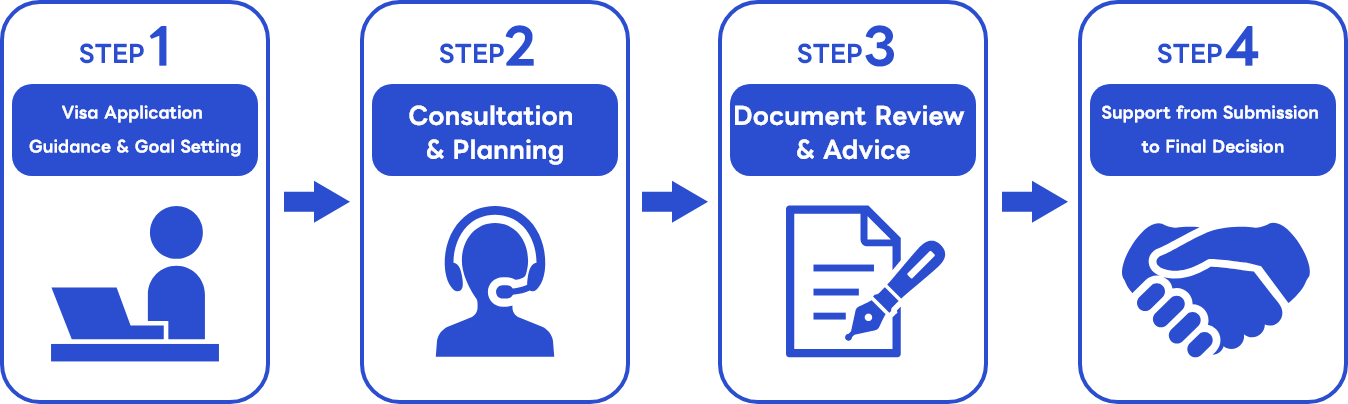
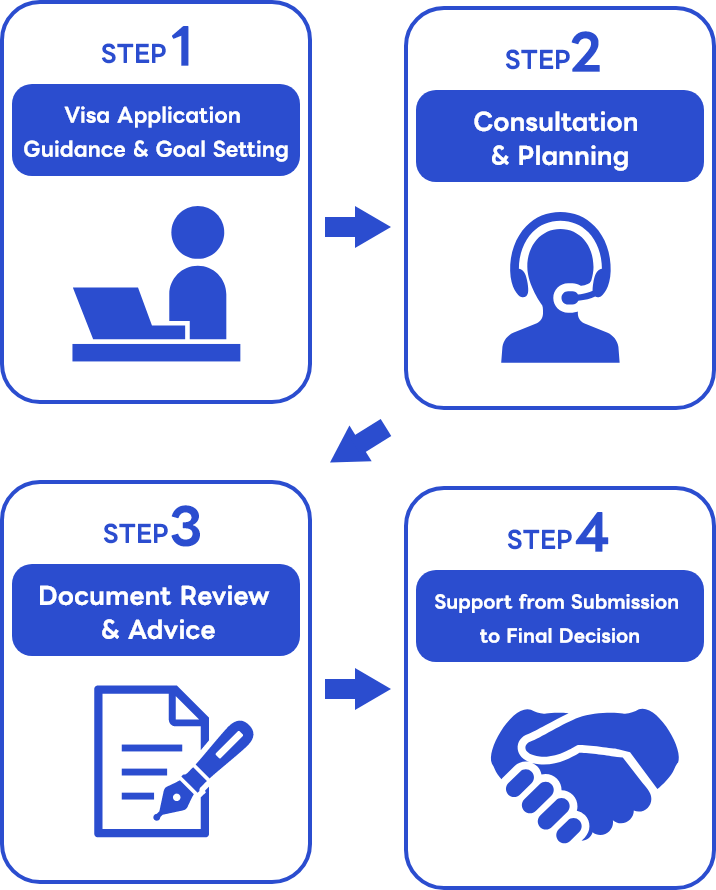
Consulting with an immigration consultant makes the process clearer and much smoother. You’ll feel more confident with document submissions and procedures, significantly reducing the risk of mistakes. Take the first step toward your Canadian dream with the guidance of an expert.
A service that makes you think,
“I’m glad I asked this person for help”
As a Regulated Canadian Immigration Consultant,
you can rely on our expertise with complete security.
We handle everything—from designing a tailored plan for obtaining permanent residence, visa application preparation, document creation, and handling the entire visa application process, to reporting the results.


Zero Anxiety About Obtaining Permanent Residence

Our knowledgeable staff in visa matters are here to address your concerns!
Delivering Carefully Selected Visa Information

We are hosting free webinars!
We will provide you with the latest visa information!