Last Updated:September 23, 2026
BCPNP Skilled Worker
Hiro
Cook
Approx. 2 years
I started working as a cook at the restaurant where I had a part-time job during my working holiday, then went on to a work permit and obtained permanent residency. Now I'm working hard in charge of the restaurant's kitchen!
Starting Work as a Cook in Canada
Q. Why did you come to Canada?
I first came to Canada on a working holiday. I wanted to snowboard, and I also thought it would be nice to become able to speak English. I chose Vancouver because I could snowboard there and there was a lot of information available.
Q. What made you decide to become a cook?
Since I was on a working holiday, I thought I’d work at a restaurant in Canada and earn money for snowboarding and having fun. In Japan I had worked as a server at a restaurant, and using that experience I was able to get a job at the restaurant where I work now.
But since I couldn’t speak English, serving customers was out of the question, so I ended up working in the kitchen. There were staff in the kitchen who spoke Japanese, so it was fine. From there, I started exploring work as a cook.

Getting a Work Permit, Then Applying for Permanent Residency
Q. Why did you get a work permit even after your working holiday ended?
My coworkers were fun, and I really got into the work and was kept busy. At first I had no intention of staying in Canada and planned to go back to Japan when my one-year working holiday was over, but right at that time, another staff member whose work permit the restaurant had planned to sponsor suddenly had to return home. So the restaurant owner asked me if I wanted to use that spot to get a work permit. I had no plans for after returning to Japan, so I decided to accept the offer.
For various reasons, it actually took a year and a half for the work permit to be issued. My working holiday visa had ended, so I went back to Japan once and waited there. It was a long time, but I had made up my mind to return to Canada, so in the meantime I worked as a cook in Japan too and built up my experience.

Q. Please tell us why you decided to get permanent residency.
Even while I was back in Japan working and waiting for my work permit, I hadn’t really thought much about getting permanent residency after that.
After my one-year work permit was issued and I returned to Canada, I started thinking about applying for permanent residency once I had worked for about half a year. I learned that my background gave me a chance to apply for permanent residency, and the people around me said that since I had the chance, I should take the next step. That was the biggest reason I applied. So I went to consult Ms. Shiraishi at Visa JP Canada, whom I had also asked to handle my work permit application, and immediately asked her to apply on my behalf.
Q. How does it feel to have actually obtained Canadian permanent residency?
Getting permanent residency has made me feel free, and like my options have expanded. As for the future, I feel like I’ve only just reached the starting line in this job, so first I want to do the work in front of me properly. I’ll think about what comes after that once I have more breathing room.
A Message from My Own Experience
Q. What would you like to tell people who want to get permanent residency?
If there’s someone who wants to get permanent residency, I’d like to listen to them and help. It’s not really advice, but what I felt is that you should study. English especially. I liked English, so I was able to work hard at it, but studying is absolutely necessary. I don’t think you’ll just naturally become able to speak English by being in Canada.

Q. What would you like to tell people who want to become cooks in Canada?
I already had some cooking skills, which helped. Now I’m in charge of the kitchen, which is quite demanding. I need to train others, and if I’m teaching, I think I need to be able to do it myself, and then the people under me will naturally learn. That’s how I learned from Yasu (the restaurant owner).
Having skills to begin with is of course a plus, but first and foremost it’s important to be truly motivated. It’s important to be able to honestly face what you lack and face your weaknesses. And not to be satisfied. It’s important to always find your own shortcomings and never consider yourself at 100%. If you’re satisfied thinking you’re at 100%, your growth stops there, so to keep striving to improve, I tell myself never to be satisfied.

Q. What kind of restaurant is Guu Garden, where you work now?
Ever since I joined, the staff have basically all gotten along well. We’re serious about work, so we do sometimes argue or clash over it, but on our days off we all hang out together. We’ve rented a boat and spent the day out on the water, and we go snowboarding together too. In my private time, I refresh by going to the pool or playing outdoors. And sometimes I just laze around.
Q. How was your experience using Visa JP Canada?
They had helped me ever since my first work permit, and they were easy to consult. The consultant works closely with the in-house assistants, so whenever I asked something, I got a quick reply. They explained complicated visa matters in an easy-to-understand way, and when I asked a question, they told me not only the answer but also extra helpful information.
Their office was close to my workplace, so it was great to be able to meet and consult with them in person. I want to tell the people coming after me that, especially if you’re aiming for permanent residency, it really is better to use an immigration consultant.
【The Restaurant Where Hiro Works】
Guu Garden
888 Nelson St m101, Vancouver, BC V6Z 2H2
+1 604-899-0855
https://guu-izakaya.com/location/#Garden
Part of the Japanese restaurant group “Guu,” which has helped izakaya culture take root in Canada and operates 5 locations in Vancouver and 1 in Toronto, this location is popular for its spacious, beer-garden-style patio.

Looking to obtain permanent residence or a visa?
Consult with us now!
Applying for permanent residence or a visa to Canada on your own can be overwhelming due to the large number of required documents, and you may feel uncertain about whether everything is correct. However, if you're serious about immigrating to Canada, we strongly recommend seeking the support of an immigration consultant. There are many pathways to obtaining permanent residence, depending on factors such as your age, occupation, and family status. With the help of an expert, you can ensure that you plan the right approach tailored to your specific situation.
A professional immigration consultant will help solve your concerns
Get a free Counseling now
From immigration planning to application submission,
everything is completed with shiraishi Visa JP Canada
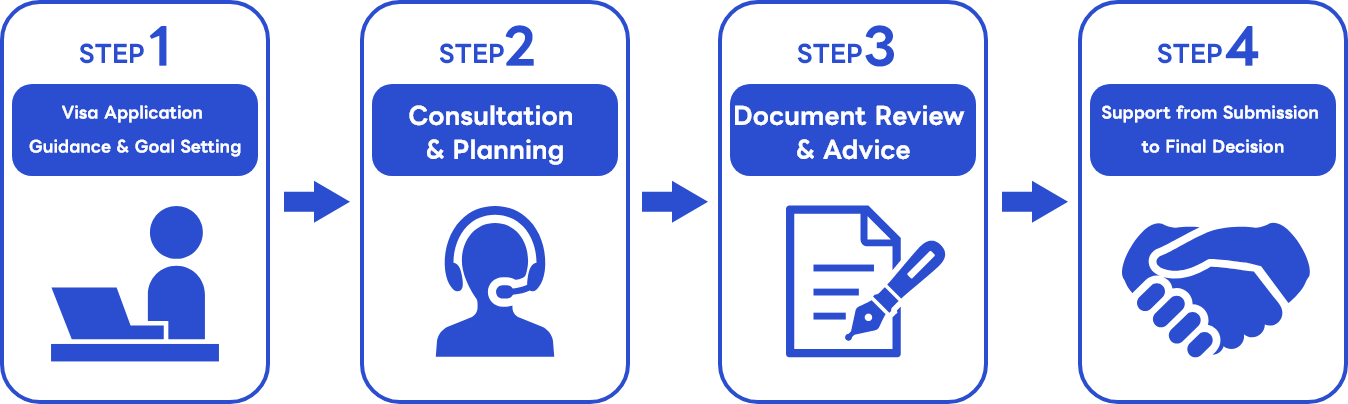
Consulting with an immigration consultant makes the process clearer and much smoother. You’ll feel more confident with document submissions and procedures, significantly reducing the risk of mistakes. Take the first step toward your Canadian dream with the guidance of an expert.