Last Updated:September 23, 2026
Self Employed
H.
Conference Interpreter
Approx. 11 months
When aiming for Canadian permanent residency, some people may find it hard to find an employer due to the economy, or may find other categories difficult because of their age, but if you have a track record as a freelancer in Japan, I think it's worth giving it a try.
Why did you decide to pursue Canadian permanent residency?
I worked as a freelance conference interpreter in Tokyo for more than 25 years. The Fukushima nuclear accident on March 11, 2011 was the direct trigger that made me decide to leave Japan. My eldest son, who was commuting to school by bicycle at the time, began showing symptoms of radiation exposure, such as nosebleeds and peeling skin on his fingers, perhaps because he got wet in the rain after the accident. Right after the accident I didn’t know much either, and I was eating vegetables from the Kanto region delivered through a co-op (生協) and drinking tap water, so my neck became badly swollen and my throat hurt. As I gradually learned more, I started ordering bottled water and vegetables from Kyushu, and the swelling in my throat went down, but I still had symptoms of radiation exposure, such as itchy facial skin when I went out to walk the dog and feeling extremely sleepy.
At first I aimed for the United States, where there is plenty of work, but since there was no prospect of getting work visa sponsorship in the U.S., I changed my destination to Canada and first applied for permanent residency from Japan under Quebec’s self-employed category. Sooner than I expected, about half a year after applying, I was called for an interview in Hong Kong, but I failed because I couldn’t converse well enough in French. However, I had passed the document review, so I knew that gathering this set of documents would be enough to pass.
What was the hardest part, or the most memorable part, of the process of obtaining permanent residency?
Since I planned to apply again the following year, I took French conversation lessons once a week via Skype from a Japanese woman living in France. In less than a year I passed DELF A2, but I was disappointed to find out that I couldn’t use this test result for the actual application to Canada. When you take a test, please make sure it is one the government requires.
However, the following year the intake never opened. At the time, applying from Japan under the federal self-employed category meant applying to Manila, and I was told it wasn’t a realistic option because there was no knowing how many years it would take. Another visa consultant advised me that in my case it would be best to graduate from graduate school and aim for the Ontario Provincial Nominee Program.
With that in mind, I took the graduate school entrance exam, but I was told that my undergraduate major didn’t give me enough credits, so I would need to take some undergraduate credits again. I grew anxious that it would take much longer than expected with no end in sight, but around that time I happened to learn that if you had lived in Canada legally for one year, you could apply directly to Ottawa even under the self-employed category. The processing time in Ottawa was 23 months, and suddenly I felt the way forward open up.
Prepared for it to take about 2 years, I decided to study at a college so I could stay legally in the meantime, and I obtained a 2-year student visa. I had the IELTS Academic results from the test I took in Japan the previous year sent directly to the college from Japan, and I was accepted without any problem just by submitting my university transcripts.
When I applied after one year of legal residence, processing went unexpectedly fast, and I received a request for a medical exam less than 5 months after applying. Then my COPR arrived in 7 months. What was unfortunate this time, however, was that the definition of dependent children under immigration law changed just before I applied, so I couldn’t include my 21-year-old eldest son in the application. Before that, even a 21-year-old could be included if he was a full-time student. From now on, my eldest son will have to obtain permanent residency on his own.

How did you learn about our company, and what led you to choose us?
The lawyer I hired when I applied to Quebec said, “You know how to answer in the interview, don’t you?” and left everything to me without developing any concrete strategy. However, I did pass the review with the documents she had me collect. Believing that developing a strategy is a lawyer’s job, I then asked the visa consultant who had suggested graduating from an Ontario graduate school to also apply for me to Manila in parallel under the self-employed category, but after looking at my interpreting record, the consultant asked whether I hadn’t done more cultural work. I understood that interpreting falls under the cultural occupations category, so when I pointed that out, I never heard from them again. They probably didn’t know.
Perhaps because there are few applicants in the self-employed category, I realized that neither lawyers nor consultants are perfect on their own, and I was at a loss. When I asked a Japanese person I had gotten to know in Toronto at the time whether they knew of a good firm, they told me about a woman who had been greatly helped by an immigration consultant at “Visa JP Canada.”
I contacted them right away, and when I consulted them via Skype, they advised me that a student visa and permanent residency are contradictory, so if I was aiming for graduate school and applied for permanent residency beforehand, the student visa itself could be refused, and that I should wait to apply for permanent residency until I had obtained my student visa. Compared with the previous two, they were very experienced and trustworthy, and I knew I wanted them to handle my case.

Please tell us your goals in Canada as a permanent resident.
Since last year, student visa holders have been allowed to work up to 20 hours a week. However, my work isn’t that kind of regular job. Toronto is Canada’s largest commercial city, but I’ve found there isn’t much demand for my work. I sometimes work in Toronto and Montreal, but it seems difficult to support myself with Canada alone. It looks like I’ll end up aiming for the U.S. after all, but for now I’d like to go to college for one more year, finish my business studies and get my diploma.
Please share a message for those aiming for permanent residency.
There is little information about the self-employed category, so I hope my experience will be of some help. In Japan, to people who were studying to become interpreters while working at a company, I used to recommend saving enough to live on for 3 years without work before going freelance, because work might not come right away when you start freelancing. I think the same applies to applying for permanent residency. If you have at least 5 years (ideally 10) of experience working independently as self-employed in Japan, and enough savings to live on for 3 years, I think your chances of obtaining permanent residency under the self-employed category are quite high. In that case, I think it’s best to stay in Canada legally for one year, for example as a student, and then apply directly to Ottawa. I don’t recommend applying from Japan to Manila, where there’s no telling when it will be processed.
Looking to obtain permanent residence or a visa?
Consult with us now!
Applying for permanent residence or a visa to Canada on your own can be overwhelming due to the large number of required documents, and you may feel uncertain about whether everything is correct. However, if you're serious about immigrating to Canada, we strongly recommend seeking the support of an immigration consultant. There are many pathways to obtaining permanent residence, depending on factors such as your age, occupation, and family status. With the help of an expert, you can ensure that you plan the right approach tailored to your specific situation.
A professional immigration consultant will help solve your concerns
Get a free Counseling now
From immigration planning to application submission,
everything is completed with shiraishi Visa JP Canada
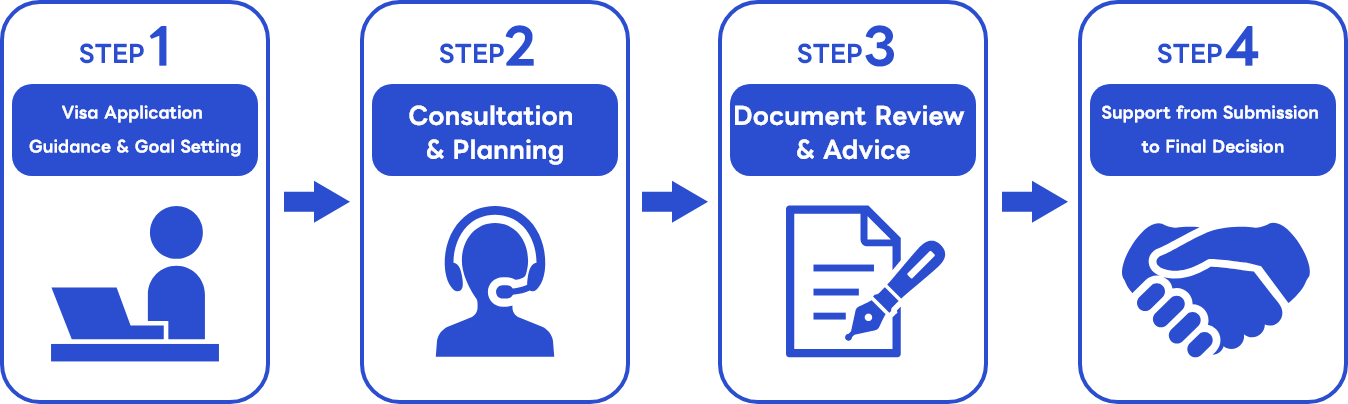
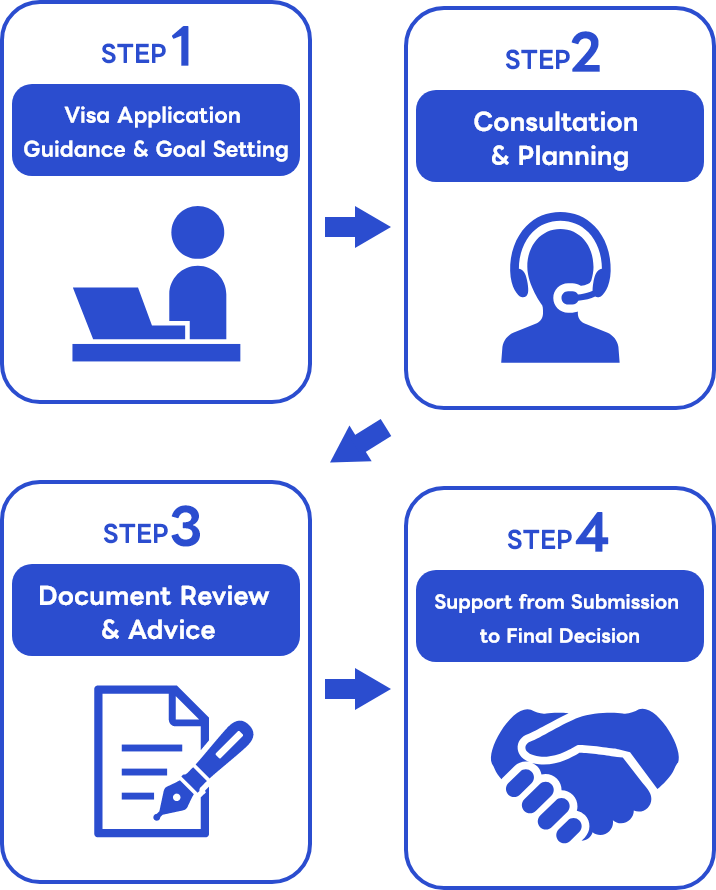
Consulting with an immigration consultant makes the process clearer and much smoother. You’ll feel more confident with document submissions and procedures, significantly reducing the risk of mistakes. Take the first step toward your Canadian dream with the guidance of an expert.