Last Updated:September 23, 2026
N/A
Kaz
Shiatsu Therapist
Over 10 years
It was a bit of a long way around, but thanks to that I chose the path of a shiatsu therapist and was able to immigrate.
Visa JP Canada’s “Shiatsu Therapist Permanent Residency Package” has been very well received. Among the inquiries we receive, many people have told us they would like to know more about the work of a shiatsu therapist.
So we interviewed Kaz, who actually became a shiatsu therapist and pursued permanent residency. Kaz arrived at a career as a shiatsu therapist after experiencing a variety of jobs, and says there were things gained and things seen precisely because of taking the long way around.
More Than 10 Years of Twists and Turns Toward Permanent Residency
Q. When did you first come to Canada?
It was on a working holiday in 2003. At first I simply planned to go home after a year, but like many people who come to Canada, I completely fell in love with the country and wanted to stay. The first year was a lot of fun, and I guess you could say Canada just suited me.
I obtained permanent residency in 2015, so it took quite a long time. In the meantime, I basically stayed in Canada the whole time by moving from a visitor visa to a student visa to a work visa. I took a very long way around to permanent residency and did all kinds of things. For example, since I had originally been a teacher at a college-prep school (予備校) in Japan, I earned TESOL (a qualification for teaching English) so that I could teach English if I went back to Japan.
At First I Aimed for Permanent Residency as a Programmer
Q. What kind of work did you do during your working holiday?
The job I got during my working holiday was as a programmer. So at first I was looking for a way to stay in Canada as a programmer.
Q. Had you also worked as a programmer in Japan?
No, I taught myself programming, but since I was able to get a job with it, in 2006 I went to a programming school in Vancouver on a student visa and studied it seriously. I also did an internship, and after graduating I was able to get work visa sponsorship from the company I was working for.
I kept working as a programmer for a while, but not everything went smoothly. Programming is a highly competitive occupation, so it was hard to find an employer willing to hire me and even sponsor a work visa, among other things. So I decided to change careers to an occupation that would lead more reliably to permanent residency.
Actually, around that time it looked like I could get permanent residency as a programmer under the skilled worker category (FSW), and I was preparing on my own, but I gave that up too. That was one of the reasons I took the long way around.

Going to Shiatsu School
Q. So you changed careers from programmer to shiatsu therapist.
Yes. I still wanted to stay in Canada, so I thought about how I could gain a hands-on trade instead of being a programmer. That’s when I learned there was a shiatsu school. It was exactly a hands-on skill, and I thought it could lead to permanent residency, so in 2010 I enrolled in a shiatsu college. While studying, I also did practical training as a shiatsu therapist at Japan Shiatsu Clinic, where I work now. After graduating, they agreed to support my work visa, and I have been working there ever since 2012.
Q. Out of so many graduates, they chose to support your work visa!
When it came to getting work visa support, I think my background and skills from Japan helped me appeal to the company. Because I had done programming, I was good with computers, and in my twenties I actually worked in the concert industry, so I also know a lot about sound and lighting. On top of that, since I had worked at a college-prep school, I have the skill of teaching people. I think that “I can do anything” background is what led to them supporting my work visa. In fact, I was even able to serve as an assistant in classes at the shiatsu college I graduated from. Taking the long way around wasn’t a waste after all.
Q. When did you start your permanent residency application?
Since I had chosen the shiatsu school with permanent residency in mind, I started the application right away as soon as I met the requirements, one year after I began working on a work visa. By then, more than 10 years had already passed since I first came to Canada on a working holiday.

Shiatsu in Canada
Q. Please tell us about working as a shiatsu therapist in Canada.
Laws are set by each province, so speaking about BC here, the status of shiatsu therapists is not as high as that of chiropractors or physiotherapists. Over the past 20 years the word “Shiatsu” has gradually spread, but honestly, we still can’t say that many people understand what shiatsu actually is.
However, Japan Shiatsu Clinic operates a total of 6 clinics in the Vancouver area and welcomes a total of 40,000 client visits a year. This figure of 40,000 a year is actually the largest in the world for a company specializing in shiatsu.

Q. “The world’s number one” – that’s amazing!
Shiatsu isn’t covered by insurance, so clients pay the full amount themselves. I think the reason so many people still come to the clinics is that those who try it once like it and come back, or recommend it to others.
I think most of our clients come with some kind of symptom, such as back pain, being unable to raise their arms above the shoulder, or fatigue that won’t go away. Some clients also come regularly for body maintenance. In that sense, people who have experienced shiatsu seem to genuinely feel its benefits and understand how it differs from relaxation massage and the like.
About a Career as a Shiatsu Therapist

Q. What kind of people choose the path of shiatsu?
Truly all sorts of people come to the college to learn shiatsu – everyone is different. Each person has a different reason for becoming a shiatsu therapist, and I think that’s a good thing. Treatments vary depending on each person’s background and experience, and precisely because of those differences, clients come to feel “I like this person’s shiatsu.” In short, there is something like compatibility, and I think it’s right for clients to be the ones who choose.
Some people became interested in shiatsu through some chance event, while others already hold qualifications in other therapies and want to add shiatsu to their skills. There are also people who have already studied shiatsu in Japan and want to try working in shiatsu in Canada while learning English.

Q. Is there a type of person you would recommend becoming a shiatsu therapist?
Not really. If anything, I don’t think there is a type of person who can’t do it. For example, in Japan, people who are blind also work as shiatsu therapists. I think their senses are highly refined, and many of them are just as successful as sighted practitioners. In other words, rather than it suiting a particular type of person, I think it’s an occupation where anyone can succeed by making the most of their own strengths.
Q. What do you think about choosing to become a shiatsu therapist for permanent residency?
I think it’s fine to treat becoming a shiatsu therapist purely as a means of immigrating to Canada. Once you’ve immigrated, you can pursue a career other than shiatsu. Even then, shiatsu becomes one of your skills.
That said, I’ve seen many people who weren’t that interested in shiatsu come to love it more and more as they went along. As a shiatsu therapist you get very direct reactions from clients, and once you experience that, you come to want to keep doing this work. So even if your goal is permanent residency, while you’re working as a shiatsu therapist I think you should give it your all so that your clients are satisfied.
Q. I see. What would you say is the most important point?
Above all, keep a strong motivation that you will absolutely immigrate to Canada. If you do, I think the effort you put in becomes simply the minimum needed to get permanent residency. For example, even when your English isn’t good enough or shiatsu treatments feel tough, you can’t run away from that. By going back to your motivation of absolutely immigrating to Canada, I think you can push through to the end.
For people who work hard like that, both the school and the clinic can support them for a year or two, until they meet the work experience requirements for a permanent residency application.
A Message for Those Who Follow

Q. Is there anything you’d like to tell future working holiday participants?
What first made me think about getting permanent residency was something said by a friend who was my roommate at the start of my working holiday. I had a vague feeling that I wanted to stay in Canada after my working holiday ended and didn’t want to go back to Japan yet, and my friend told me, “Getting permanent residency doesn’t mean you lose your Japanese citizenship, and having it gives you more options.” I thought that was absolutely right. I’d like to tell the young working holiday people coming from Japan now the same thing.
Q. Having more paths to choose from is a good thing.
That’s right. If you think even a little that you want to stay in Canada, take as much action as you can while you’re still in Canada. If you go back to Japan for the time being without deciding, coming back to Canada is a big undertaking. I also once gave up on permanent residency, but after that I was determined to stay in Canada no matter what.
If you make up your mind early, I think most people will surely reach permanent residency without as much hardship as I had. Otherwise, you waste both money and time. The things I experienced along the way weren’t a waste, but I think I could have gained my freedom sooner with a smarter approach.
Q. Finally, please tell us what you want to pursue in Canada from here on.
As a shiatsu therapist, I do think about various things, like wanting to try going independent. But right now, I want to create an environment at Japan Shiatsu Clinic, the company I work for, where the people working there want to do their best and work for a long time.
About Visa JP Canada’s “Shiatsu Therapist Permanent Residency Package”

For details, please see the package page.
Looking to obtain permanent residence or a visa?
Consult with us now!
Applying for permanent residence or a visa to Canada on your own can be overwhelming due to the large number of required documents, and you may feel uncertain about whether everything is correct. However, if you're serious about immigrating to Canada, we strongly recommend seeking the support of an immigration consultant. There are many pathways to obtaining permanent residence, depending on factors such as your age, occupation, and family status. With the help of an expert, you can ensure that you plan the right approach tailored to your specific situation.
A professional immigration consultant will help solve your concerns
Get a free Counseling now
From immigration planning to application submission,
everything is completed with shiraishi Visa JP Canada
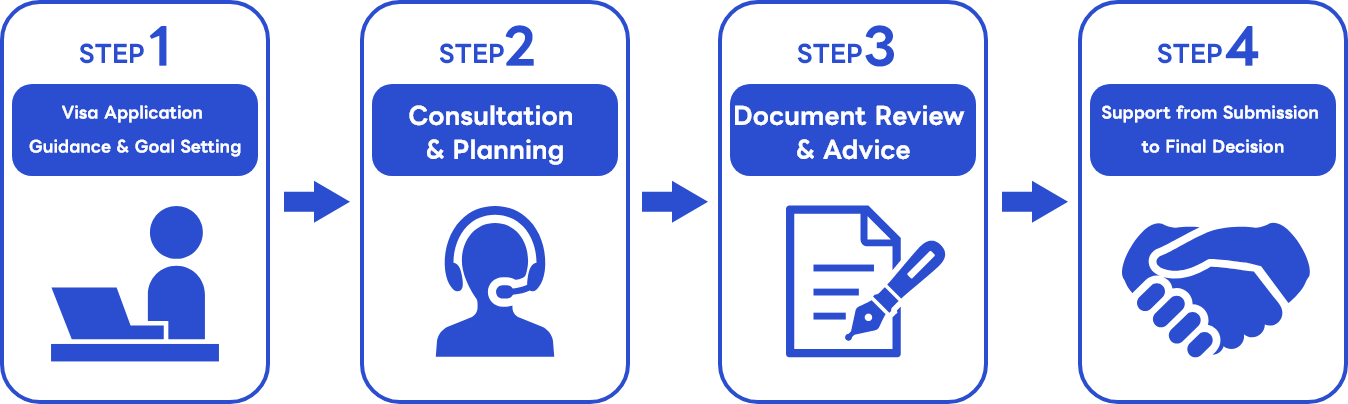
Consulting with an immigration consultant makes the process clearer and much smoother. You’ll feel more confident with document submissions and procedures, significantly reducing the risk of mistakes. Take the first step toward your Canadian dream with the guidance of an expert.