Last Updated:September 24, 2026
Supervised by Yuki Shiraishi (Immigration Consultant)

The general education system in Canada
Education in Canada is governed by each province. At Canadian public schools, not only elementary and junior high school but also high school up to G12, when students turn 17, is compulsory education, and tuition is covered by the provincial government, making it free.
However, free schooling applies only to Canadian residents attending public schools; international students pay tuition. To be considered a Canadian resident, conditions include holding citizenship or permanent residence, or having a parent who holds a work permit or a study permit to attend a university, graduate school, college, etc.
| Kindergarten (1 year) | Generally attached to an Elementary School attended by children in G1 and above, with school districts divided by place of residence. |
|---|---|
| Elementary School (7 years) Grade 1-Grade 7 | Ages 6 to 12. |
| Secondary School (5 years) Grade8 – Grade 12 | Ages 13 to 17. To earn a high school diploma, students must complete the required credits during the three years of Grade10, 11, 12. |
The education system differs somewhat depending on the province you live in, but the above is the most common one and is used in British Columbia, where Vancouver is located.
What is the semester system in Canada?
The Canadian education system generally uses a semester system, with the school year divided into two semesters. The first semester runs from September to January of the following year, and the second semester from February to June. Summer vacation lasts from the end of June until the new school year starts in September. In Japan, by contrast, the new school year starts in April, and the cut-off date for school years is April 1. In Canada, the new school year starts in September, and in principle each grade is made up of children born in the same calendar year.

Canadian grade chart: for the school year starting in September 2024
| Grade (Canada)/Grade | Grade (Japan) | Children born in | Age during the school year |
|---|---|---|---|
| Kindergarten(K) | Kindergarten | Born in 2019 | 4-5 years old |
| G1 | Elementary Grade 1 | Born in 2018 | 5-6 years old |
| G2 | Elementary Grade 2 | Born in 2017 | 6-7 years old |
| G3 | Elementary Grade 3 | Born in 2016 | 7-8 years old |
| G4 | Elementary Grade 4 | Born in 2015 | 8-9 years old |
| G5 | Elementary Grade 5 | Born in 2014 | 9-10 years old |
| G6 | Elementary Grade 6 | Born in 2013 | 10-11 years old |
| G7 | Junior High Year 1 | Born in 2012 | 11-12 years old |
| G8 | Junior High Year 2 | Born in 2011 | 12-13 years old |
| G9 | Junior High Year 3 | Born in 2010 | 13-14 years old |
| G10 | High School Year 1 | Born in 2009 | 14-15 years old |
| G11 | High School Year 2 | Born in 2008 | 15-16 years old |
| G12 | High School Year 3 | Born in 2007 | 16-17 years old |
[Notes]
- As a rule, grades are determined by year of birth.
- This refers to the system at typical public schools in British Columbia.
- In Ontario, Kindergarten lasts 2 years.
In the Canadian education system, children can attend Pre School and Kindergarten (Kindergarden) when they are young, and then begin elementary education with Grade 1. In this system, students advance through a continuous count from Grade 1 in elementary school to Grade 12 in high school. For example, the first year of junior high school in Japan corresponds to “Grade 7” in Canada, and the first year of high school in Japan corresponds to “Grade 10.”
Although it may vary by region, many areas of Canada divide schooling into 7 years of Elementary and 5 years of Secondary, providing 12 years of education in total. Some regions are instead structured into Elementary, Middle and Secondary schools.
There is a big difference in how grades are assigned in Canada and Japan. In Japan, children born between April 2 and April 1 of the following year are placed in the same grade, but in Canada, the year of birth determines the grade. The new school year starts in September, and all children born in the same year are in the same grade. For this reason, the Japanese concept of “hayaumare” (早生まれ, being born early in the calendar year, between January 1 and April 1) does not exist in Canada.
How to make your child’s tuition free
Education is compulsory up to Grade12, and public schools are tuition-free for local students. When parents and children study abroad together, depending on the parent’s visa status, there is a way for the child to attend public school as a local student, which makes international student tuition of more than $15,000 a year free. This is a method with major benefits, but it is not easy to time the visa application correctly or to meet the eligibility requirements and complete the preparations needed. Many sound judgements based on the situation are needed at each key stage.
Consult Visa JP Canada about family immigration and education-based immigration
When you are considering moving to Canada as a family or having your child study abroad, it is helpful to be aware of the timings that make it easier for children to settle smoothly into a new environment: the fact that the new school year starts in September, the point when they finish Elementary and enter Secondary School, and the start of G10, when the high school diploma program begins.Let’s move to Canada as a family!

Immigration Consultant
Yuki Shiraishi
Born in Japan. After earning a Bachelor's degree from the University of Michigan, she worked for six years in New York as a marketing consultant at a major travel agency, while also studying in an MBA program at the City University of New York. After returning to Japan, she managed the visa center of the same travel company, handling various international visa applications for foreign clients.
Looking to obtain permanent residence or a visa?
Consult with us now!
Applying for permanent residence or a visa to Canada on your own can be overwhelming due to the large number of required documents, and you may feel uncertain about whether everything is correct. However, if you're serious about immigrating to Canada, we strongly recommend seeking the support of an immigration consultant. There are many pathways to obtaining permanent residence, depending on factors such as your age, occupation, and family status. With the help of an expert, you can ensure that you plan the right approach tailored to your specific situation.
A professional immigration consultant will help solve your concerns
Get a free Counseling now
From immigration planning to application submission,
everything is completed with shiraishi Visa JP Canada
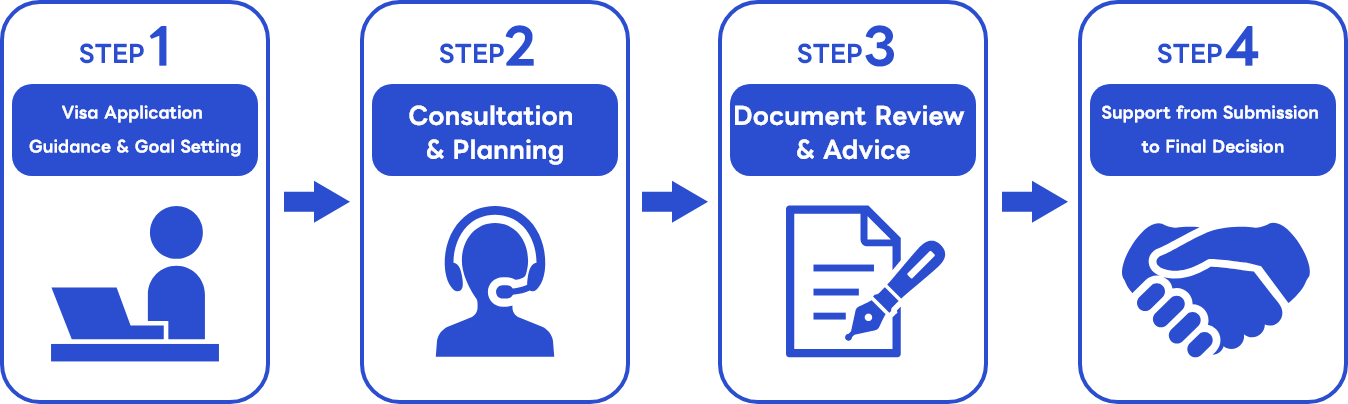
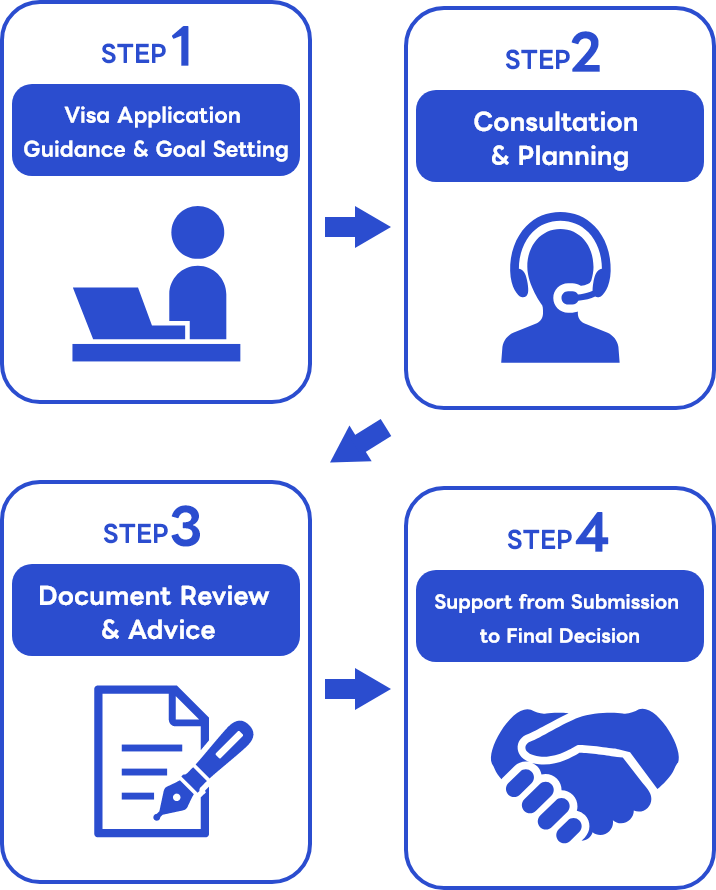
Consulting with an immigration consultant makes the process clearer and much smoother. You’ll feel more confident with document submissions and procedures, significantly reducing the risk of mistakes. Take the first step toward your Canadian dream with the guidance of an expert.