

Canada Issues Updated Guidance for Digital Nomads: IRCC Clarifies Documentation Requirements
Date Posted:June 10, 2026
Last Updated:September 9, 2026
Immigration, Refugees and Citizenship Canada (IRCC) has released updated guidance for immigration officers regarding digital nomads entering Canada as temporary residents.
Published on May 26, 2026, the revised instructions provide greater clarity on eligibility requirements and on the documentation digital nomads may be asked to present when applying for entry to Canada.
Who Qualifies as a Digital Nomad?
A digital nomad is someone who can perform their work remotely from anywhere in the world.
Under Canada’s current immigration framework, foreign nationals may stay in Canada as visitors while continuing to work remotely, provided that they are:
- Employed by a company located outside Canada; or
- Self-employed and providing services exclusively to clients outside Canada.
In these circumstances, individuals generally do **not require a work permit** and may remain in Canada as visitors for up to **six months at a time**.
Remote Work for Foreign Employers Is Not Considered Entry into Canada’s Labour Market
IRCC has reaffirmed that working remotely for a foreign employer does **not constitute entry into the Canadian labour market**.
As a result, digital nomads working for employers abroad can continue their employment while staying in Canada without obtaining a work permit.
However, foreign nationals who intend to work for a Canadian employer must obtain appropriate work authorization before beginning employment, unless they qualify for a specific exemption under section 186 of the Immigration and Refugee Protection Regulations (IRPR).
What Has Changed?
The updated guidance does not create a new digital nomad program. Rather, it provides more detailed instructions to officers regarding the assessment of digital nomad cases.
One notable change is the emphasis on documentation.
Previous guidance indicated that digital nomads generally did not require additional supporting documents beyond standard visitor requirements. The revised instructions now specify that applicants should be prepared to demonstrate that their income originates entirely from outside Canada.
Applicants may be asked to provide evidence showing that they work remotely for a foreign employer or, if self-employed, that they serve only clients located outside Canada.
Examples of Supporting Documents
IRCC lists several examples of documents that may be used to establish eligibility as a digital nomad, including:
- Employment letters from foreign employers;
- Employment contracts;
- Pay slips issued by foreign employers;
- Service agreements or sales contracts;
- Invoices issued to foreign clients;
- Foreign business registration documents;
- Foreign income tax documents; and
- Bank statements.
| Employment Status | Examples of Required Documents |
| Employed by a foreign company | Letter of employment from the foreign employer, Employment contract, Pay stubs (Payslips) |
| Self-employed / Freelancer | Service contracts, Sales contracts, Invoices, Foreign business registration documents |
| Common financial & tax documents | Foreign income tax documents, Bank statements |
These documents can help demonstrate that the applicant’s employment activities are not connected to the Canadian labour market.
The optimistic assumption that you can enter Canada with just a passport simply because you are a digital nomad is no longer valid. At the border, we anticipate a growing number of cases where officers will require concrete documentation proving your remote employment and foreign income. Preparing these documents in advance is absolutely essential.
Digital Nomads Must Still Meet Visitor Requirements
IRCC has emphasized that digital nomads remain subject to all standard visitor requirements.
When applying for a visitor visa, requesting a visitor record, or seeking entry at a Canadian port of entry, applicants may be required to satisfy an officer that they:
- Will not enter the Canadian labour market;
- Have sufficient financial resources to support themselves during their stay;
- Will leave Canada at the end of their authorized period of stay; and
- Are otherwise admissible to Canada from a medical and criminal perspective.
Extending a Stay in Canada
Digital nomads wishing to remain in Canada beyond their initially authorized period of stay must apply for a **Visitor Record**.
A Visitor Record does not automatically grant the right to continue working for a Canadian employer; rather, it extends a person’s temporary resident status as a visitor.
Applicants should ensure that extension requests are submitted before their current status expires.
Accompanying Family Members Must Apply Separately
The updated guidance also clarifies the status of accompanying family members.
Spouses and dependent children do not automatically receive authorization to work or study in Canada simply because they are accompanying a digital nomad.
Each family member must independently apply for the appropriate temporary resident status, whether as a:
- Visitor;
- Student; or
- Worker.
Those wishing to work or study in Canada must obtain the necessary permits before doing so.
If you wish to enroll your children in a local school or if your spouse also intends to work in Canada, you must develop a comprehensive family visa strategy that incorporates Study Permits and Work Permits alongside the digital nomad framework. We will propose the optimal plan to ensure a smooth long term stay for your entire family.
Tax Considerations for Digital Nomads
While immigration rules may allow remote work from Canada without a work permit, tax obligations should not be overlooked.
Whether an individual becomes a Canadian tax resident depends on several factors, which may include:
- Spending 183 days or more in Canada during a calendar year;
- Establishing significant residential ties in Canada, such as securing long-term housing or enrolling children in school; and
- Demonstrating that Canada has become the individual’s primary place of residence.
If the Canada Revenue Agency (CRA) determines that an individual is a tax resident of Canada, they may be required to file Canadian tax returns and report worldwide income.
Where two countries both consider an individual to be a tax resident, applicable tax treaties may help determine which country has primary taxing rights.Because tax residency determinations are highly fact-specific, digital nomads planning an extended stay in Canada should consider seeking professional tax advice.
Final Thoughts
Canada continues to welcome foreign nationals who wish to live temporarily in the country while working remotely for employers and clients abroad.
The latest IRCC guidance does not fundamentally change the rules applicable to digital nomads. Instead, it provides greater clarity regarding the evidence applicants should be prepared to provide in support of their temporary resident status.
Individuals considering Canada as a destination for remote work should ensure they understand not only immigration requirements, but also their responsibilities relating to visitor status, health insurance coverage, and potential tax obligations.

Immigration Consultant
Yuki Shiraishi
Born in Japan. After earning a Bachelor's degree from the University of Michigan, she worked for six years in New York as a marketing consultant at a major travel agency, while also studying in an MBA program at the City University of New York. After returning to Japan, she managed the visa center of the same travel company, handling various international visa applications for foreign clients.
Related Columns


Date Posted:April 23, 2025
A Case of False Information on Visa Applications Leading to Court Proceedings

Date Posted:April 23, 2025
What to Do if You Encounter Issues with Your Visa Application: 4 Ways to Contact the Immigration, Refugees and Citizenship Canada (IRCC)

Related News
Looking to obtain permanent residence or a visa?
Consult with us now!

Applying for permanent residence or a visa to Canada on your own can be overwhelming due to the large number of required documents, and you may feel uncertain about whether everything is correct. However, if you're serious about immigrating to Canada, we strongly recommend seeking the support of an immigration consultant. There are many pathways to obtaining permanent residence, depending on factors such as your age, occupation, and family status. With the help of an expert, you can ensure that you plan the right approach tailored to your specific situation.
A professional immigration consultant will help solve your concerns
Get a free Counseling now
From immigration planning to application submission,
everything is completed with shiraishi Visa JP Canada
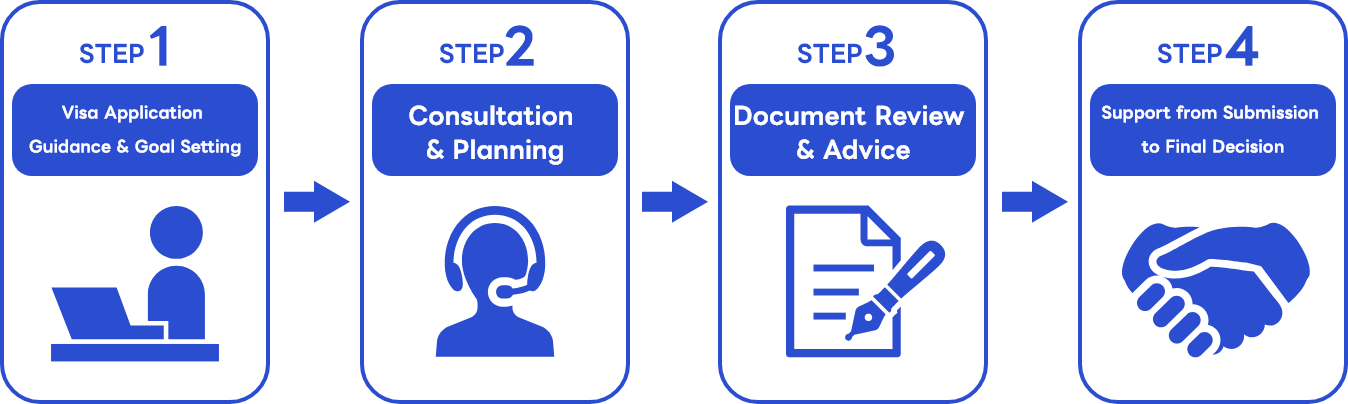
Consulting with an immigration consultant makes the process clearer and much smoother. You’ll feel more confident with document submissions and procedures, significantly reducing the risk of mistakes. Take the first step toward your Canadian dream with the guidance of an expert.