


5 Permanent Residence Work Experience Declaration Mistakes and Solutions
Date Posted:April 23, 2026
Last Updated:April 23, 2026

Index
- 1 1. Choosing a NOC Based on Job Title Instead of Actual Duties
- 2 2. Choosing a Higher TEER Level Based on Perceived Advantage
- 3 3. Insufficient Employment Reference Letters
- 4 4. Not Checking the “Exclusions” Section
- 5 5. Inconsistent Information Across Documents
- 6 A Consistent Employment Story Is What Matters
- 7 Contact Us for Professional Guidance
When applying for Canadian permanent residence, one of the most important steps is correctly declaring your work experience under the appropriate occupation.
In particular, selecting the correct NOC (National Occupational Classification) plays a critical role in determining your eligibility for permanent residence and your chances of receiving an invitation to apply.
In many cases, applicants with solid work experience are still refused or do not receive invitations. In practice, this is often due to incorrect job classification or mistakes in how work experience is presented.
We, VisaJPCanada, frequently receive inquiries from applicants who attempted to apply on their own and encountered difficulties later in the process. Based on these real-life cases, we have summarized the five most common mistakes and how to avoid them.
1. Choosing a NOC Based on Job Title Instead of Actual Duties
One of the most common mistakes is selecting a NOC based on job title alone.
Job titles vary significantly between companies and countries, and they do not always reflect actual job responsibilities.
For example, in Canada as well as in other countries, a “Manager” title does not always mean the person is managing staff. In some cases, it may simply be a senior-level title without direct supervisory duties.
Similarly, a “Sales Manager” in one company may perform similar duties to a Marketing Coordinator, Account Executive, or Business Development role in another organization.
What immigration officers actually assess is not your job title, but your actual work responsibilities.
How to avoid this mistake:
- Start by searching based on job title, but always make the final decision based on duties
- List your day-to-day responsibilities (10–15 items is ideal)
- Compare them with the NOC lead statement and main duties
- Select the NOC that matches approximately 70–80% of your actual tasks
Even if you find it difficult to articulate your daily tasks, we will conduct a thorough interview in Japanese to identify every detail of your role. By cross-referencing your experience with the immigration authorities’ criteria, we identify the “definitive NOC” that ensures your experience is evaluated at its highest potential. You can leave the entire process to us!
2. Choosing a Higher TEER Level Based on Perceived Advantage
The NOC system includes TEER (Training, Education, Experience, and Responsibilities) levels that classify occupations by skill level.
A common misunderstanding is that selecting a higher-skilled occupation may improve your chances.
However, what matters is the accuracy of the match between your actual job duties and the NOC description, not how “advanced” the occupation appears.
In Express Entry and most immigration programs, TEER 0–3 occupations are generally considered eligible, and a higher TEER level does not automatically provide an advantage.
How to avoid this mistake:
- Check the TEER requirements of the immigration program you are applying for
- Select the NOC based strictly on your actual job duties
Selecting the right TEER is a “strategy” to secure your permanent residency. Rather than focusing on how impressive a job title sounds, we use our professional expertise to identify and propose the most suitable level—one that offers the highest probability of approval and maintains total consistency with your chosen PR program.
3. Insufficient Employment Reference Letters
In practice, this is one of the most common reasons applications run into problems.
Even if the correct NOC is selected, it must be supported by strong documentation. If the documents are insufficient, immigration officers may not be able to confirm the claimed work experience.
In particular, employment letters from companies in Canada and many other countries often only include job title and employment dates. This is not sufficient for immigration purposes.
Without detailed information, officers cannot properly assess whether the work experience matches the selected NOC.
Required elements:
- Detailed job duties and responsibilities
- Employment period
- Working hours (full-time or part-time)
- Salary information
- Employer contact details
Supporting documents such as pay stubs or employment contracts are also recommended.
Japanese companies are often unsure of how to respond when suddenly asked to provide the detailed English employment certificates required by IRCC. At Shiraishi Visa JP Canada, we provide specialized English templates that organize all essential criteria to minimize the burden on your employer. By simply having your representative fill in the facts according to our format, we support you in creating a certificate that meets all requirements seamlessly!
4. Not Checking the “Exclusions” Section
Each NOC description includes an “Exclusions” section, which lists occupations that may appear similar but are not included under that code.
If this section is overlooked, applicants may mistakenly select a NOC that seems correct but is actually not eligible.
How to avoid this mistake:
- Always review the Exclusions section when selecting a NOC
- If your occupation is excluded, consider alternative NOC options listed in the guidance
Our Regulated Canadian Immigration Consultants (RCIC) perform double and triple cross-checks, including related NOCs, to completely eliminate any unexpected pitfalls in advance.
5. Inconsistent Information Across Documents
This is often underestimated but can seriously impact your application.
Examples include:
- Different job titles between your resume and employment letter
- Inconsistent employment start or end dates
- Mismatched job descriptions across documents
Even if unintentional, these inconsistencies can raise concerns during the assessment process.
How to avoid this mistake:
- Create a “master employment record” (e.g., spreadsheet)
- Ensure all documents are based on the same verified information
Even a minor inconsistency in your documents can be fatal to your application. Adopting the rigorous perspective of an actual immigration officer, we review every word across your resume, employment certificates, and application forms to craft a “perfect story” free of any contradictions.
A Consistent Employment Story Is What Matters
Choosing the correct NOC is not just about selecting a code—it is about presenting a clear and consistent explanation of your work history.
Immigration officers primarily assess three key factors:
- Whether your actual duties match the selected NOC
- Whether your claims are properly supported by documentation
- Whether all information is consistent across all documents
Only when these three elements align can your work experience be properly recognized.
In Canadian immigration applications, accurately and consistently describing what you actually did at work is directly linked to the outcome of your case. Proper organization of your employment history and careful NOC selection are essential steps that should not be rushed.
Contact Us for Professional Guidance
Organizing your work history and selecting the correct NOC can be one of the most complex aspects of a Canadian immigration application.
We often hear from applicants who are unsure which NOC applies to their experience or whether their application is strong enough.
VisaJPCanada provides support based on practical, real-world immigration experience, including:
- Employment History Structuring: Accurately extracting qualifying duties from complex career backgrounds.
- Optimal NOC Selection: Choosing a consistent code that prevents any doubts from immigration officers.
- Complete Document Verification: Professionally reviewing employment letters and resumes to ensure zero contradictions.
Through our consultation services, we can assess your background and provide guidance on your immigration options and possible pathways.
If you would like professional assistance, please feel free to contact us for a consultation.
Related Columns


Date Posted:May 28, 2026
What Is the Proposed “High-Wage Occupation Factor”? Understanding IRCC’s Planned Express Entry Reform

Date Posted:May 20, 2026
Express Entry Reform Latest Developments and IRCC Stakeholder Webinar Report
Related News
Looking to obtain permanent residence or a visa?
Consult with us now!

Applying for permanent residence or a visa to Canada on your own can be overwhelming due to the large number of required documents, and you may feel uncertain about whether everything is correct. However, if you're serious about immigrating to Canada, we strongly recommend seeking the support of an immigration consultant. There are many pathways to obtaining permanent residence, depending on factors such as your age, occupation, and family status. With the help of an expert, you can ensure that you plan the right approach tailored to your specific situation.
A professional immigration consultant will help solve your concerns
Get a free Counseling now
From immigration planning to application submission,
everything is completed with shiraishi Visa JP Canada
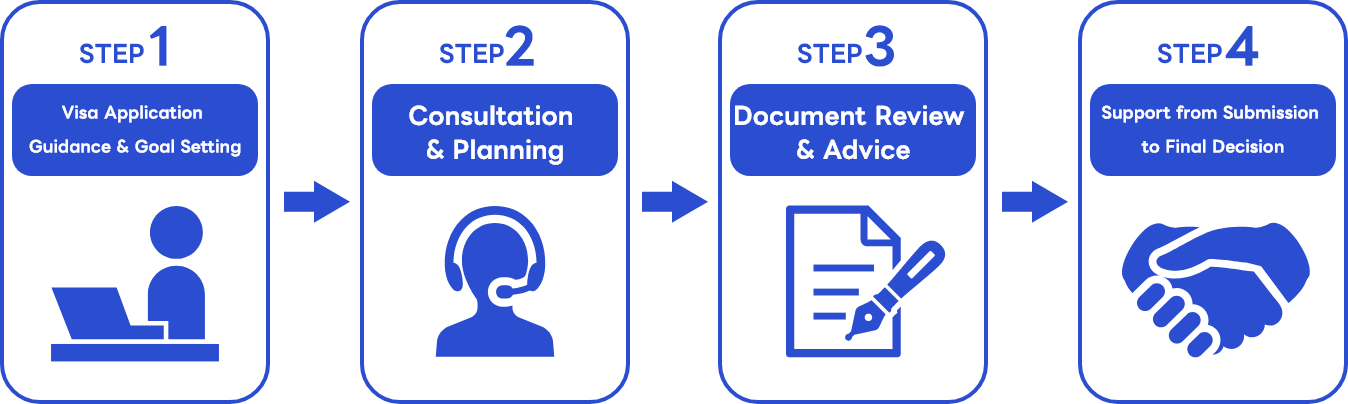
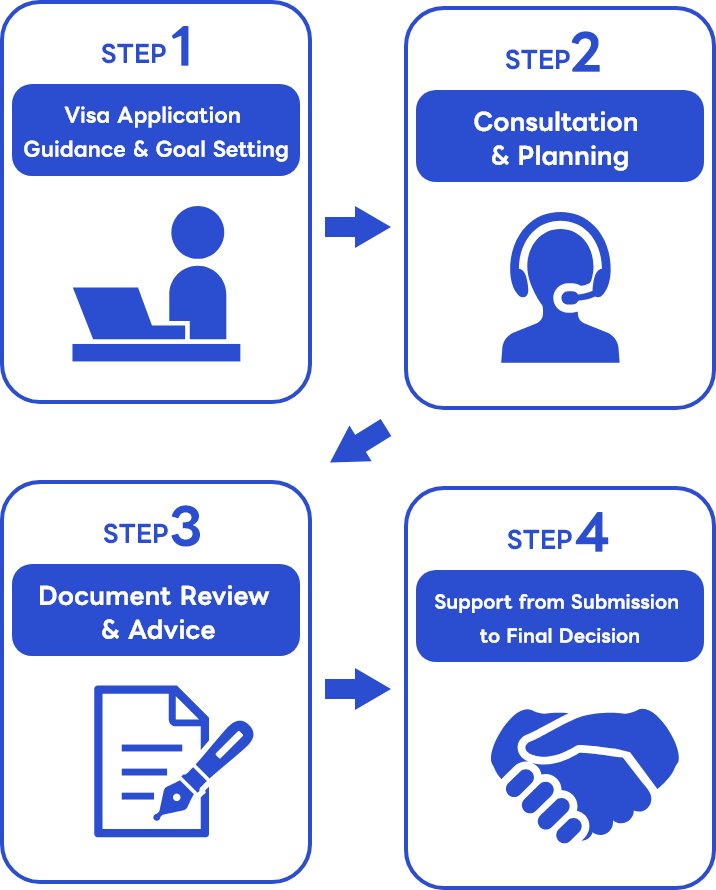
Consulting with an immigration consultant makes the process clearer and much smoother. You’ll feel more confident with document submissions and procedures, significantly reducing the risk of mistakes. Take the first step toward your Canadian dream with the guidance of an expert.
Free Counseling
Tag list
Popular Rankings

2025年10月3日
Express Entry Jobs for Canadian PR: Easy-to-Start Occupations with No Experience
Index1 Eligibility for Category-Based Draws2 Occupations Considered Easier to Enter2.1 Healthcare &a

2025年10月3日
PNP and AIP Program Updates: Growing Restrictions Across Canadian Provinces (As of July 2025)
Index1 Nova Scotia2 Yukon3 New Brunswick4 British Columbia (BC)5 Northwest Territories6 Summary In 2

2025年12月30日
Provincial Nominee Programs to Expand Significantly in 2026
Index1 2026 Nomination Allocation for British Columbia: 5,254 Nominations2 Why Is This Considered Mo

2026年3月18日
Stricter Screening for the Significant Benefit Work Permit (C10), Including the Entrepreneur Work Permit| Policy Changes and Application Strategies
Index1 What is the Significant Benefit (C10) Work Permit?2 Why Have the Rules Been Tightened?3 Key C