Last Updated:September 24, 2026
Supervised by Toko Gould (Immigration Consultant)
What is the Innovation and Tech Talent Pathway?
The Innovation and Tech Talent Pathway is a permanent residence category for highly skilled workers in Saskatchewan’s technology and innovation sectors. It is open to professionals such as engineers, programmers and data scientists who hold a job offer from an employer in the province.
Innovation and Tech Talent Pathway Requirements (Non-Express Entry)
This route is for applicants residing outside Canada, or holding legal status in Canada (refugee claimants are excluded).
Job Offer Requirements
- You must hold a job offer for permanent, full-time employment from an employer in Saskatchewan’s technology or innovation sector.
- The employer must be registered with the SINP and hold a valid Employer Position Assessment (EPA) for the position.
Work Experience
You must have full-time work experience (30 hours or more per week) meeting one of the following conditions.
- If applying from within Saskatchewan: you must currently be working in the province and have a total of at least 6 months (780 hours) of work experience with the employer that obtained the Employer Position Assessment (EPA) (the experience does not need to be continuous). If you have been with your current employer for less than 6 months, you need at least 1 year of work experience in your own occupation within the past 5 years.
- In all other cases (inside or outside Canada): you must have a total of at least 1 year of work experience in your intended high-skilled occupation within the past 5 years.
Professional Licensing Requirements
Depending on the occupation, you may need to meet Saskatchewan’s licensing requirements.
- For NOC 21112 (agricultural representatives, consultants and specialists): proof of licensing from the Saskatchewan Institute of Agrologists (SIA), or documentation showing conditional approval or approval as an articling member, is required.
- For engineering-related occupations (NOC 21310, 21311, 21320, 21322, 21330, 21331, 21332): a letter from the Association of Professional Engineers and Geoscientists of Saskatchewan (APEGS) confirming that your registration as an Engineer-in-Training has been approved, or that Confirmatory Exams have been assigned to you, is required.
Eligible Occupations (NOC List)
The technology- and innovation-related occupations listed below are eligible. A total of 32 occupations is designated.
View the full list of 32 occupations
20012
Computer and information systems managers
21100
Physicists and astronomers
21101
Chemists
21102
Geoscientists and oceanographers
21109
Other professional occupations in physical sciences
21110
Biologists and related scientists
21112
Agricultural representatives, consultants and specialists
21211
Data scientists
21220
Cybersecurity specialists
21221
Business system specialists
21222
Information System specialists
21223
Database analysts and data administrators
21230
Computer systems developers and programmers
21231
Software engineers and designers
21232
Software developers and programmers
21233
Web designers
21234
Web developers and programmers
21310
Electrical and Electronics engineers
21311
Computer engineers (except software engineers and designers)
21320
Chemical engineers
21322
Metallurgical and materials engineers
21330
Mining engineers
21331
Geological engineers
21332
Petroleum engineers
22100
Chemical technologists and technicians
22101
Geological and mineral technologists and technicians
22110
Biological technologists and technicians
22214
Technological occupations in geomatics and meteorology
22220
Computer network and web technicians
22221
User support technicians
22222
Information systems testing technicians
22301
Mechanical engineering technologists and technicians
Language Ability
You must have a score of CLB 5 or higher on an English or French language test designated by IRCC, taken within 2 years before the date of application. Use the table below to check whether your score meets CLB 5.
| Test | Language | Reading | Writing | Listening | Speaking | |
|---|---|---|---|---|---|---|
| CLB 5 | IELTS | English | 4.0 | 5.0 | 5.0 | 5.0 |
| CELPIP | English | 5 | 5 | 5 | 5 | |
| PTE Core | English | 42-50 | 51-59 | 39-49 | 51-58 | |
| TEF (from December 11, 2023) | French | 352-392 | 330-378 | 352-392 | 387-421 | |
| TEF (previous) | French | 350-399 | 350-399 | 350-399 | 350-399 | |
| TCF | French | 375-405 | 6.0 | 369-397 | 6.0 |
Education
You must have completed post-secondary education related to the position offered (a master’s degree, a bachelor’s degree, a degree of 3 years or longer, or a diploma of 2 years or longer from a trade or technical school).
Innovation and Tech Talent Pathway Requirements (Express Entry)
This route is for applicants who are already in IRCC’s Express Entry pool. Federal processing is prioritized, making this a faster route in which permanent residence can normally be expected within 6 months.
Express Entry Requirements
- You must be accepted into IRCC’s Express Entry pool.
- You must hold a valid Express Entry profile number and job seeker validation code.
Job Offer Requirements
- You must hold a job offer for permanent, full-time employment from an employer in Saskatchewan’s technology or innovation sector.
- The employer must be registered with the SINP and hold a valid Employer Position Assessment (EPA) for the position.
Work Experience
You must have full-time work experience meeting one of the following conditions.
- If applying from within Saskatchewan: you must currently be working in the province and have a total of at least 6 months (780 hours) of work experience with the employer that obtained the Employer Position Assessment (EPA). If you have been with your current employer for less than 6 months, you need at least 1 year of work experience in your own occupation within the past 5 years.
- In all other cases (inside or outside Canada): you must have a total of at least 1 year of work experience in your intended high-skilled occupation within the past 5 years.
Professional Licensing Requirements
Depending on the occupation, you may need to meet Saskatchewan’s licensing requirements (as under the Non-Express Entry route, documentation such as SIA or APEGS confirmation is required).
Eligible Occupations (NOC List)
The same 32 occupations as under the Non-Express Entry route are eligible.
View the full list of 32 occupations
20012
Computer and information systems managers
21100
Physicists and astronomers
21101
Chemists
21102
Geoscientists and oceanographers
21109
Other professional occupations in physical sciences
21110
Biologists and related scientists
21112
Agricultural representatives, consultants and specialists
21211
Data scientists
21220
Cybersecurity specialists
21221
Business system specialists
21222
Information System specialists
21223
Database analysts and data administrators
21230
Computer systems developers and programmers
21231
Software engineers and designers
21232
Software developers and programmers
21233
Web designers
21234
Web developers and programmers
21310
Electrical and Electronics engineers
21311
Computer engineers (except software engineers and designers)
21320
Chemical engineers
21322
Metallurgical and materials engineers
21330
Mining engineers
21331
Geological engineers
21332
Petroleum engineers
22100
Chemical technologists and technicians
22101
Geological and mineral technologists and technicians
22110
Biological technologists and technicians
22214
Technological occupations in geomatics and meteorology
22220
Computer network and web technicians
22221
User support technicians
22222
Information systems testing technicians
22301
Mechanical engineering technologists and technicians
Language Ability
You must have a score of CLB 7 or higher on an English or French language test designated by IRCC, taken within 2 years before the date of application. Use the table below to check whether your score meets CLB 7.
| Test | Language | Reading | Writing | Listening | Speaking | |
|---|---|---|---|---|---|---|
| CLB 7 | IELTS | English | 6.0 | 6.0 | 6.0 | 6.0 |
| CELPIP | English | 7 | 7 | 7 | 7 | |
| PTE Core | English | 60-68 | 69-78 | 60-70 | 68-75 | |
| TEF (from December 11, 2023) | French | 453-498 | 449-502 | 453-498 | 512-558 | |
| TEF (previous) | French | 450-499 | 450-499 | 450-499 | 450-499 | |
| TCF | French | 453-498 | 10-11 | 458-502 | 10-11 |
Education
You must have completed post-secondary education related to the position offered (a master’s degree, a bachelor’s degree, a degree of 3 years or longer, or a diploma of 2 years or longer from a trade or technical school).
Who Cannot Apply and When Applications Are Refused
Who Cannot Apply Under This Category
Individuals who have made a refugee claim to the Government of Canada cannot apply under this category.
Cases in Which an Application May Be Refused
Please note that an application may be refused (or closed) in the following cases.
- Not all required documents were submitted with the application.
- You cannot demonstrate an intention to live and work in Saskatchewan.
- The applicant or their representative deliberately provided false information (misrepresentation).
Tech Talent Pathway Application Process
01Obtain a job offer from an employer
Secure a job offer from an employer in Saskatchewan’s technology sector. When looking for openings, you can also use Saskjobs.ca.
02The employer obtains an Employer Position Assessment (EPA)
The employer registers with the SINP and obtains an Employer Position Assessment for the position. This document is mandatory for the application.
03Submit the application through your SINP online account
Create an account on the SINP online portal, upload the required documents as PDFs and submit your application. Applications submitted on or after April 1, 2026 require a CAD 500 fee.
04SINP assessment and provincial nomination
Once the application passes assessment, Saskatchewan issues a provincial nomination. Applications with missing or incomplete documents are returned.
05Apply for permanent residence with IRCC
After receiving the provincial nomination, formally submit your permanent residence application to IRCC. Applications under the Express Entry route are processed on a priority basis.
06IRCC assessment and receipt of the CoPR
IRCC carries out the final assessment, and on completion a Confirmation of Permanent Residence (CoPR) is issued.
07Landing
Applicants outside Canada complete the landing procedure on entry, and applicants inside Canada complete it online, finalizing registration as a permanent resident.
08Receive your PR card
Several months after landing is completed, your PR card is mailed to the address you provided.
Free Consultations and Inquiries
Feel free to get in touch!



Immigration Consultant
Toko Gould
Born in Japan. Worked as a registered dietitian in hospitals and other facilities. Moved to Vancouver, Canada in 2001 on a Working Holiday. Later utilized her professional background to obtain a work visa, then Canadian permanent residency as a skilled worker. Studied Oil and Gas Administration at a college in Alberta, then worked at a U.S.-based oil company. Later studied accounting and transitioned into an accounting role.
Related Columns

Date Posted:September 24, 2026
How to Check Processing Times and Status for Canadian Visa and PR Applications


Date Posted:September 24, 2026
Canada Immigration Policy Trends 2025 | What Fewer Newcomers Mean for PR

Related News
Looking to obtain permanent residence or a visa?
Consult with us now!

Applying for permanent residence or a visa to Canada on your own can be overwhelming due to the large number of required documents, and you may feel uncertain about whether everything is correct. However, if you're serious about immigrating to Canada, we strongly recommend seeking the support of an immigration consultant. There are many pathways to obtaining permanent residence, depending on factors such as your age, occupation, and family status. With the help of an expert, you can ensure that you plan the right approach tailored to your specific situation.
A professional immigration consultant will help solve your concerns
Get a free Counseling now
From immigration planning to application submission,
everything is completed with shiraishi Visa JP Canada
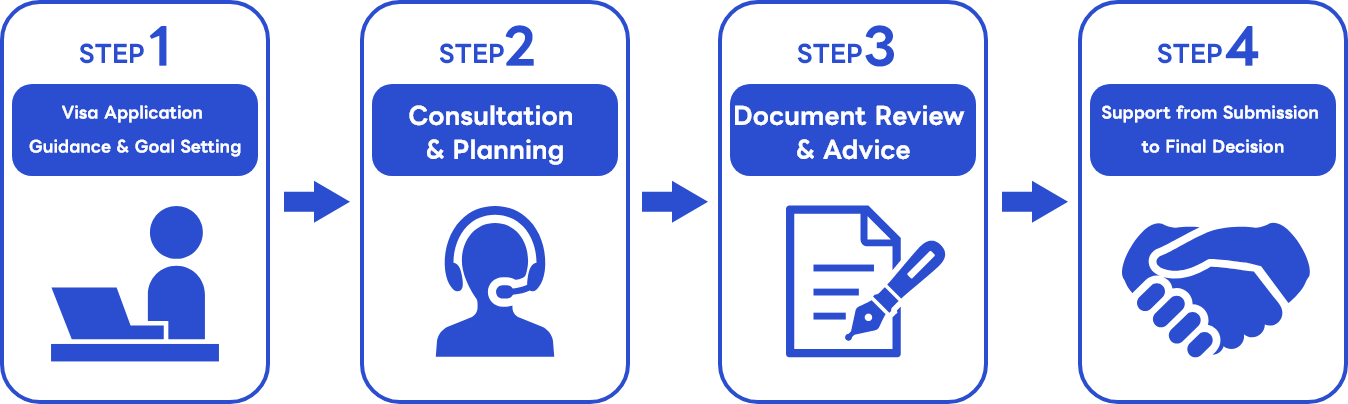
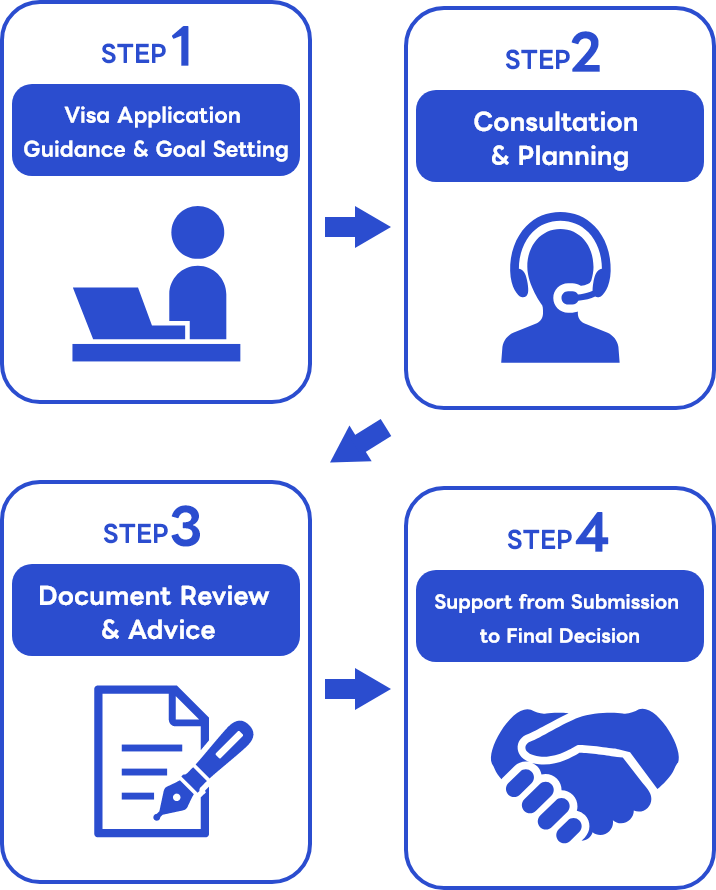
Consulting with an immigration consultant makes the process clearer and much smoother. You’ll feel more confident with document submissions and procedures, significantly reducing the risk of mistakes. Take the first step toward your Canadian dream with the guidance of an expert.