

Canada Immigration Policy 2025 | Key Changes in the First Half
Date Posted:September 24, 2026
Last Updated:September 24, 2026
In the first half of 2025, Immigration, Refugees and Citizenship Canada (IRCC) made several important changes to permanent residence, temporary resident visas, and study and work programs.
There is a lot to know, not only for those aiming to settle permanently in Canada but also for those considering a work permit or studying in Canada.
In this column, we explain the latest immigration policies announced by IRCC in the first half of 2025, clearly organized by area, from the perspective of Shiraishi, a licensed Canadian immigration consultant.
Update (September 2026): This article describes the changes made in the first half of 2025. Some rules and figures may have changed since then. In particular, the 2026–2028 Immigration Levels Plan, announced in November 2025, sets a permanent resident target of 380,000 per year for 2026–2028 and lowers new temporary resident arrivals to 385,000 in 2026. Please check IRCC for the latest information.
Caps Introduced on Permanent Residents and Temporary Residents
Going forward, permanent residence selection (eligibility requirements, assessments, etc.) is expected to place even greater emphasis on “the high-quality talent the Government of Canada needs.”
First, the annual target for permanent residents was lowered, and at the same time, a cap was set for the first time on temporary residents (work permit holders, study permit holders, etc.).
Permanent and Temporary Resident Admissions in 2025
- Cap on permanent resident admissions: approx. 395,000 people (about 90,000 fewer than the previous year)
- Cap on temporary residents: approx. 673,650 new arrivals (about 21% lower than in 2024)
- The government is emphasizing “transitions from temporary to permanent residence” and designing its programs around long-term settlement
In future visa assessments, whether an applicant is “someone who can contribute to Canadian society over the medium to long term” is expected to be given even more weight.
Express Entry: Job Offer Points Eliminated and Priority Occupations Revised
Express Entry, the main route for permanent residence applications, also saw major changes in the first half of 2025.
In particular, the elimination of points for job offers and the revision of occupations for Category-Based Draws have drawn attention.
Changes to Express Entry
- March 2025: Additional points for job offers (up to 50 or 200 points) eliminated
- Education occupations newly added as a priority category (Category-Based Draw)
- Priority occupation list revised
- Many IT occupations removed
- Social services occupations, insurance brokers, cooks and others newly added
Going forward, selection “by occupation and sector” tailored to Canada’s domestic labour market is expected to be strengthened.
New Permanent Residence Routes Focused on Regions and Sectors
In 2025, the following pilot programs were newly created or restructured.
Main New or Restructured Pilot Programs
- Rural Community Immigration Pilot
A new program aimed at encouraging settlement in smaller communities - Francophone Community Immigration Pilot
Strengthening French-speaking communities outside Quebec - Home Care Worker Immigration Pilots (child care and home support)
Attracting strong interest, with spots filling up within hours of applications opening
Major Impact on Provincial Nominee Programs (PNP)
The number of spots in the Provincial Nominee Programs has been reduced across the board since 2024, and depending on the province, some categories have been paused, requirements have been raised, or application methods have changed.
Main PNP Developments by Province
- Overall allocations cut by about half
- British Columbia has almost stopped accepting new applications
- Ontario and Alberta have made frequent changes to targeted occupations and score requirements
Study Permit Changes and Tighter Restrictions
2025 was also a year of tightening for international study. In particular, the cap on the number of study permits and new rules for changing schools have affected many international students.
Cap on the Number of Study Permits
- Cap on study permit applications processed: approx. 550,000 (January–December 2025)
- Number of permits issued: 437,000 (10% fewer than the previous year)
- Once the cap is reached, further applications will not be processed and application fees will be refunded.
A New Study Permit Is Required to Change Schools
Since May 1, 2025, international students who change schools must obtain a new study permit.
Before that, students could change schools simply by notifying the change through their online account.
Changes to PAL (Provincial Attestation Letter) Requirements
Since January 24, 2025, international students in graduate programs (master’s and doctoral) must also submit a PAL (Provincial Attestation Letter). On the other hand, exchange students no longer need a PAL.
The cap on study permit applications is managed based on the PAL allocations given to each province.
Changes to Work Permits and Open Work Permits
Changes have also been made to the eligibility requirements for various work permits.
Post-Graduation Work Permit (PGWP)
- March 2025: Graduates of college bachelor’s degree programs also became eligible for the PGWP
- The revision of eligible fields of study, originally planned for June 2025, was postponed to take effect in early 2026
• 119 fields of study newly added
• 178 fields of study removed
Please check the eligible fields of study for the PGWP here (official Immigration, Refugees and Citizenship Canada (IRCC) website).
Spousal Open Work Permit (SOWP)
- The spouse of a student can obtain a spousal open work permit only if the student’s program is one of the following
• Doctoral program (PhD)
• Master’s program of 16 months or longer (Master)
• Professional degree programs at a university, such as medicine, engineering or law (Bachelor) - Spouses of foreign workers are eligible only in the following cases
• Occupations in TEER 0 or 1
• Some occupations in TEER 2 or 3
• The principal foreign national (work permit holder) must have at least 16 months remaining on their work permit
The Low-Wage Stream of LMIA Work Permits Remains Restricted
The “restrictions on LMIA applications based on regional unemployment rates” introduced in September 2024 have continued in 2025. In regions where the unemployment rate exceeds 6%, it is still not possible to obtain an LMIA under the Low-Wage Stream.
Good News for Japanese Citizens: Working Holiday Now Possible Twice!
Since April 2025, Japanese citizens can obtain a Canadian Working Holiday visa up to two times (12 months each). This has expanded opportunities to work and live in Canada.
Watch for Shifts in Immigration Policy Following the Change in Government
With Mark Carney taking office as the new Prime Minister in March 2025, changes can also be seen in the overall direction of immigration policy. There is a tendency to emphasize keeping admission numbers down and streamlining the routes from temporary residence to permanent residence.
The Future of Canadian Immigration Policy and Key Points for Preparation
Canada’s immigration policy in 2025 shows a clear shift “from quantity to quality.” Selection criteria are being tightened, and admissions are increasingly geared to the labour needs of each region and industry. The system is evolving into a “sustainable system” that meets regional and sector-specific needs while curbing short-term population growth. The following three points are important for your immigration strategy going forward.
- With admissions capped, “applying early” and “accurately understanding the requirements” are becoming more important than ever
- Planning ahead to deal with stricter requirements for study permits, work permits and spousal permits
- A flexible strategy that makes good use of region- and sector-specific permanent residence routes to lead to long-term stay or permanent residence
Policies are expected to continue to be updated step by step. Prepare based on reliable sources and keep an eye on each update. If you are considering moving to Canada, early preparation and checking the latest information are more important than ever.
Free Consultations and Inquiries
Feel free to get in touch!



Immigration Consultant
Yuki Shiraishi
Born in Japan. After earning a Bachelor's degree from the University of Michigan, she worked for six years in New York as a marketing consultant at a major travel agency, while also studying in an MBA program at the City University of New York. After returning to Japan, she managed the visa center of the same travel company, handling various international visa applications for foreign clients.
Related Columns

Date Posted:September 24, 2026
How to Check Processing Times and Status for Canadian Visa and PR Applications


Date Posted:September 24, 2026
Canada Immigration Policy Trends 2025 | What Fewer Newcomers Mean for PR
Related News
Looking to obtain permanent residence or a visa?
Consult with us now!

Applying for permanent residence or a visa to Canada on your own can be overwhelming due to the large number of required documents, and you may feel uncertain about whether everything is correct. However, if you're serious about immigrating to Canada, we strongly recommend seeking the support of an immigration consultant. There are many pathways to obtaining permanent residence, depending on factors such as your age, occupation, and family status. With the help of an expert, you can ensure that you plan the right approach tailored to your specific situation.
A professional immigration consultant will help solve your concerns
Get a free Counseling now
From immigration planning to application submission,
everything is completed with shiraishi Visa JP Canada
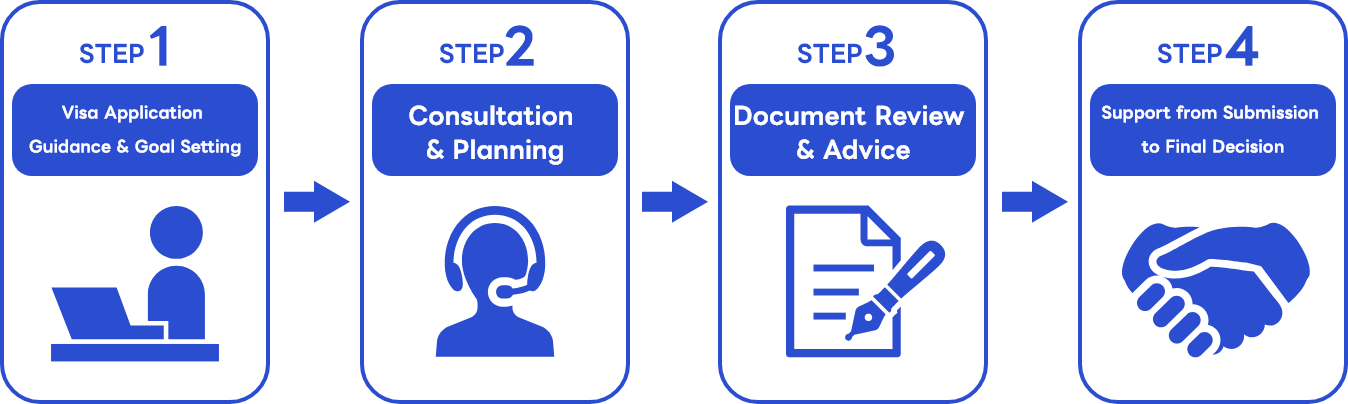
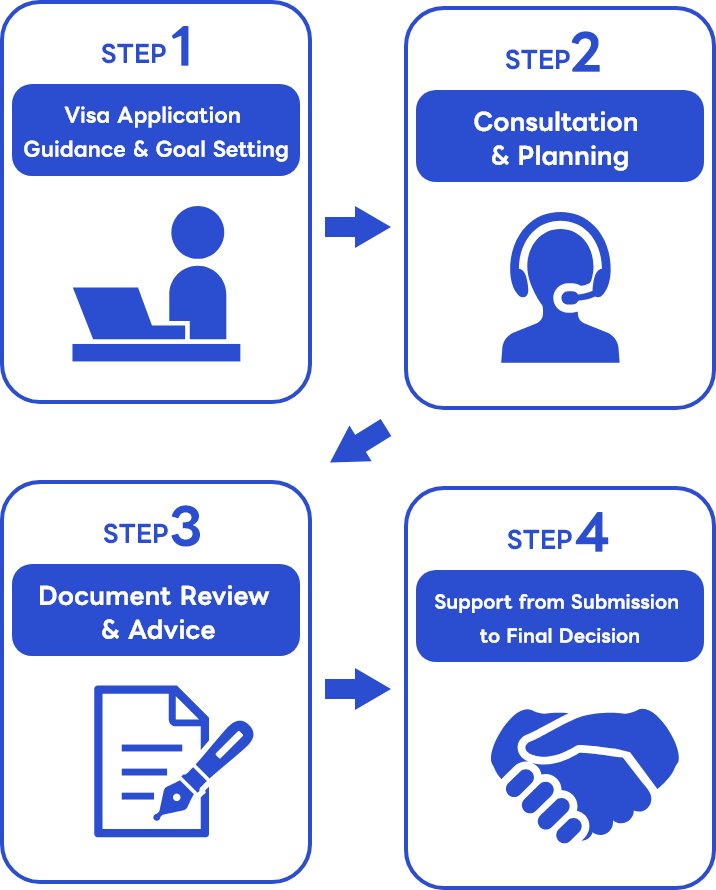
Consulting with an immigration consultant makes the process clearer and much smoother. You’ll feel more confident with document submissions and procedures, significantly reducing the risk of mistakes. Take the first step toward your Canadian dream with the guidance of an expert.
Tag list
Popular Rankings

September 24, 2026
Express Entry Jobs for Canadian PR: Easy-to-Start Occupations with No Experience
If you are aiming to fast-track your path to Canadian permanent residence, Express Entry’s category-

September 24, 2026
Provincial Nominee Programs to Expand Significantly in 2026
In December 2025, the Government of British Columbia announced its 2026 nomination allocation under

September 24, 2026
Stricter Screening for the Significant Benefit Work Permit (C10), Including the Entrepreneur Work Permit| Policy Changes and Application Strategies
On February 24, 2026, IRCC updated its guidelines for the Significant Benefit (C10) category, one of

September 24, 2026
PNP and AIP Program Updates: Growing Restrictions Across Canadian Provinces (As of July 2025)
In 2025, several Canadian provinces and territories have introduced new limits and priority criteria