【2027–2029】Immigration Levels Plan Targets 380,000 Permanent Residents a Year, With a Separate 2027 Measure for Up to 200,000 People Already in Canada
Date Posted:
Last Updated:
Canada maintains its target of 380,000 new permanent residents per year and announces a separate 2027 measure for up to 200,000 people already living in Canada.
Immigration, Refugees and Citizenship Canada (IRCC) released its 2027–2029 Immigration Levels Plan on November 5, 2026.
The plan maintains Canada’s annual permanent resident admissions target at 380,000 for all three years.
A separate, time-limited measure will help up to 200,000 people already living in Canada become permanent residents in 2027.
What Is Canada’s Immigration Levels Plan?
Canada’s Immigration Levels Plan is a three-year plan that the Government of Canada publishes every year. It sets targets for the following year and projections for the two years after that. In addition to permanent residents, it also sets targets for the number of new international students and workers entering Canada.
How the new targets compare with 2026
New Temporary Resident Arrivals
The target for new temporary resident arrivals falls from 385,000 in 2026 to 370,000 per year from 2027 through 2029. The annual target includes 220,000 workers and 150,000 international students. Among new workers, the target for the International Mobility Program (IMP), which does not require an LMIA, stays at 170,000 a year, the same as in 2026. The target for the Temporary Foreign Worker Program (TFWP), which requires an LMIA, falls from 60,000 in 2026 to 50,000 a year. The previous plan had already set a target of 370,000 for both 2027 and 2028.
Unit: people
| Category | 2026 target (previous plan) | 2027 target | 2028 target | 2029 target |
|---|---|---|---|---|
| Total temporary residents | 385,000 | 370,000 | 370,000 | 370,000 |
| Workers (IMP) | 170,000 | 170,000 | 170,000 | 170,000 |
| Workers (TFWP) | 60,000 | 50,000 | 50,000 | 50,000 |
| International students | 155,000 | 150,000 | 150,000 | 150,000 |
Breakdown of Permanent Resident Targets: Economic, Family, Refugees and Other
Economic immigration accounts for 244,700 planned permanent resident admissions per year, or 64.4% of the total. Permanent resident admissions include people who are already working or studying in Canada when they become permanent residents.
By category, family class admissions fall from 84,000 in 2026 to 81,000 a year, and humanitarian and other admissions fall from 6,900 to 5,000. Refugees and protected persons remain at 49,300 a year.
Unit: people
| Category | 2026 target (previous plan) | 2027–2029 target (each year) |
|---|---|---|
| Economic | 239,800 | 244,700 |
| Family | 84,000 | 81,000 |
| Refugees and protected persons | 49,300 | 49,300 |
| Humanitarian and compassionate and other | 6,900 | 5,000 |
| Total | 380,000 | 380,000 |
Targets for Major Economic Immigration Programs
Unit: people
| Program | 2026 target (previous plan) | 2027 target | 2028 target | 2029 target |
|---|---|---|---|---|
| Federal High Skilled (CEC, FSW, FST) | 109,000 | 100,000 | 100,000 | 100,000 |
| Provincial Nominee Program (PNP) | 91,500 | 95,000 | 95,000 | 95,000 |
| Atlantic Immigration Program (AIP) | 4,000 | 6,000 | 6,000 | 6,000 |
| Rural Community Immigration Program (RCIP) | No separate target | 5,500 | 6,000 | 6,500 |
The economic total also includes federal business immigration, other federal economic pilots and Quebec’s economic immigration, which are not listed in the table. The previous plan reported RCIP together with other federal economic pilots. The 2028 and 2029 targets are subject to annual confirmation or adjustment.
Compared with the 2026 targets, the 2027 plan provides for 4,900 more economic admissions overall. The Federal High Skilled target falls by 9,000, while the PNP and AIP targets rise by 3,500 and 2,000 respectively.
The previous plan had projected 111,000 Federal High Skilled admissions in each of 2027 and 2028. The new plan reduces those targets by 11,000 per year, to 100,000. This category combines admissions under the Canadian Experience Class, the Federal Skilled Worker Program and the Federal Skilled Trades Program.
IRCC also announced that it plans to make the Rural Community Immigration Pilot a permanent program to address labour shortages in rural communities. The target share of French-speaking permanent resident admissions outside Quebec rises from 9.5% in 2027 to 10.5% in 2028 and 12% in 2029.
What does “up to 622,000” mean for 2027?
The 2027 plan sets a target of 380,000 permanent resident admissions within a planning range of 352,500 to 422,000. CIC News arrived at its figure of 622,000 by adding the top of that range, 422,000, to the maximum of 200,000 under the separate 2027 measure. The combined figure represents what the total would be if both reached their upper limits.
IRCC’s supplementary tables · CIC News coverage
The separate 2027 measure for people already in Canada
Up to 100,000 workers and their family members
The federal government plans to give provinces and territories additional PNP nomination spaces so they can nominate workers who meet local labour market needs. Provinces and territories will also be able to identify candidates who have already applied for permanent residence through selected federal programs. These include the AIP and certain programs that are closed to new applications, such as the Start-up Visa Program, the Self-Employed Persons Program, the Agri-Food Pilot and home care worker programs.
The federal government’s 2026 budget also refers to workers who qualify for Express Entry. As of November 5, 2026, the government had yet to specify how it would select candidates through Express Entry, how many additional nomination spaces British Columbia or other provinces and territories would receive, which occupations or work experience would qualify, or whether individuals would need to apply separately.
This part of the measure will help process outstanding applications under the Hong Kong permanent residence pathways and the Ukraine Family Reunification Pathway. It will also help finalize cases in which applicants have already been found eligible on humanitarian and compassionate grounds. IRCC will use these additional spaces to process applications from spouses, common-law partners and dependent children of Canadian citizens and permanent residents who are already living in Canada.
The separate In-Canada Workers Initiative, announced in May 2026, will continue through 2027. It aims to accelerate the transition to permanent residence for up to 33,000 work permit holders.
Shiraishi Visa JP Canada Can Help You Become a Permanent Resident
In this levels plan, the overall permanent resident target stays the same, while federal skilled immigration decreases and the PNP and regional programs increase. Details on who will be eligible for the 2027 special measure and how they will be selected are expected to be announced later. Shiraishi Visa JP Canada provides guidance on the path to permanent residence that best fits your background and work situation, based on the latest rules. If you would like to know how these changes affect you, please feel free to contact us.
This article is a summary prepared by Shiraishi Visa JP Canada based on official information from the Government of Canada, organized for clarity and ease of understanding.
Source: Building a stronger Canada through a well-managed, predictable immigration system
Source: Supplementary Information for the 2027-2029 Immigration Levels Plan
Source: Supplementary Information for the 2026-2028 Immigration Levels Plan
Source: Budget 2026 Chapter 3: A more affordable life
Free Consultations and Inquiries
Feel free to get in touch!



Immigration Consultant
Yuki Shiraishi
Born in Japan. After earning a Bachelor's degree from the University of Michigan, she worked for six years in New York as a marketing consultant at a major travel agency, while also studying in an MBA program at the City University of New York. After returning to Japan, she managed the visa center of the same travel company, handling various international visa applications for foreign clients.
Related Columns

Date Posted:September 24, 2026
How to Check Processing Times and Status for Canadian Visa and PR Applications


Date Posted:September 24, 2026
Canada Immigration Policy Trends 2025 | What Fewer Newcomers Mean for PR
Related News
Looking to obtain permanent residence or a visa?
Consult with us now!

Applying for permanent residence or a visa to Canada on your own can be overwhelming due to the large number of required documents, and you may feel uncertain about whether everything is correct. However, if you're serious about immigrating to Canada, we strongly recommend seeking the support of an immigration consultant. There are many pathways to obtaining permanent residence, depending on factors such as your age, occupation, and family status. With the help of an expert, you can ensure that you plan the right approach tailored to your specific situation.
A professional immigration consultant will help solve your concerns
Get a free Counseling now
From immigration planning to application submission,
everything is completed with shiraishi Visa JP Canada
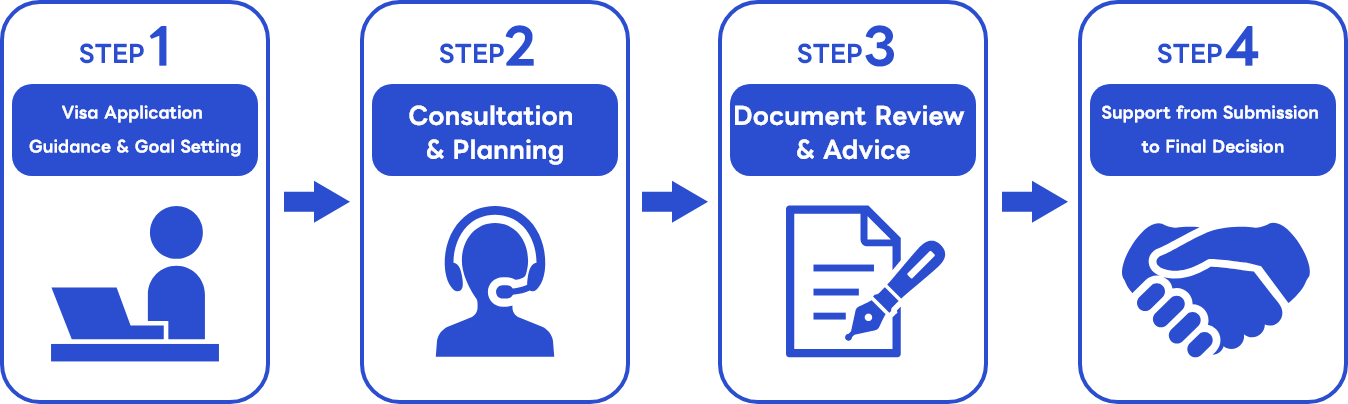
Consulting with an immigration consultant makes the process clearer and much smoother. You’ll feel more confident with document submissions and procedures, significantly reducing the risk of mistakes. Take the first step toward your Canadian dream with the guidance of an expert.