Last Updated:September 24, 2026
Supervised by Toko Gould (Immigration Consultant)
What is Saskatchewan Work Experience: Students?
Saskatchewan Work Experience: Students is a sub-category for international students who have graduated from a Designated Learning Institution (DLI) in Saskatchewan and have work experience in the province. From 2026, sector-based nomination has been introduced, and a dedicated allocation of 750 nominations is set aside for graduates working in priority sectors such as health care, agriculture and technology. Part-time work and Co-op experience gained while studying can also be counted towards the required hours, which makes it easy to move smoothly from graduation to a permanent residence application.
Sector-based nomination in 2026
From 2026, nominations are allocated differently depending on the sector of employment. Please check how the allocation for graduates is managed.
Priority sectors (750 nominations reserved for graduates)
Health care, agriculture, skilled trades, energy, mining, manufacturing and technology. A dedicated priority allocation is set aside for Saskatchewan graduates holding a job offer in these sectors. There is also no restriction on when you may apply.
Capped sectors
Accommodation and food services, trucking, and retail. These sectors have an annual cap, and an employer’s Employer Position Assessment (EPA) application can only be made during a specific intake window in odd-numbered months. In addition, six months or less must remain on the work permit.
Requirements for the Students sub-category
Work permit requirements
You must hold a valid Post-Graduation Work Permit (PGWP) issued by Immigration, Refugees and Citizenship Canada, or an open work permit issued under CUAET.
Work experience
You must have a total of at least 6 months (780 hours) of paid work experience in Saskatchewan related to your field of study. The following experience can also be combined towards this total.
- On-campus and off-campus employment
- Employment through a Co-op program
- A graduate fellowship that can be verified by the educational institution
- Employment after obtaining a Post-Graduation Work Permit
Job offer requirements
You must have a job offer from an approved Saskatchewan employer for permanent, full-time employment that is related to your field of study and requires post-secondary education, and you must hold a valid Employer Position Assessment (EPA). The occupation requirements are as follows.
- The occupation must be at skill level 0, 1, 2 or 3.
- Alternatively, it must be a Designated Trade.
*If you will be working as a food and beverage server (NOC 65200), you must apply under the Existing Work Permit sub-category rather than this one.
Occupation and skill level (TEER)
Skill levels are defined as follows within the National Occupational Classification (NOC), Canada’s occupational classification system.
| Skill level 0 | Business owners, company executives and management occupations |
|---|---|
| Skill level 1 | Professional occupations that usually require a university or graduate degree |
| Skill level 2 | Technical occupations that usually require a college diploma or two or more years of apprenticeship training, and supervisory occupations |
| Skill level 3 | Intermediate technical occupations that usually require a college diploma, less than two years of apprenticeship training, or more than six months of on-the-job training |
| Skill level 4 | Occupations that usually require a high school diploma or several weeks of training for the specific occupation |
| Skill level 5 | Occupations such as light labour that usually require only a short demonstration and no formal education |
Language ability
A score of CLB 4 or higher is required only where the occupation in your job offer is a Designated Trade and falls under skill level 4 or 5. Please use the table below to check whether your score corresponds to CLB 4.
| Test | Language | Reading | Writing | Listening | Speaking | |
|---|---|---|---|---|---|---|
| CLB4 | IELTS | English | 3.5 | 4.0 | 4.5 | 4.0 |
| CELPIP | English | 4 | 4 | 4 | 4 | |
| PTE Core | English | 33-41 | 41-50 | 28-38 | 42-50 | |
| TEF (from 2023/12/11) | French | 306-351 | 268-329 | 306-351 | 328-386 | |
| TEF (before) | French | 300-349 | 300-349 | 300-349 | 300-349 | |
| TCF | French | 342-374 | 4-5 | 331-368 | 4-5 |
Education
You must have graduated from a Designated Learning Institution (DLI) in Saskatchewan and obtained a certificate, diploma or degree.
Who cannot apply, and cases that are refused
Those who cannot apply under this sub-category
- Those who have made a refugee claim to the Government of Canada.
- International students who have not yet completed their program of study.
- Those who graduated from an institution outside Saskatchewan and obtained a Post-Graduation Work Permit based on that education.
Cases in which an application may be refused
- Where not all required documents are submitted with the application.
- Where you cannot demonstrate your intention to live and work in Saskatchewan.
- Where there is any misrepresentation in the application or supporting documents.
Application process for Students
01Complete your program and graduate
Complete your studies at a DLI in Saskatchewan and obtain your graduation certificate and transcripts.
02Build up six months of work experience
Complete a total of six months or more of practical experience related to your field of study, through part-time work in the province, a Co-op placement, or employment after graduation.
03Your employer obtains an Employer Position Assessment (EPA)
Your employer applies to the SINP and obtains approval for the position. If you work in a capped sector, the application can only be made during a specific intake window.
04Submit your application through your SINP online account
Upload the required documents (proof of graduation, proof of employment, EPA, etc.) as PDFs in the SINP online system and submit your application.
05SINP assessment and receipt of the provincial nomination
If your application is approved, Saskatchewan issues a provincial nomination.
06Apply for permanent residence to Immigration, Refugees and Citizenship Canada
After obtaining the provincial nomination, formally submit your permanent residence application to Immigration, Refugees and Citizenship Canada (IRCC).
07IRCC assessment and receipt of the CoPR
IRCC carries out the final assessment, and on completion issues the Confirmation of Permanent Residence (CoPR).
08Receive your PR card
Your PR card will arrive at your designated address within a few months of landing.
Free Consultations and Inquiries
Feel free to get in touch!



Immigration Consultant
Toko Gould
Born in Japan. Worked as a registered dietitian in hospitals and other facilities. Moved to Vancouver, Canada in 2001 on a Working Holiday. Later utilized her professional background to obtain a work visa, then Canadian permanent residency as a skilled worker. Studied Oil and Gas Administration at a college in Alberta, then worked at a U.S.-based oil company. Later studied accounting and transitioned into an accounting role.
Related Columns

Date Posted:September 24, 2026
How to Check Processing Times and Status for Canadian Visa and PR Applications


Date Posted:September 24, 2026
Canada Immigration Policy Trends 2025 | What Fewer Newcomers Mean for PR
Related News
Looking to obtain permanent residence or a visa?
Consult with us now!

Applying for permanent residence or a visa to Canada on your own can be overwhelming due to the large number of required documents, and you may feel uncertain about whether everything is correct. However, if you're serious about immigrating to Canada, we strongly recommend seeking the support of an immigration consultant. There are many pathways to obtaining permanent residence, depending on factors such as your age, occupation, and family status. With the help of an expert, you can ensure that you plan the right approach tailored to your specific situation.
A professional immigration consultant will help solve your concerns
Get a free Counseling now
From immigration planning to application submission,
everything is completed with shiraishi Visa JP Canada
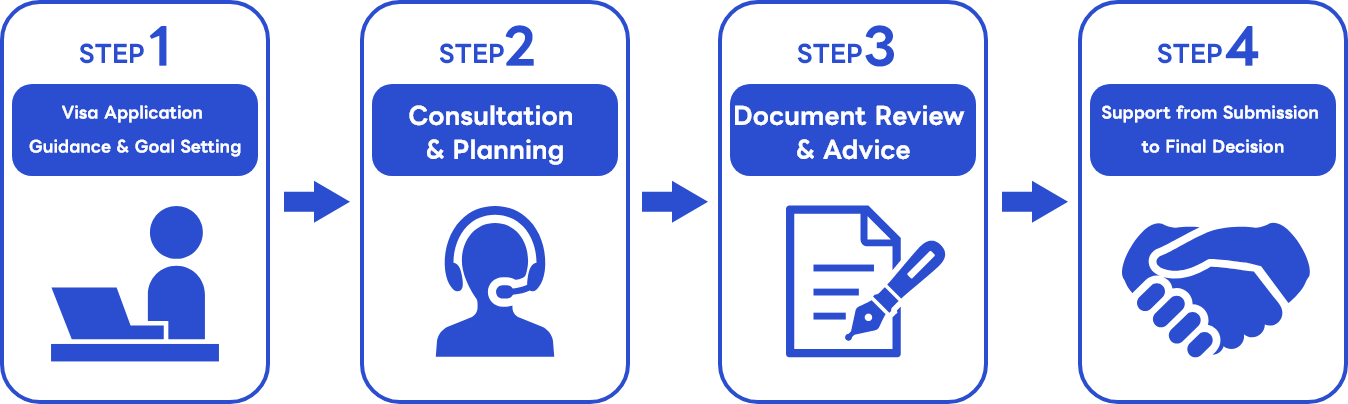
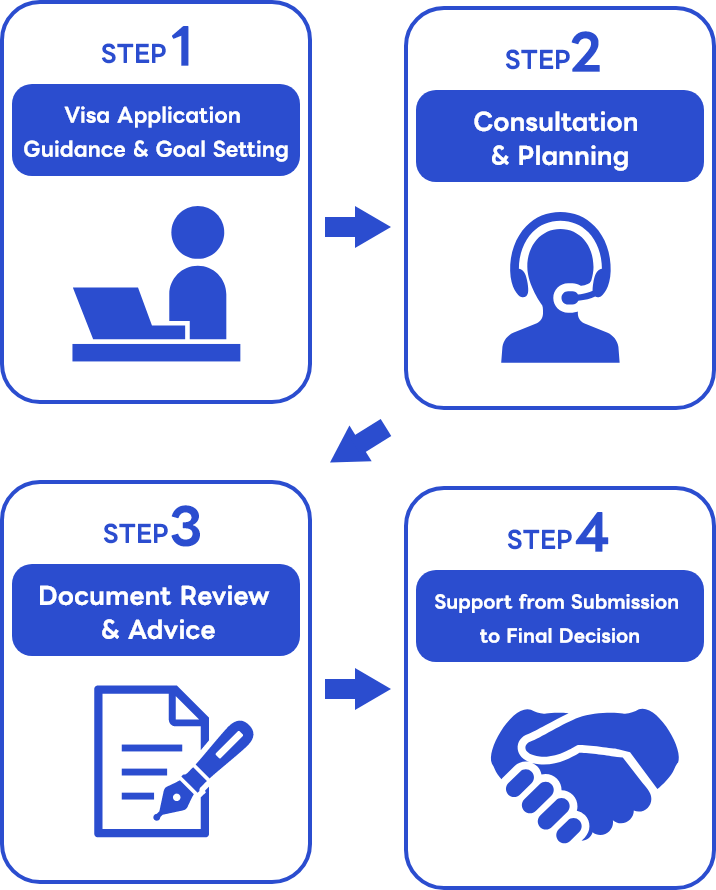
Consulting with an immigration consultant makes the process clearer and much smoother. You’ll feel more confident with document submissions and procedures, significantly reducing the risk of mistakes. Take the first step toward your Canadian dream with the guidance of an expert.