

Canada Immigration Ministers Meeting Report and Provincial Labour Needs
Date Posted:July 2, 2026
Last Updated:September 24, 2026

On June 23, 2026, a meeting was held between the Canadian federal government and the provincial and territorial ministers responsible for immigration.
A major theme was balancing a sustainable immigration system with securing the workforce regional economies need.
Based on the announcements, we explain the future direction of Canadian immigration policy and the specific talent each province is seeking.
Federal and Provincial Immigration Ministers Meeting Agenda
This meeting brought together the Canadian federal government and provincial and territorial immigration ministers to discuss future immigration policies. The main agenda items included:
- Immigration levels plans for 2027 and beyond
- Responses to labour shortages
- Regional community absorption capacity
- The role of Provincial Nominee Programs (PNP)
This reaffirmed the stance of aiming for sustainable immigration policies tailored to regional conditions rather than simply increasing overall immigration numbers.
Transition to Sustainable Immigration Levels
The Canadian government has been adjusting immigration levels since 2024. The background to this includes the following issues:
- Housing supply shortages
- Pressure on healthcare services
- Delays in infrastructure development
- Rising cost of living
The term Sustainable Immigration was repeatedly used during this meeting, indicating that the policy of capping overall immigration numbers is expected to continue.
Temporary Resident Population Reduction Target
The federal government has already set a target to reduce the number of temporary residents, including international students, work permit holders, and other temporary residents, to less than 5 percent of the Canadian population by the end of 2027.
As a result, the following restrictions are likely to continue:
- Caps on international student admissions
- Restrictions on spousal open work permits
- Revisions to certain work permit programs
The traditional strategy of coming to Canada first and aiming for permanent residence later is becoming much more difficult than before.
Strategic Importance of Provincial Nominee Programs
On the other hand, a very interesting point from this meeting was that each province strongly emphasized the importance of the PNP.
The PNP is a system where provinces select the talent needed for their own labour markets and recommend them to IRCC as permanent residence candidates. Even as the federal government outlines a policy to cap overall immigration, there is a shared recognition that the talent supporting regional economies remains essential. In fact, many provinces continue to experience severe labour shortages.
Alignment with Provincial Labour Needs
What emerges from this meeting is that matching the specific talent needs of a province will become more important than ever, going beyond just English proficiency and educational background.
In future Express Entry and PNP selections, alignment with priority occupations in each province may be given even greater weight.
Priority Occupations and Industries by Province
Economic structures and demographics vary by province. Therefore, the required talent also differs significantly from one province to another.
Canada Provincial and Territorial Priority Target Overview
| Province or Territory | High Demand Priority Occupations and Industries | Characteristics and Key Points |
| British Columbia | Healthcare professionals, early childhood educators, construction related roles | Significantly narrowing target candidates. Construction for housing shortages and healthcare for aging populations are top priorities. |
| Alberta | Construction, energy sector, skilled trades, transportation | Reflects an economy driven by the oil and natural gas industry, with strong demand for skilled trades supporting field operations. |
| Saskatchewan | Agriculture, food processing, healthcare, skilled trades | Chronic labour shortages. The provincial government has historically emphasized long term settlement in the region. |
| Manitoba | Manufacturing, healthcare, transportation, skilled trades | Strong connections with local employers and established work experience are highly valued. |
| Ontario | Healthcare, skilled trades, engineers, specific IT sectors | As the most populous province, shortages in healthcare and trades are severe. Note that competition for general office work and administrative roles is intensifying. |
| Atlantic Provinces (NS, NB, PEI, NL) | Healthcare, early childhood education, caregiving, hospitality, service industries | Strong sense of crisis regarding population decline, leading to a broader recruitment of talent across various sectors compared to other provinces. |
| Northern Territories | Healthcare professionals, construction, heavy equipment operators, skilled trades | Due to small population sizes, specific sector shortages directly impact the region. High reliance on field based specialized professions. |
British Columbia
BC has significantly narrowed its PNP selection targets in recent years. While the population continues to grow, housing shortages have become severe, making securing construction workers a top priority for the provincial government. Additionally, due to an aging population, the demand in the healthcare sector is extremely high. The prioritized sectors are:
- Healthcare professionals
- Early childhood education
- Construction related roles
Alberta
Alberta continues to see high demand in the following areas. With an economic structure centered on the oil and natural gas industry, the province has a relatively strong demand for skilled trades and field workers.
- Construction
- Energy sector
- Skilled trades
- Transportation
Saskatchewan
Saskatchewan has a small population and faces chronic labour shortages. The provincial government has traditionally emphasized long term settlement in the region.
- Agriculture
- Food processing
- Healthcare
- Skilled trades
Manitoba
Manitoba tends to have high demand in the following areas. It is also known as a province that highly values ties with local employers.
- Manufacturing
- Healthcare
- Transportation
- Skilled trades
Ontario
Ontario is Canada’s most populous province, but it also faces severe labour shortages. However, competition for general office work and administrative roles has become extremely fierce.
- Healthcare
- Skilled trades
- Engineers
- Specific IT sectors (Note: This does not apply to all IT roles)
Atlantic Provinces
In the four provinces of Nova Scotia, New Brunswick, Prince Edward Island, and Newfoundland and Labrador, population decline is a major challenge. Therefore, they are looking to secure talent across a relatively broad range of sectors.
- Healthcare
- Early childhood education
- Caregiving
- Hospitality
- Service industries
Northern Territories
The territories continue to face shortages in the following areas. Because their population size is small, a shortage of talent in a specific sector tends to have a massive impact on the entire region.
- Healthcare professionals
- Construction
- Heavy equipment operators
- Skilled trades
Conclusion on Strict Policies and Targeted Opportunities
What is clear from this Immigration Ministers meeting is the shift from an era of simply increasing immigration numbers to an era of strategically accepting the necessary talent.
While regulations on international students and temporary residents are tightening, opportunities for permanent residence remain available for occupations and industries needed by each province. For future Canadian immigration, how you can contribute to the regional community and labour market in a specific province and industry will be more important than ever.
The needs of each province can also change year by year. It is common for an occupation that was in high demand a few years ago to have lower demand now. For those aiming for permanent residence, it will be crucial to build a long term plan while considering how your work history and education align with the talent profiles sought by each province.
Free Consultation Tell Us About Your Current Situation and Goals
If you are wondering which province needs your current profession, or if you are struggling with whether to relocate to a more advantageous province before regulations tighten, please feel free to consult our professionals regarding your future stay and permanent residence plans in Canada.
At Shiraishi Visa JP Canada, our government authorized immigration consultants analyze the latest federal and provincial trends to propose the optimal route tailored to your work history and goals.
- Assess which provincial labour market best matches your professional background
- Determine the strategic timing for relocating or updating your current visa status
- Navigate the increasingly strict immigration policies with accurate legal guidance
Contact us today for a free assessment or individual counseling to check your visa application possibilities.
Free Consultations and Inquiries
Feel free to get in touch!



Immigration Consultant
Yuki Shiraishi
Born in Japan. After earning a Bachelor's degree from the University of Michigan, she worked for six years in New York as a marketing consultant at a major travel agency, while also studying in an MBA program at the City University of New York. After returning to Japan, she managed the visa center of the same travel company, handling various international visa applications for foreign clients.
Related Columns

Date Posted:September 24, 2026
How to Check Processing Times and Status for Canadian Visa and PR Applications


Date Posted:September 24, 2026
Canada Immigration Policy Trends 2025 | What Fewer Newcomers Mean for PR

Related News
Looking to obtain permanent residence or a visa?
Consult with us now!

Applying for permanent residence or a visa to Canada on your own can be overwhelming due to the large number of required documents, and you may feel uncertain about whether everything is correct. However, if you're serious about immigrating to Canada, we strongly recommend seeking the support of an immigration consultant. There are many pathways to obtaining permanent residence, depending on factors such as your age, occupation, and family status. With the help of an expert, you can ensure that you plan the right approach tailored to your specific situation.
A professional immigration consultant will help solve your concerns
Get a free Counseling now
From immigration planning to application submission,
everything is completed with shiraishi Visa JP Canada
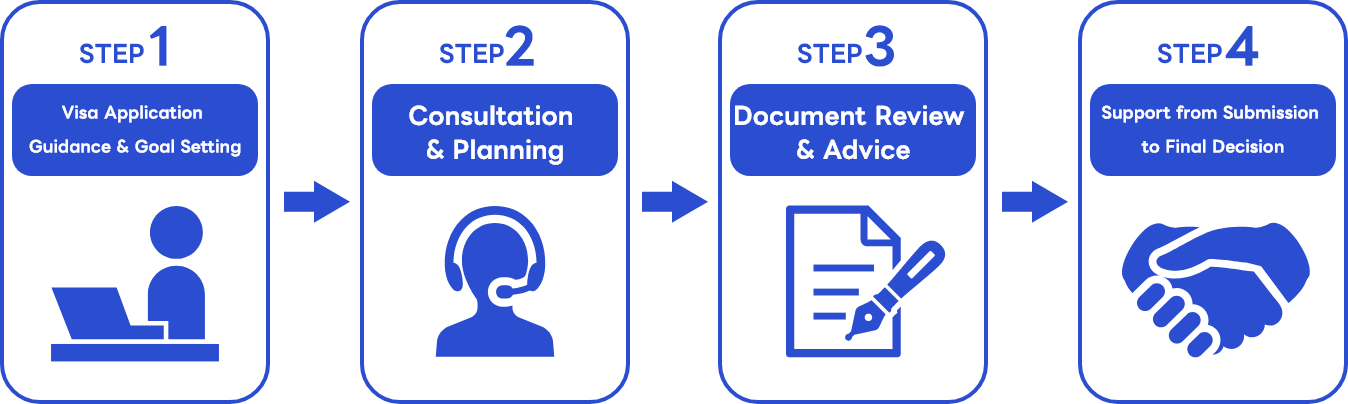
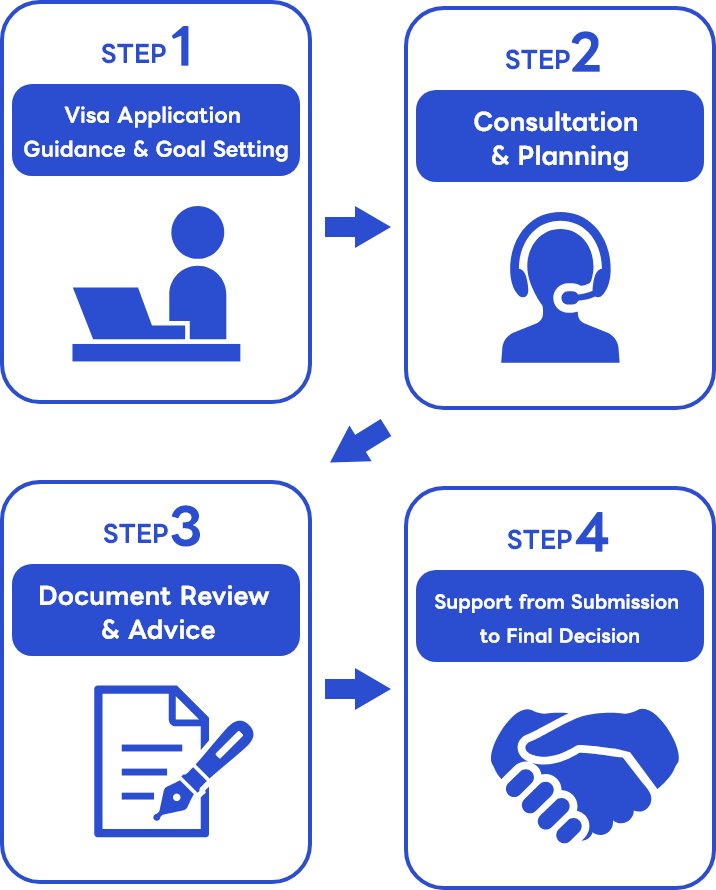
Consulting with an immigration consultant makes the process clearer and much smoother. You’ll feel more confident with document submissions and procedures, significantly reducing the risk of mistakes. Take the first step toward your Canadian dream with the guidance of an expert.
Tag list
Popular Rankings

September 24, 2026
Express Entry Jobs for Canadian PR: Easy-to-Start Occupations with No Experience
If you are aiming to fast-track your path to Canadian permanent residence, Express Entry’s category-

September 24, 2026
Provincial Nominee Programs to Expand Significantly in 2026
In December 2025, the Government of British Columbia announced its 2026 nomination allocation under

September 24, 2026
Stricter Screening for the Significant Benefit Work Permit (C10), Including the Entrepreneur Work Permit| Policy Changes and Application Strategies
On February 24, 2026, IRCC updated its guidelines for the Significant Benefit (C10) category, one of

September 24, 2026
PNP and AIP Program Updates: Growing Restrictions Across Canadian Provinces (As of July 2025)
In 2025, several Canadian provinces and territories have introduced new limits and priority criteria