

Express Entry Reform Latest Developments and IRCC Stakeholder Webinar Report
Date Posted:May 20, 2026
Last Updated:September 24, 2026

Yuki Shiraishi, President of Shiraishi Visa JP Canada, participated in the Immigration, Refugees and Citizenship Canada (IRCC) stakeholder webinars held on April 21 and April 28, 2026, regarding the upcoming Express Entry reforms.
This article summarizes the key updates shared during those sessions and outlines how the Express Entry system is expected to evolve from a practical, real-world perspective.
Express Entry Reform Will Not Be Implemented All at Once
One of the clearest messages from the webinar is that the Express Entry reform will not be introduced as a single, comprehensive change.
IRCC explained that the reform is broadly divided into two components:
- Structural changes to the overall Express Entry system
- Adjustments to the CRS (Comprehensive Ranking System) and selection rules
These two components differ in nature, and therefore differ in implementation timelines.
| Reform Component | Expected Implementation Timeline | Required Process and Procedures | Key Characteristics and Impact |
|---|---|---|---|
| System Wide Changes (Framework of FSW, CEC, FST) | Approximately 12 to 18 months | Requires legislative amendments | Considered a medium to long term initiative |
| CRS Scoring Adjustments | Potential earlier implementation | Can be made through Ministerial Instructions | Relatively fast implementation timelines without legislative amendments |
System Wide Changes Timeline
Reforms affecting the overall framework of Express Entry, including the structure of programs such as FSW, CEC, and FST, will require legislative amendments. As a result, these changes are expected to take approximately 12 to 18 months to implement. In other words, this part of the reform should be considered a medium to long term initiative.
CRS Scoring Accelerated Adjustments
A key takeaway from the webinar is that changes to the CRS scoring system may be implemented sooner than the broader structural reforms. CRS adjustments can be made through Ministerial Instructions. With no need for legislative amendments, these changes feature relatively fast implementation timelines. This means that changes to the scoring system could be introduced before the full reform package is completed.
High-Wage Occupation Factor Identified as a Potential Early Change
One of the most closely watched proposals is the introduction of the “High-Wage Occupation factor.”
The proposed direction includes:
- Evaluation based on occupation-level wage data
- Assessment based on NOC codes rather than individual salary
- Tiered additional CRS points based on median wage thresholds
This mechanism may be introduced earlier than the broader system reform.
This topic was highlighted as one of the key focus areas during the webinar. A more detailed analysis of the High-Wage Occupation factor will be provided in a separate article.
Skilled Trades and Education Evaluation Structural Shift
Overall, this indicates a shift away from “education and time spent in Canada” toward “occupation, certification, and labour market value.”
No Changes to Age Points at This Time
The webinar also confirmed that there are currently no planned changes to age-related CRS points.This provides a level of short-term stability for most applicants.
Potential Changes to Skilled Trades and Education Factors
Other potential directions discussed include:
- Stronger emphasis on certification-based evaluation for skilled trades (e.g., Red Seal certification)
- Increased importance of Certificates of Qualification in certain occupations
- Possible reduction in additional points for Canadian post-secondary education
Overall, this indicates a shift away from “education and time spent in Canada” toward “occupation, certification, and labour market value.”
Potential Elimination of Certain CRS Points
The following CRS point categories may be removed:
- Second official language points
- Points for having siblings in Canada
- Spousal factors in CRS scoring
The general direction suggests that points not directly linked to economic contribution may be phased out.
Impact on Candidates in the Express Entry Pool
From an operational standpoint, the following was also confirmed:
- Candidates in the Express Entry pool may have their CRS scores recalculated in the future
- However, applications submitted after receiving an ITA (Invitation to Apply) will be processed under the rules in place at the time of invitation
This creates a distinction between future candidates and those already invited to apply.
Summary of Accelerated System Evolution and Comment
Overall, the webinar suggests that Express Entry reform will not occur all at once, but rather in stages—with some elements potentially being implemented ahead of schedule.
Key takeaways include:
- System-wide reforms will take time to complete
- CRS scoring changes may come earlier
- A shift toward occupation-based selection is clearly underway
This means that long-term immigration strategies based solely on current CRS assumptions may become increasingly uncertain.
Comment from Yuki Shiraishi (Based on Webinar Participation)
Having attended the webinar, my strongest impression is that Express Entry reform is no longer at the conceptual stage—it is now entering the implementation design phase.What stood out in particular was the possibility that CRS scoring adjustments may be introduced ahead of the full structural reform.
For applicants, this means that current CRS-based strategies may not remain stable over the long term.Going forward, it will become increasingly important to consider not only Canadian work experience, but also the type of occupation and wage level at which an applicant is positioned within the labour market.
While the details are not yet finalized, the overall direction is clearly shifting toward a system that places greater emphasis on economic outcomes.
We will continue to closely monitor official updates and provide further practical analysis as more information becomes available.
Immediate Action and Strategic Rebuilding for Express Entry Changes
With Express Entry scoring standards shifting rapidly toward occupations, qualifications, and wage levels, you must decide whether to submit your application under current rules or strategically plan a career change for upcoming factors.
At Shiraishi Visa JP Canada, our government-authorized consultants use direct insights from internal IRCC sessions to establish your optimal permanent residence roadmap.
- Factual Profile Assessment: Determining if your occupation will qualify for the future High-Wage factor.
- Strategic Timing Optimization: Advising whether to enter the pool immediately before current points are eliminated.
- Point Maximization Structuring: Developing verified steps to maximize your CRS scores today based on exact legal frameworks.
Contact us today for a professional consultation and secure your pathway in Canada.
Free Consultations and Inquiries
Feel free to get in touch!



Immigration Consultant
Yuki Shiraishi
Born in Japan. After earning a Bachelor's degree from the University of Michigan, she worked for six years in New York as a marketing consultant at a major travel agency, while also studying in an MBA program at the City University of New York. After returning to Japan, she managed the visa center of the same travel company, handling various international visa applications for foreign clients.
Related Columns

Date Posted:September 24, 2026
How to Check Processing Times and Status for Canadian Visa and PR Applications


Date Posted:September 24, 2026
Canada Immigration Policy Trends 2025 | What Fewer Newcomers Mean for PR

Related News
Looking to obtain permanent residence or a visa?
Consult with us now!

Applying for permanent residence or a visa to Canada on your own can be overwhelming due to the large number of required documents, and you may feel uncertain about whether everything is correct. However, if you're serious about immigrating to Canada, we strongly recommend seeking the support of an immigration consultant. There are many pathways to obtaining permanent residence, depending on factors such as your age, occupation, and family status. With the help of an expert, you can ensure that you plan the right approach tailored to your specific situation.
A professional immigration consultant will help solve your concerns
Get a free Counseling now
From immigration planning to application submission,
everything is completed with shiraishi Visa JP Canada
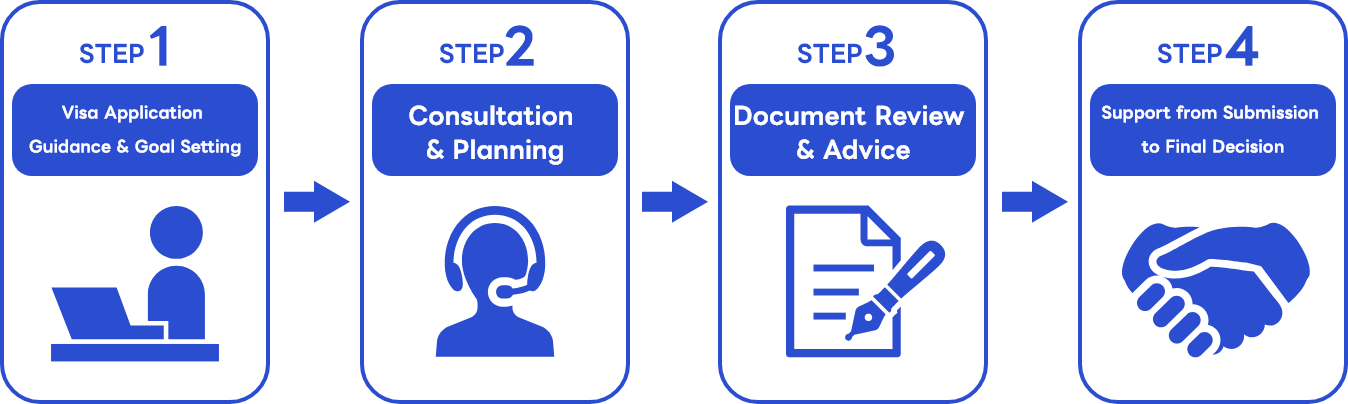
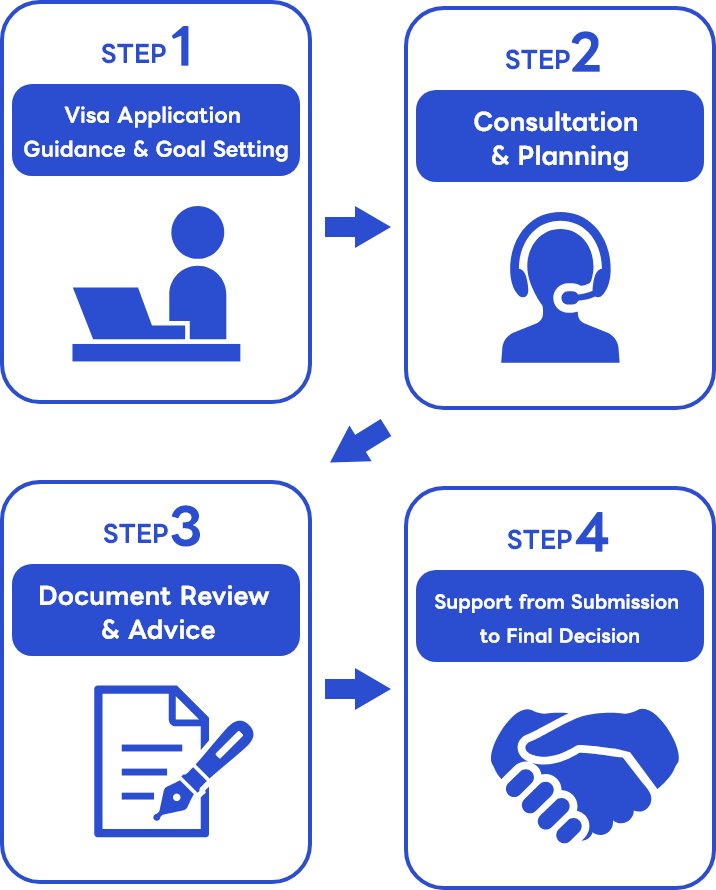
Consulting with an immigration consultant makes the process clearer and much smoother. You’ll feel more confident with document submissions and procedures, significantly reducing the risk of mistakes. Take the first step toward your Canadian dream with the guidance of an expert.
Tag list
Popular Rankings

September 24, 2026
Express Entry Jobs for Canadian PR: Easy-to-Start Occupations with No Experience
If you are aiming to fast-track your path to Canadian permanent residence, Express Entry’s category-

September 24, 2026
Stricter Screening for the Significant Benefit Work Permit (C10), Including the Entrepreneur Work Permit| Policy Changes and Application Strategies
On February 24, 2026, IRCC updated its guidelines for the Significant Benefit (C10) category, one of

September 24, 2026
Provincial Nominee Programs to Expand Significantly in 2026
In December 2025, the Government of British Columbia announced its 2026 nomination allocation under

September 24, 2026
PNP and AIP Program Updates: Growing Restrictions Across Canadian Provinces (As of July 2025)
In 2025, several Canadian provinces and territories have introduced new limits and priority criteria