

Canadian Government Launches New Support for Early Childhood Educators (ECEs) | Why ECE May Remain a Promising Career Option for Those Seeking Canadian Permanent Residence
Date Posted:August 13, 2026
Last Updated:September 24, 2026

When considering permanent residence in Canada, choosing the right career path can be an important part of an overall immigration strategy, and certain occupations have attracted particular attention among those planning a career change.
One of these is Early Childhood Educator (ECE).
On August 10, 2026, the Government of Canada announced a new initiative to support the recruitment, retention and career development of ECEs.
Government of Canada to Invest Up to $5.4 Million to Support ECEs
The Government of Canada has announced a new initiative to support the recruitment and retention of Early Childhood Educators. Through the Sectoral Workforce Solutions Program, the government will invest up to $5.4 million through March 31, 2027.
The initiative will support measures such as:
- Supporting the recruitment and retention of ECEs
- Updating the National Occupational Standards for ECEs
- Improving labour market information
- Modernizing training tools to reflect changes in the ECE profession
- Supporting career development, mentoring, and professional development opportunities
In other words, the initiative is not simply about hiring more ECEs. The government is also supporting the development of ECEs as a long-term career by focusing on professional development, career advancement, and retention.
The project will be led by three organizations: Colleges and Institutes Canada (CICan), the Canadian Child Care Federation (CCCF), and L’Association des collèges et universités de la francophonie canadienne (ACUFC).
Canada Is Also Expanding Child Care Spaces
Another important aspect of this announcement is the broader expansion of child care services across Canada. Since 2021, the federal government has announced more than $58 billion in federal funding through March 2031 to support the creation and maintenance of Canada’s Canada-wide Early Learning and Child Care (ELCC) system.
The federal government also reports that provinces and territories have announced measures to create more than 250,000 new child care spaces.
Expanding access to affordable child care requires more than simply creating new spaces and facilities. It also requires qualified professionals to work in those facilities.
In other words:
- Expand child care services
- Increase the number of child care spaces
- Increase the need for qualified ECEs
The government’s investment in the ECE workforce is therefore important not only as a response to current labour shortages, but also as part of building the workforce needed to support the continued expansion of child care services.
Will Demand for ECEs Remain High?
Of course, it would be difficult to say that ECE jobs will definitely remain secure or in high demand indefinitely based solely on this announcement. Employment conditions, wages, licensing requirements, and demand for ECEs can also vary by province and community.
However, the announcement does show that the Canadian government considers ECEs an important part of the workforce needed to support the country’s long-term Early Learning and Child Care system. If Canada continues to expand child care spaces and services, it will also need qualified professionals to provide that care.
Considering the government’s continued investment in the recruitment, retention, training, and career development of ECEs, it is reasonable to expect that demand for ECEs is likely to remain strong for the foreseeable future. This is an important point for people who are considering a career change as part of their plans to build a future in Canada.
Four Points to Permanent Residence Through an ECE Career
So, what does this mean for people who are considering a career change in Canada and eventually want to obtain permanent residence? Even if someone is currently working in a completely different occupation, it may be possible to start a new career as an ECE by completing an Early Childhood Education program at a Canadian college.
Point 1 College Pathway to ECE Career and Permanent Residence
One possible career path could look like this:
- Study Early Childhood Education (ECE) at a Canadian college
- Graduate and obtain the certification or registration required to work as an ECE
- Use a Post Graduation Work Permit (PGWP) to work in Canada after graduation
- Gain Canadian work experience as an ECE
- Explore permanent residence pathways based on the individual’s circumstances
It is important to emphasize that this does not mean that completing an ECE program automatically leads to permanent residence. Eligibility for permanent residence depends on a variety of factors, including the immigration programs available at the time, age, language ability, education, work experience, Canadian work experience, and provincial immigration programs.
Therefore, the idea should not be simply: “Become an ECE to get permanent residence.”
Rather, it is about building a career in an occupation with continued demand and using that Canadian career and work experience as part of a broader long term immigration strategy.
Point 2 PGWP Eligibility for ECE Programs
For international students considering a Canadian college program followed by a PGWP, it is also important to understand the current PGWP requirements. For students who apply for a study permit on or after November 1, 2024, graduates of non degree programs generally need to have completed a program in an eligible field of study to qualify for a PGWP.
Currently, Early childhood education and teaching (CIP 13.1210) is included among the eligible fields of study for PGWP purposes.
This makes Early Childhood Education an interesting option not only for people who want to develop a career in child care, but also for those who want to consider a pathway of studying in Canada, gaining Canadian work experience after graduation, and potentially pursuing permanent residence later.
However, graduating from an ECE program does not automatically guarantee a PGWP. Students need to meet all applicable requirements, including requirements relating to the designated learning institution (DLI), the program, timing of the application, language proficiency, and other eligibility criteria. PGWP rules can also change over time.
For this reason, anyone considering an ECE program should confirm the latest PGWP requirements and the eligibility of the specific school and program at the time they plan to study and graduate, rather than assuming that all ECE programs will automatically qualify.
Point 3 Two Year College Program Career Strategy
For someone considering a career change, completing a roughly two year Early Childhood Education program at a Canadian college can be one possible route into the profession. The length of the program and the licensing or registration requirements vary depending on the school and province.
However, studying ECE at a Canadian college can provide an opportunity to:
- Develop the knowledge and skills needed to work as an ECE
- Gain practical experience through placements
- Build connections with Canadian child care employers
- Find employment after graduation
- Use a PGWP to gain Canadian work experience
- Build a long term career in the child care sector
- Explore potential permanent residence pathways
For someone who feels that their current occupation in their home country may not translate easily into a career in Canada, going back to school and developing a new professional skill set in Canada can be an option worth considering.
Of course, studying in Canada requires a significant investment in tuition and living expenses, and there is no guarantee of employment after graduation. Nevertheless, for someone who wants to build a new career in Canada from the ground up, ECE can provide a relatively clear career path.
Point 4 Family Day Care Business Operation Option
When considering a career as an ECE, working as an employee at a child care centre is not the only possible option. Depending on the province and local regulations, Canada also has family day care models that allow individuals who meet the applicable licensing or registration requirements to operate a child care business from part of their own home.
This can be an interesting option, particularly for people who want to combine raising their own children with their professional life. For example, someone may be able to care for their own children at home while also providing child care for children from other families, subject to the applicable provincial and local requirements.
The specific qualifications, licensing or registration requirements, permitted number of children, and requirements relating to the home can vary significantly by province and community. Anyone considering this option should therefore confirm the current requirements in their particular area.
From a career perspective, however, family day care can offer another interesting possibility. Someone could start by gaining experience as an ECE, then establish and operate a small family day care business, and eventually use that experience as a foundation for managing a larger child care centre.
For example:
- Study Early Childhood Education at a Canadian college
- Work as an ECE and gain professional experience
- Establish and operate a family day care
- Gain experience not only in child care, but also in business operations and staff management
- Potentially move toward operating a larger child care centre in the future
This is certainly not a career path that will suit everyone. In addition to enjoying working with children, it can be particularly attractive to people who are also interested in entrepreneurship, business management, and building their own organization.
For people planning to make Canada their long term home, the fact that ECE can potentially lead beyond employment to self employment and business ownership is another aspect worth considering.
In other words, ECE does not necessarily have to be viewed simply as “a job that can help with permanent residence.” It can potentially become the starting point for building a long term career and even a child care business in Canada.
Proven ECE Career and Permanent Residence Pathways
At Visa JP Canada, we have a strong track record of supporting clients who have successfully built careers as Early Childhood Educators and subsequently obtained permanent residence.
Our team provides comprehensive guidance on the demand for ECEs, career development, and potential pathways for those considering studying and working in this field. If you are considering changing careers and building a future in Canada, our consultants can offer the strategic advice you need to get started.
Real Life Client ECE Career Transitions
Many of our clients have transitioned from completely different backgrounds in their home countries to study Early Childhood Education at Canadian colleges. Through practical placements and dedicated job searches, they have secured employment and found genuine fulfillment in their roles while working toward permanent residence.
Rather than viewing ECE simply as a tool for immigration, our successful clients often discover the profound rewards of the profession and choose to pursue it as a lifelong career. For anyone considering this career change, we can share practical insights into what the profession looks like and how to navigate the journey from a college program to permanent residence in Canada.
Think Beyond Permanent Residence and Consider Whether It Is a Career You Can Build in Canada
When planning to immigrate to Canada, it is certainly important to consider which occupations may provide opportunities for permanent residence. However, choosing a career based solely on immigration prospects is not necessarily the best approach.
Obtaining permanent residence can take time. Depending on the pathway, there may be a period of study, job searching, gaining work experience, and meeting various eligibility requirements. For this reason, it is important to consider not only: “What job can help me obtain permanent residence?” but also: “What kind of career can I realistically build and continue in Canada?”
ECE is a profession focused on supporting children’s development and well-being. It is not necessarily suitable for everyone. ECEs need to communicate with children, parents, and colleagues in English or another official language, and the profession comes with significant responsibilities.
Rather than choosing ECE simply because it may be useful for immigration purposes, it is important to consider whether you genuinely enjoy working with children and whether you can see yourself continuing in the profession as a long-term career.
For those who do enjoy working with children and want to build a new career in Canada, however, ECE can be an attractive option.
ECE Is Worth Watching as Part of Canada’s Future Immigration Landscape
Canadian immigration policies change frequently. An occupation that receives favourable treatment under an immigration program today may not necessarily receive the same treatment in the future. Therefore, it would not be appropriate to assume that becoming an ECE will always provide an advantage for obtaining permanent residence.
At the same time, the latest government announcement clearly shows that Canada is continuing to invest in the expansion of child care services and in the recruitment, retention, and development of the ECE workforce needed to support them.
More child care spaces require more qualified ECEs. This underlying demand is an important factor to consider. For people who want to build a long-term career and life in Canada, ECE may therefore remain an occupation worth watching in the coming years.
It may be particularly worth considering for people who:
- Feel that their current occupation in their home country may not easily translate into a career in Canada
- Want to change careers and develop a new professional skill set in Canada
- Are willing to study at a Canadian college before entering the workforce
- Want to build a career that can potentially lead to employment, self-employment, or business ownership
- Want to consider both career development and permanent residence as part of a long-term plan
For those considering a career change, ECE may be more than simply an occupation that could potentially support an immigration strategy. It can also be a starting point for building a long-term career in Canada, and potentially even for creating and operating a child care business of your own.
Of course, immigration programs and PGWP requirements can change. Before committing to a Canadian college program, it is important to review the current PGWP requirements, the eligibility of the specific school and program, provincial ECE licensing requirements, and the permanent residence options that may be available at that time.
Rather than starting with the question: “Which school should I attend?” it may be more useful to start with: “What kind of career do I want to build in Canada, and how can that career fit into my long-term immigration plans?” For people considering a career change and a future in Canada, ECE may be one option worth taking a closer look at.
This article is a summary prepared by Visa JP Canada based on official information from the Government of Canada, organized for clarity and ease of understanding.
Source (Published: August 10, 2026): Government of Canada launches new initiative to support early childhood educators (English)
Free Consultations and Inquiries
Feel free to get in touch!



Immigration Consultant
Yuki Shiraishi
Born in Japan. After earning a Bachelor's degree from the University of Michigan, she worked for six years in New York as a marketing consultant at a major travel agency, while also studying in an MBA program at the City University of New York. After returning to Japan, she managed the visa center of the same travel company, handling various international visa applications for foreign clients.
Related Columns

Date Posted:September 24, 2026
How to Check Processing Times and Status for Canadian Visa and PR Applications


Date Posted:September 24, 2026
Canada Immigration Policy Trends 2025 | What Fewer Newcomers Mean for PR

Related News
Looking to obtain permanent residence or a visa?
Consult with us now!

Applying for permanent residence or a visa to Canada on your own can be overwhelming due to the large number of required documents, and you may feel uncertain about whether everything is correct. However, if you're serious about immigrating to Canada, we strongly recommend seeking the support of an immigration consultant. There are many pathways to obtaining permanent residence, depending on factors such as your age, occupation, and family status. With the help of an expert, you can ensure that you plan the right approach tailored to your specific situation.
A professional immigration consultant will help solve your concerns
Get a free Counseling now
From immigration planning to application submission,
everything is completed with shiraishi Visa JP Canada
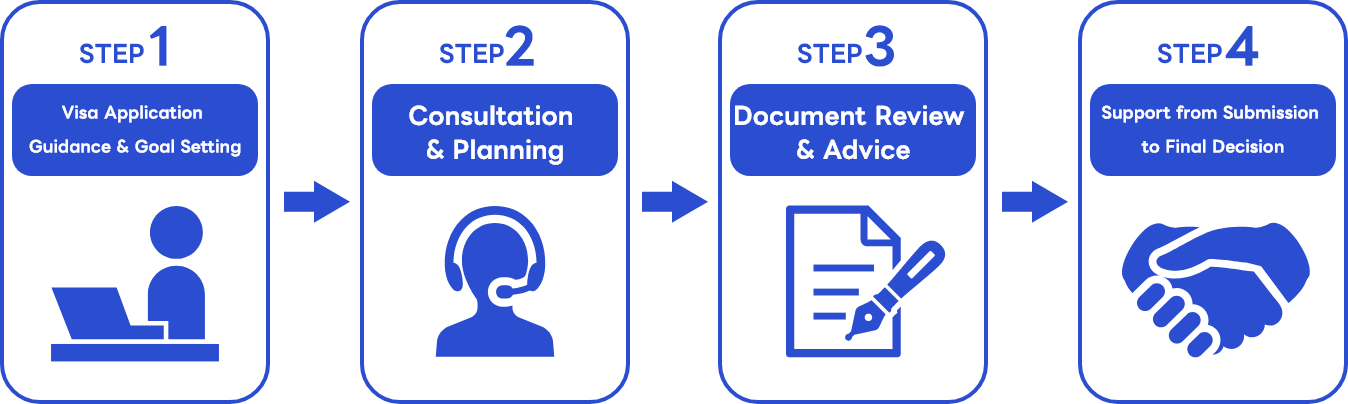
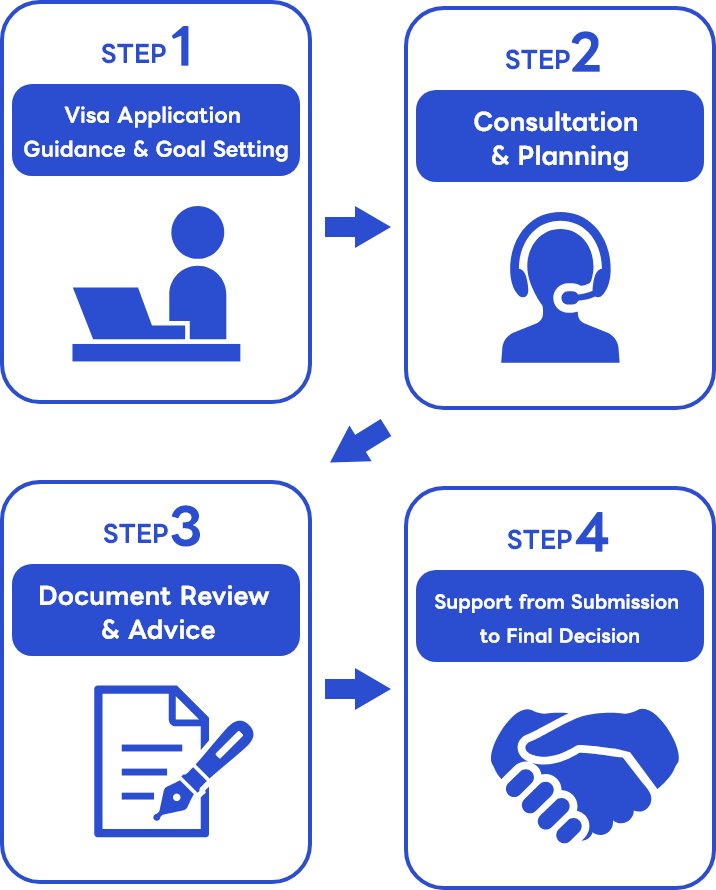
Consulting with an immigration consultant makes the process clearer and much smoother. You’ll feel more confident with document submissions and procedures, significantly reducing the risk of mistakes. Take the first step toward your Canadian dream with the guidance of an expert.
Tag list
Popular Rankings

September 24, 2026
Express Entry Jobs for Canadian PR: Easy-to-Start Occupations with No Experience
If you are aiming to fast-track your path to Canadian permanent residence, Express Entry’s category-

September 24, 2026
Stricter Screening for the Significant Benefit Work Permit (C10), Including the Entrepreneur Work Permit| Policy Changes and Application Strategies
On February 24, 2026, IRCC updated its guidelines for the Significant Benefit (C10) category, one of

September 24, 2026
Provincial Nominee Programs to Expand Significantly in 2026
In December 2025, the Government of British Columbia announced its 2026 nomination allocation under

September 24, 2026
PNP and AIP Program Updates: Growing Restrictions Across Canadian Provinces (As of July 2025)
In 2025, several Canadian provinces and territories have introduced new limits and priority criteria