

The Cannabis Act | What Japanese Nationals in Canada Should Know
Date Posted:September 24, 2026
Last Updated:September 24, 2026

On October 17, 2018, a new cannabis law, the Cannabis Act, came into force in Canada.
With it, the use of cannabis (also known as marijuana) in Canada was legalized not only for medical purposes but also for recreational purposes. How should we, as Japanese people, view this?
Opinions will differ depending on your connection to Canada and your position in society, but first and foremost, it is important for everyone to get accurate information and understand it. We have summarized what you need to know.
Update (September 2026): This article was written in 2018, shortly before recreational cannabis was legalized. The Cannabis Act came into force on October 17, 2018, and adults have been able to buy and use cannabis legally in Canada since then. The British Columbia rules below (minimum age 19, up to 30 grams in public, up to four plants per household) remain in effect as of September 2026. Taking cannabis across Canada’s borders, including to or from Japan, remains illegal.
Japan’s Cannabis Laws Also Apply to Japanese Nationals Staying or Living Abroad
The first thing you must clearly understand is that Japanese laws and regulations may apply even when the act takes place outside Japan. Through the embassy and consulates, Japan’s Ministry of Foreign Affairs has issued warnings to Japanese nationals living in Canada, urging them to obey Japanese law and not to get involved with cannabis, even outside Japan.
*In Japan, the possession and receipt (including purchase) of cannabis, among other acts, are illegal and subject to punishment. Since December 12, 2024, following an amendment of the Cannabis Control Act, cannabis has been regulated as a narcotic under the Narcotics and Psychotropics Control Act, and using cannabis is now also a punishable offence.
Overview of Canada’s New Law, “The Cannabis Act”
The Act came into force on October 17, 2018. The main purposes of legalization, including for recreational use, are to “restrict youth access to cannabis,” “cut off a source of funding for organized crime,” and “promote responsible cannabis use,” among others.
Cannabis Laws (in British Columbia)
The detailed rules on how cannabis is regulated are set by each province, within the overall framework of the law established by the federal government. You therefore need to keep in mind that some things, such as the age of majority (the age at which you can buy cannabis), differ from province to province.
Here we introduce the cannabis laws of British Columbia, where Vancouver is located, based on information published by the BC government.
Laws to Protect Children (Minors)
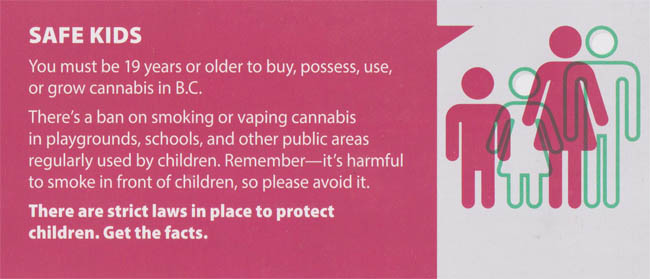
In British Columbia, you must be 19 or older to buy, possess, use or grow cannabis. Smoking or vaping (using an e-cigarette that holds liquid) cannabis is prohibited in public places frequently used by children, such as parks and schools, because cannabis smoke is harmful to children.
Laws to Protect Health

Cannabis affects brain function regardless of age. In particular, it can harm the brains of people aged 25 and under, whose brains are considered to be still undeveloped or developing. You must recognize that cannabis can harm your health and that its effects vary from person to person.
Laws to Keep Communities Safe
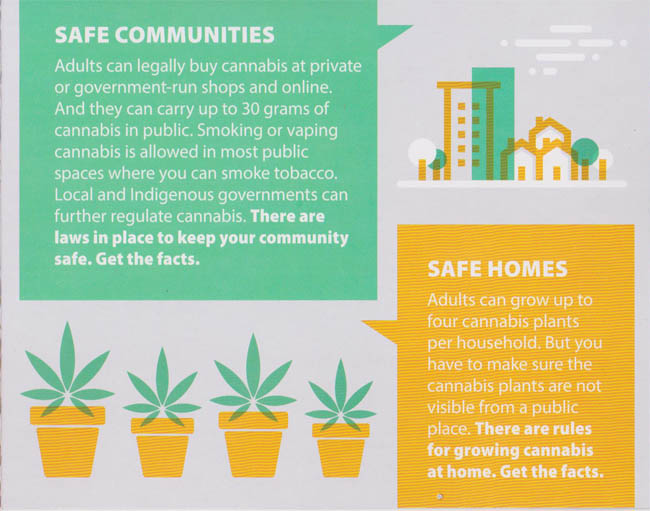
Adults can buy cannabis from government-run or private retail stores or online stores. However, you may possess no more than 30 grams of cannabis at a time in public. The places where you can use cannabis (smoking or vaping) are largely the same as where you can smoke tobacco. However, the local government with jurisdiction over the area can set additional restrictions.
Growing Cannabis
Adults are allowed to grow up to four cannabis plants per household. However, the plants must be grown in a place that is not visible to the public.
Cannabis Is Also Regulated Under Road Traffic Laws
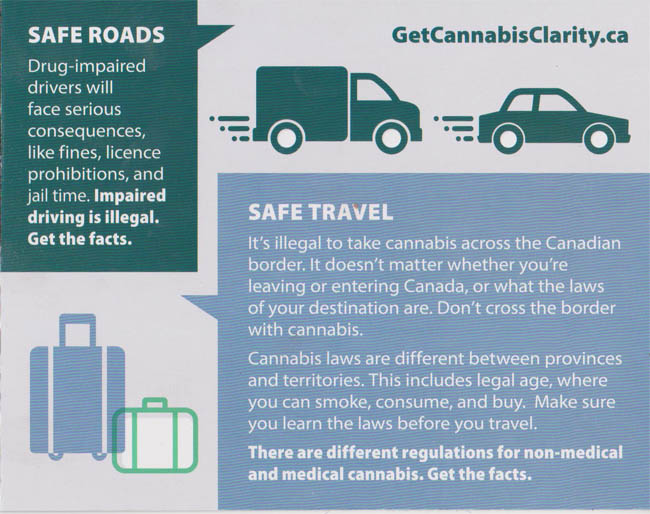
Drug-impaired drivers are subject to severe penalties, including fines or licence suspension, and in serious cases, imprisonment.
What to Keep in Mind When Travelling Within or Outside Canada
Crossing the Canadian border with cannabis is illegal, whether you are leaving or entering Canada. This applies regardless of your destination. Do not cross the Canadian border with cannabis.
Also, even within Canada, cannabis laws differ from province to province. You must correctly understand the rules at your destination, such as the age at which adults are allowed to buy and use cannabis and where its use is permitted.
*Rules also differ depending on the purpose of cannabis use (medical or recreational).

Final Thoughts
What the British Columbia government emphasizes is that people’s views and opinions about cannabis use differ from person to person. With this major undertaking by the Government of Canada, it seems essential that people properly understand the facts and are able to express their opinions openly.
What do you think? Let’s continue to think about this together.
Free Consultations and Inquiries
Feel free to get in touch!


Immigration Consultant
Yuki Shiraishi
Born in Japan. After earning a Bachelor's degree from the University of Michigan, she worked for six years in New York as a marketing consultant at a major travel agency, while also studying in an MBA program at the City University of New York. After returning to Japan, she managed the visa center of the same travel company, handling various international visa applications for foreign clients.
Related Columns
![International Students Can Work Up to 24 Hours per Week: What You Need to Know About Working on a Study Permit [2026 Update]](https://en.visajpcanada.com/wp-content/uploads/2026/09/visacoloumn_site_20261001-1024x538.jpg)
Date Posted:October 3, 2026
International Students Can Work Up to 24 Hours per Week: What You Need to Know About Working on a Study Permit [2026 Update]

Date Posted:September 24, 2026
Hotmail (Outlook.com) Emails Not Arriving? How to Fix Free Email Delivery Problems

Related News
Looking to obtain permanent residence or a visa?
Consult with us now!

Applying for permanent residence or a visa to Canada on your own can be overwhelming due to the large number of required documents, and you may feel uncertain about whether everything is correct. However, if you're serious about immigrating to Canada, we strongly recommend seeking the support of an immigration consultant. There are many pathways to obtaining permanent residence, depending on factors such as your age, occupation, and family status. With the help of an expert, you can ensure that you plan the right approach tailored to your specific situation.
A professional immigration consultant will help solve your concerns
Get a free Counseling now
From immigration planning to application submission,
everything is completed with shiraishi Visa JP Canada
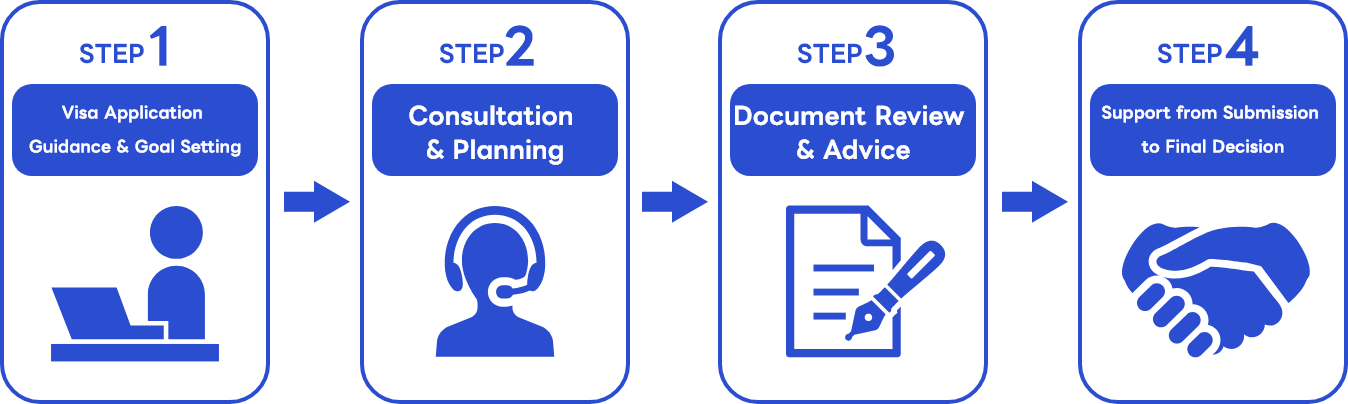
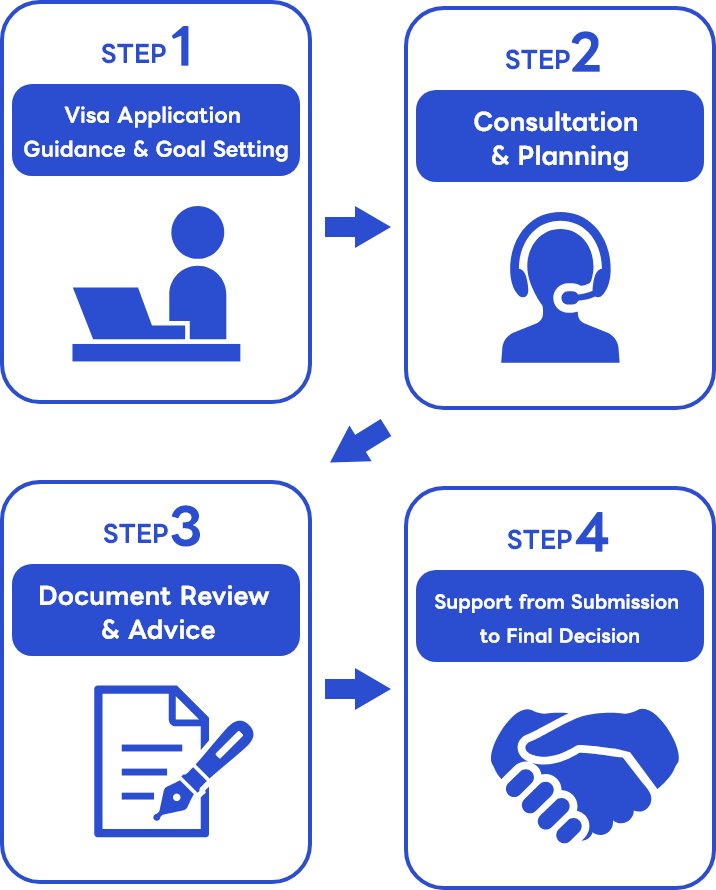
Consulting with an immigration consultant makes the process clearer and much smoother. You’ll feel more confident with document submissions and procedures, significantly reducing the risk of mistakes. Take the first step toward your Canadian dream with the guidance of an expert.
Tag list
Popular Rankings

September 24, 2026
Express Entry Jobs for Canadian PR: Easy-to-Start Occupations with No Experience
If you are aiming to fast-track your path to Canadian permanent residence, Express Entry’s category-
September 24, 2026
Provincial Nominee Programs to Expand Significantly in 2026
In December 2025, the Government of British Columbia announced its 2026 nomination allocation under

September 24, 2026
Stricter Screening for the Significant Benefit Work Permit (C10), Including the Entrepreneur Work Permit| Policy Changes and Application Strategies
On February 24, 2026, IRCC updated its guidelines for the Significant Benefit (C10) category, one of
September 24, 2026
PNP and AIP Program Updates: Growing Restrictions Across Canadian Provinces (As of July 2025)
In 2025, several Canadian provinces and territories have introduced new limits and priority criteria