

International Students Can Work Up to 24 Hours per Week: What You Need to Know About Working on a Study Permit [2026 Update]
Date Posted:October 3, 2026
Last Updated:October 3, 2026
![International Students Can Work Up to 24 Hours per Week: What You Need to Know About Working on a Study Permit [2026 Update]](https://en.visajpcanada.com/wp-content/uploads/2026/09/visacoloumn_site_20261001.jpg)
For many international students who started studying in Canada in September, it has now been about a month since arriving.
As you begin to settle into school and life in Canada, you may also be thinking that it is time to start looking for a part-time job.
In Canada, international students who meet certain requirements can work off campus without obtaining a separate work permit.
However, having a study permit does not automatically mean that everyone is allowed to work, nor does it mean that you can work as many hours as you want.
One of the most important rules to be aware of is the 24-hour-per-week limit on off-campus work during regular academic sessions.
Working more than the permitted hours can be a violation of your study permit conditions and may affect future immigration applications.
In this article, we explain the rules for international students working in Canada as of 2026, particularly for those who are thinking about starting a part-time job.
International students can work up to 24 hours per week
International students who meet the eligibility requirements can work up to 24 hours per week off campus during regular academic sessions. The 24-hour limit does not apply separately to each employer.
For example, if you have multiple jobs and work the hours shown below, the hours from all of your off-campus jobs must be combined, meaning that you would have worked a total of 24 hours that week:
- 15 hours per week at a restaurant
- 9 hours per week at a café
Different rules apply to on-campus work. If you meet the eligibility requirements to work on campus, there is generally no limit on the number of hours you may work on campus.
Not every international student can work off campus: Eligibility requirements
Simply having a study permit does not automatically give you the right to work off campus. Generally, you must meet requirements such as:
- having a valid Study Permit
- being a full-time student at a Designated Learning Institution (DLI)
- being enrolled in an academic, vocational or professional training program that is at least six months in duration
- being enrolled in a program that leads to a degree, diploma or certificate, or being enrolled in an authorized exchange program
- having already started your study program
- having a condition on your Study Permit that allows you to work
- having a Social Insurance Number (SIN)
One particularly important point is that you cannot start working before your study program begins. For example, if your program starts in September and you arrive in Canada early with your Study Permit, you cannot begin working simply because you have already entered Canada. You must wait until your program actually starts.
What if you are a part-time student?
Part-time students may work off campus only if both of the following conditions apply:
- you meet all of the eligibility requirements above except the requirement to be a full-time student
- you are studying part-time only because you are in the final semester of your study program and do not need a full course load to complete the program
Language school and Pathway students generally cannot work off campus
This is an area where misunderstandings are particularly common. If you are only enrolled in an English or French as a Second Language (ESL/FSL) program, you are not eligible to work off campus, even if you have a Study Permit.
This rule does not apply only to students attending what is commonly referred to as a “language school.” Even if the language program is offered by a DLI such as a college or university, students who are enrolled only in an ESL/FSL program are generally not eligible to work off campus. In other words, attending a university does not automatically mean you can work, nor does studying English on a college campus automatically give you off-campus work authorization. What matters is not simply the type of institution you attend, but the program in which you are actually enrolled.
Similarly, if you are only taking courses required for admission to a full-time academic program, such as a Pathway or preparatory program, you are generally not eligible to work off campus. Once you officially begin an eligible program leading to a diploma, degree or other qualifying credential, you may become eligible to work off campus if you meet the other requirements.
Students who are taking only general-interest courses that do not lead to a degree, diploma or certificate are also not eligible to work off campus. However, students participating in certain authorized exchange programs may be eligible to work.
If your Study Permit states that you are not authorized to work off campus but you later change to a study program that makes you eligible for off-campus work, you may apply to IRCC to change the conditions of your Study Permit.
For example, you may have originally received a Study Permit to study in an ESL/FSL program and later enter a full-time college, university or graduate-level program. In this situation, you may apply to IRCC to have the restriction on off-campus work removed from your Study Permit.
Having a Study Permit does not automatically mean that you are allowed to work. Always confirm that your program and your Study Permit conditions allow you to work before starting a job.
Can you work more than 24 hours during Winter Break or Reading Week?
If your school has an officially scheduled break, you may work unlimited hours off campus during that period. Examples may include:
- Winter Break
- Summer Break
- Reading Week
However, simply deciding not to attend classes for a week does not make that period a scheduled break. A single statutory holiday or a long weekend is also not considered a scheduled break. IRCC requires a scheduled break to be at least seven consecutive days and formally scheduled by your educational institution.
There is also a limit on how long you can work unlimited hours during scheduled breaks: up to a total of 180 days per calendar year.
During an eligible scheduled break, you may work overtime or work multiple jobs and therefore work more hours than you normally would. However, to work full-time during a scheduled break, you must be a full-time student both before and after the break. There is no specific number of hours that IRCC defines as “full-time” for off-campus work during an eligible scheduled break.
If your program does not have scheduled breaks, you may only work up to the regular limit that applies during an academic session.
Do not assume that you can work full-time simply because you do not have classes. Check your school’s academic calendar to confirm that the period is officially considered a scheduled break.
Can you work while on a leave from your studies?
Even if your school has approved an Authorized Leave, you cannot work off campus while you are on leave from your studies. In general, you also cannot work off campus during a period when you have changed schools but are not actually studying.
Your eligibility to work is therefore based not only on whether you hold a Study Permit, but also on your current status as a student.
Can you work between two study programs? Your next program must start within 150 days
There is an important exception for students who have completed one program and are waiting for their next program to begin. If you meet certain requirements, you may work unlimited hours off campus between the two programs.
The main requirements include:
- you were eligible to work off campus during your previous program
- you have a valid Study Permit, or you applied to extend your Study Permit before it expired
- you have received written confirmation from your previous school that you completed your program
- you have received a Letter of Acceptance for a new full-time program at a DLI
- you will begin your new program within 150 calendar days of receiving confirmation that you completed your previous program
If you meet the applicable requirements, you may work between the two programs without being subject to the regular 24-hour-per-week limit. However, if your new program begins more than 150 days after you receive confirmation that you completed your previous program, you must stop working once the first 150 days have passed.
Therefore, it is not necessarily true that you cannot work simply because you are “between schools.” What matters is whether you have formally completed your previous program, have been accepted into your next program, will begin it within 150 days, and meet the other IRCC requirements.
Does self-employment or freelance work count toward the 24-hour limit?
Being self-employed or working as a freelancer does not exempt you from the 24-hour rule. If you are self-employed, you are responsible for keeping track of your own working hours and being able to demonstrate that you have complied with the conditions of your Study Permit.
IRCC considers not only the hours for which you receive wages, but also the time you spend earning commissions or receiving compensation for selling products or providing services. Do not assume that the rules do not apply simply because you are not an employee of a company.
What if you continue working remotely for a Japanese company while in Canada?
A slightly different situation applies when you work remotely for an employer located outside Canada. IRCC states that, as long as you continue to meet the conditions of your Study Permit, remote work for an employer outside Canada does not count toward the 24-hour-per-week off-campus work limit.
For example, this may apply if you maintain your employment with a company in Japan and continue working remotely for that company while studying in Canada. However, there may be separate tax implications, so you may need to seek appropriate advice regarding your tax obligations.
Co-op Work Permits generally no longer required as of April 2026
There was also a significant change to the rules for international students in 2026.
As of April 1, 2026, eligible post-secondary international students are generally no longer required to obtain a separate Co-op Work Permit to complete a mandatory work placement, such as a co-op or internship, that forms part of their study program. Eligible students can complete a work placement approved by their school as a requirement of their program under their Study Permit.
This is separate from the rules for regular part-time employment. The removal of the separate Co-op Work Permit requirement does not mean that international students are now free to work without restrictions. The rules governing regular off-campus employment, including the 24-hour-per-week limit during regular academic sessions, continue to apply.
What happens if you work more than 24 hours per week?
Working more than the permitted number of hours off campus during a regular academic session is a violation of your Study Permit conditions. IRCC states that violating these conditions could result in losing your student status, affect future Study Permit or Work Permit applications, and potentially require you to leave Canada.
It is also important to keep these rules in mind if you plan to apply for a Post-Graduation Work Permit (PGWP) after completing your studies. One of the requirements for being able to work full-time while your PGWP application is being processed is that you were eligible to work off campus during your studies and did not work more hours than you were permitted to work.
For the purpose of calculating your off-campus working hours, work includes time during which you are earning wages or receiving commissions. It may also include time when you are scheduled to work and are being paid even if you are waiting and not actively performing tasks at that moment.
Both international students and their employers should confirm that the student is authorized to work, whether on or off campus, before employment begins.
Do not assume that going slightly over the limit will not matter. We recommend keeping your pay stubs and employment records and carefully tracking your working hours.
Working on campus: What are the requirements?
On-campus work generally refers to work performed on the premises of the college, university or other educational institution where you are studying. This may include work in university libraries, laboratories, classrooms, student centres and other campus facilities.
Who can work on campus?
Generally, you can work on campus if you meet all of the applicable requirements, including:
- you are a full-time student at an eligible post-secondary institution
- you have a valid Study Permit or maintained status
- your Study Permit includes a condition allowing you to work on campus
- you have a Social Insurance Number (SIN)
If you were a full-time student throughout your program and are studying part-time only during your final semester because you need fewer courses to complete your program, you may still be eligible to work on campus.
Where can you work on campus?
Generally, on-campus work means that you can work in buildings located on your school’s campus. If your school has more than one campus, you normally work at the campus where you are studying.
There are some exceptions. For example, you may be able to work at another location if:
- you are working as a teaching or research assistant
- your work is strictly related to a research grant
In these situations, you may be able to work at a school-affiliated facility located outside the main campus, such as a library, research facility or hospital. A medical examination may be required for certain types of work, particularly work in hospitals or other public health-related settings.
Who can be your employer for on-campus work?
Your on-campus employer may include:
- your school
- a faculty member
- a student organization
- yourself, if you operate a business physically located on campus, such as a coffee shop
- a private business
- a private contractor that provides on-campus services to your school
Can you continue working after graduation? Working after applying for a PGWP
This is another important point to understand. Once you receive written confirmation that you have completed your program—such as a Completion Letter, transcript or an email confirming completion—your authorization to work off campus as a student generally ends.
However, if you are eligible for a PGWP and apply for your PGWP while your Study Permit is still valid, and meet the other applicable requirements, you may be able to work full-time after submitting your PGWP application while waiting for a decision.
Therefore, graduating does not necessarily mean that you must stop working until your PGWP is approved. However, the timing of your PGWP application and the validity of your Study Permit are extremely important.
If your PGWP application is refused, you must stop working immediately.
Check your Study Permit conditions before starting a part-time job
Working part-time in Canada can be a great opportunity to improve your English, gain experience in a Canadian workplace and build new relationships.
Part-time work while studying can also lead to employment opportunities after graduation. In some cases, students who demonstrate their abilities at a part-time job are offered full-time positions after graduation. Canadian work experience, professional references and connections developed through part-time employment can also be valuable when looking for a job after completing your studies.
For students who hope to work in Canada after graduation, gaining familiarity with Canadian workplace culture and building a professional network while still in school can be a significant advantage. As long as your studies remain your priority and you comply with the applicable work rules, we encourage students to take advantage of opportunities to gain work experience while studying in Canada.
At the same time, international students are permitted to work only under specific conditions attached to their Study Permits. In particular, make sure you know:
- Am I enrolled in a program that allows me to work?
- Am I staying within the 24-hour weekly limit?
- Is this actually an official scheduled break?
- Has a leave of absence or change of school affected my eligibility to work?
Studying in Canada is a valuable opportunity. If you decide to work part-time during your studies, make sure you understand the conditions of your Study Permit and your current student status so that you can gain Canadian work experience while staying in compliance with the rules.
This article is based on information available as of September 30, 2026. Canadian immigration rules and work conditions are subject to change. Please check the latest information from IRCC before starting employment.
If you are unsure whether your program allows you to work part-time, whether you can work during a gap between study programs, or how your current situation may affect a future PGWP application, please feel free to contact Shiraishi VisaJP Canada for an initial consultation. We can provide general information about the applicable rules based on your current circumstances. For case-specific assessments and advice tailored to your individual situation, paid consultations with our Regulated Canadian Immigration Consultants are also available.
This article is a summary prepared by Shiraishi Visa JP Canada based on official information from the Government of Canada, organized for clarity and ease of understanding.
Source: Work off campus as an international student
Source: Can I work as many hours as I want if I’m eligible to work off campus?
Free Consultations and Inquiries
Feel free to get in touch!



Immigration Consultant
Yuki Shiraishi
Born in Japan. After earning a Bachelor's degree from the University of Michigan, she worked for six years in New York as a marketing consultant at a major travel agency, while also studying in an MBA program at the City University of New York. After returning to Japan, she managed the visa center of the same travel company, handling various international visa applications for foreign clients.
Related Columns
![International Students Can Work Up to 24 Hours per Week: What You Need to Know About Working on a Study Permit [2026 Update]](https://en.visajpcanada.com/wp-content/uploads/2026/09/visacoloumn_site_20261001-1024x538.jpg)
Date Posted:October 3, 2026
International Students Can Work Up to 24 Hours per Week: What You Need to Know About Working on a Study Permit [2026 Update]


Date Posted:September 24, 2026
Hotmail (Outlook.com) Emails Not Arriving? How to Fix Free Email Delivery Problems

Related News
Looking to obtain permanent residence or a visa?
Consult with us now!

Applying for permanent residence or a visa to Canada on your own can be overwhelming due to the large number of required documents, and you may feel uncertain about whether everything is correct. However, if you're serious about immigrating to Canada, we strongly recommend seeking the support of an immigration consultant. There are many pathways to obtaining permanent residence, depending on factors such as your age, occupation, and family status. With the help of an expert, you can ensure that you plan the right approach tailored to your specific situation.
A professional immigration consultant will help solve your concerns
Get a free Counseling now
From immigration planning to application submission,
everything is completed with shiraishi Visa JP Canada
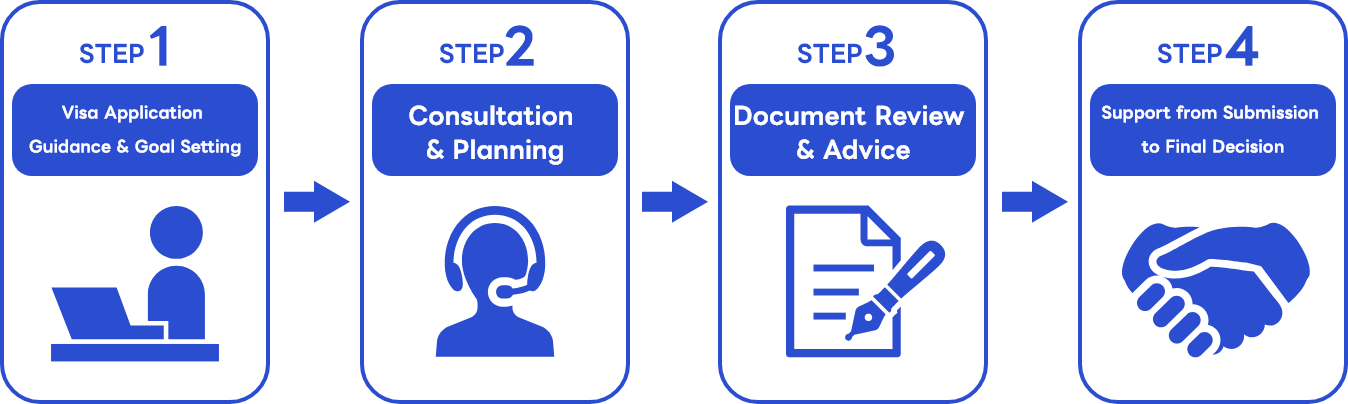
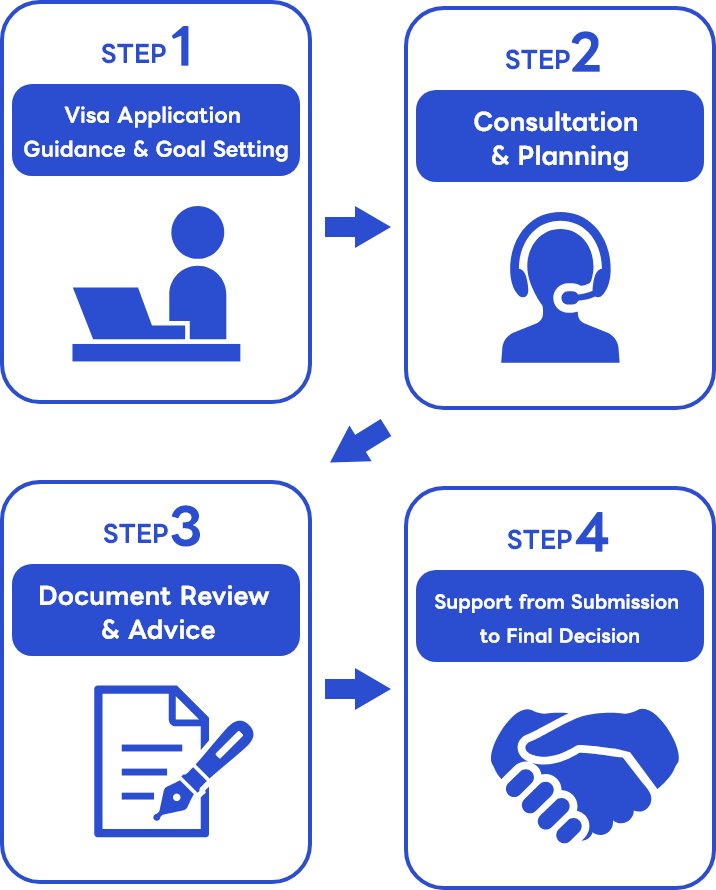
Consulting with an immigration consultant makes the process clearer and much smoother. You’ll feel more confident with document submissions and procedures, significantly reducing the risk of mistakes. Take the first step toward your Canadian dream with the guidance of an expert.
Tag list
Popular Rankings

September 24, 2026
Express Entry Jobs for Canadian PR: Easy-to-Start Occupations with No Experience
If you are aiming to fast-track your path to Canadian permanent residence, Express Entry’s category-

September 24, 2026
Provincial Nominee Programs to Expand Significantly in 2026
In December 2025, the Government of British Columbia announced its 2026 nomination allocation under

September 24, 2026
Stricter Screening for the Significant Benefit Work Permit (C10), Including the Entrepreneur Work Permit| Policy Changes and Application Strategies
On February 24, 2026, IRCC updated its guidelines for the Significant Benefit (C10) category, one of

September 24, 2026
PNP and AIP Program Updates: Growing Restrictions Across Canadian Provinces (As of July 2025)
In 2025, several Canadian provinces and territories have introduced new limits and priority criteria