Why Did Canada Need to Legalize Marijuana? The Background and Reasons
Date Posted:September 24, 2026
Last Updated:September 24, 2026

The news that “Prime Minister Trudeau has announced the legalization of marijuana from October 17, 2018” became a hot topic not only in Canada but around the world.
Canada is reportedly the first G7 country to legalize recreational cannabis nationwide, and the second country in the world after Uruguay.
Legalizing marijuana was also one of Prime Minister Justin Trudeau’s campaign promises before he took office. For those who find this move hard to understand, we have summarized the reasons behind it.
Update (September 2026): This article was originally written in 2018, before recreational cannabis was legalized. The Cannabis Act came into force on October 17, 2018, and adults have been able to buy and use cannabis legally in Canada since then, under rules set by the federal government and each province or territory. Taking cannabis across Canada’s international borders, whether leaving or entering Canada, remains illegal.
Background to the Legalization of Marijuana
The reasons for legalizing marijuana stemmed from a background that included the following social problems:
- A large amount of cannabis was in circulation, and there were many users, even though its sale was illegal
- The supply of marijuana to young people could not be controlled
- The illegal distribution and sale of marijuana was a source of income for criminal organizations
In Japan, cannabis (marijuana) is probably seen as something regulated in the same way as narcotics. In Canada, on the other hand, many people view it as a recreational product closer to tobacco. Living in Canada, I feel that this view is widely shared among the general public.
Cannabis for medical purposes has long been legal because of its pain-relieving and relaxing effects. It is sold to the public at licensed pharmacies, and in recent years even medical cannabis vending machines have appeared. Research is also progressing on a wide range of medical uses, such as slowing the progression of cancer.
Against this backdrop, even though recreational use was illegal, the number of users kept growing and the law was increasingly becoming a dead letter. The law prohibiting recreational cannabis existed in name only: when police saw someone possessing or smoking cannabis, they would simply give a warning, and large events for cannabis enthusiasts could be held openly in the middle of the city in broad daylight.
There were also many easy ways to obtain it, including private sales, and many illegal distribution networks. The profits from these sales were said to be a major source of funding, particularly for drug-related criminal organizations. This was a serious social problem for Canada as a country.
The Decision That Legalizing and Regulating Was the Better Approach
Given this social background, banning marijuana by law at this point would not make marijuana users disappear. On the other hand, an unregulated, disorderly distribution environment did nothing to stop minors from buying marijuana, which was also seen as a problem. Canadians, too, recognize that recreational marijuana use is harmful for young people who are still developing.
For these reasons and against this background, the government decided that it was better to legalize recreational use, place regulations on its sale, and enforce laws that reflect reality.
Under the law now in effect, as with alcohol and tobacco, ID is required to buy marijuana, and people under the minimum age set by each province or territory cannot buy it (19 in most provinces, including British Columbia; 18 in Alberta; 21 in Quebec). There are also limits on how much an adult may possess in public (30 grams of dried cannabis or its equivalent). A licence is required to sell it, and unlicensed sales are subject to penalties. A special tax is imposed, which is also a source of government revenue.
Keeping minors away from cannabis, generating tax revenue, and cutting off the funds that criminal organizations earn from illegal sales: these are the aims behind the legalization of marijuana.
That said, the legalization of recreational marijuana use remains controversial. Even if marijuana is relatively low in harm, there is a persistent argument that it may become a trigger for people to try dangerous drugs (a gateway drug).
In addition, the idea that marijuana is low in harm and that moderate recreational use is not a problem is still far removed from how Japanese society views it. I think this is a topic that we should continue to consider carefully together with all of you living in or staying in Canada as Japanese citizens.
Postscript (July 5, 2018)
Japan is a country where the possession and transfer of cannabis (marijuana) are illegal. For Japanese citizens, these rules may apply even while you are living in or staying in Canada, and complying with Japanese law means not using cannabis even in Canada.
We need to make sure we understand this point properly as well. I would like to compile and share more information on this again and think about it together with all of you.
Free Consultations and Inquiries
Feel free to get in touch!



Immigration Consultant
Yuki Shiraishi
Born in Japan. After earning a Bachelor's degree from the University of Michigan, she worked for six years in New York as a marketing consultant at a major travel agency, while also studying in an MBA program at the City University of New York. After returning to Japan, she managed the visa center of the same travel company, handling various international visa applications for foreign clients.
Related Columns

Date Posted:October 3, 2026
International Students Can Work Up to 24 Hours per Week: What You Need to Know About Working on a Study Permit [2026 Update]


Date Posted:September 24, 2026
Hotmail (Outlook.com) Emails Not Arriving? How to Fix Free Email Delivery Problems

Related News
Looking to obtain permanent residence or a visa?
Consult with us now!

Applying for permanent residence or a visa to Canada on your own can be overwhelming due to the large number of required documents, and you may feel uncertain about whether everything is correct. However, if you're serious about immigrating to Canada, we strongly recommend seeking the support of an immigration consultant. There are many pathways to obtaining permanent residence, depending on factors such as your age, occupation, and family status. With the help of an expert, you can ensure that you plan the right approach tailored to your specific situation.
A professional immigration consultant will help solve your concerns
Get a free Counseling now
From immigration planning to application submission,
everything is completed with shiraishi Visa JP Canada
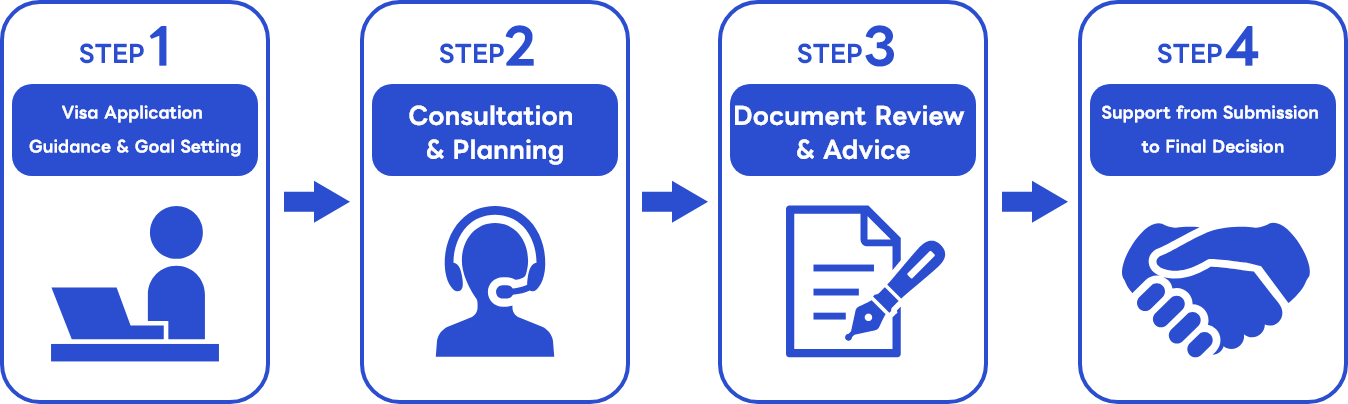
Consulting with an immigration consultant makes the process clearer and much smoother. You’ll feel more confident with document submissions and procedures, significantly reducing the risk of mistakes. Take the first step toward your Canadian dream with the guidance of an expert.
Tag list
Popular Rankings

September 24, 2026
Express Entry Jobs for Canadian PR: Easy-to-Start Occupations with No Experience
If you are aiming to fast-track your path to Canadian permanent residence, Express Entry’s category-

September 24, 2026
Stricter Screening for the Significant Benefit Work Permit (C10), Including the Entrepreneur Work Permit| Policy Changes and Application Strategies
On February 24, 2026, IRCC updated its guidelines for the Significant Benefit (C10) category, one of
September 24, 2026
Provincial Nominee Programs to Expand Significantly in 2026
In December 2025, the Government of British Columbia announced its 2026 nomination allocation under
September 24, 2026
PNP and AIP Program Updates: Growing Restrictions Across Canadian Provinces (As of July 2025)
In 2025, several Canadian provinces and territories have introduced new limits and priority criteria