

IRCC Updates Guidelines for Assessing the Genuineness of Job Offers in Work Permit Applications
Date Posted:September 21, 2026
Last Updated:September 21, 2026
Immigration, Refugees and Citizenship Canada (IRCC) updated its program delivery instructions on September 17, 2026, regarding how officers assess the genuineness of offers of employment for employer-specific work permit applications.
This update does not introduce a new genuineness requirement.
Rather, it provides more detailed guidance on how officers assess whether an offer of employment is genuine under subsection 200(5) of the Immigration and Refugee Protection Regulations (IRPR), including the factors officers should consider, examples of situations that may raise concerns, and procedures for requesting additional information.
What Does the “Genuineness of an Offer of Employment” Mean?
For an employer-specific work permit application, having a job offer from a Canadian employer is not enough on its own. The offer must also be determined to be genuine.
IRCC generally assesses the following four factors:
- Whether the employer is actively engaged in the business in respect of which the offer is made;
- Whether the offer is consistent with the reasonable employment needs of the employer;
- Whether the employer is reasonably able to fulfill the terms of the offer, including wages, hours of work and other employment conditions; and
- Whether the employer, or a recruiter acting on the employer’s behalf, has complied with federal and provincial or territorial laws regulating employment and recruitment.
If an officer is not satisfied that these requirements are met, the work permit application may be refused.
Does the Employer Really Need the Position?
The updated instructions provide examples of situations in which an officer may question whether a position is consistent with the employer’s reasonable employment needs. Examples include a catering company seeking to hire a roofer, a company with only 10 employees seeking to hire a sixth supervisor within a short period of time, or a franchise restaurant seeking to hire a full-time business analyst. These examples illustrate that officers may look beyond the job title itself and consider whether the position makes sense in light of the employer’s business activities, size and operational needs. Where the relationship between the business and the position is not immediately clear, or where the number or level of managerial positions appears unusual for the size of the company, the employer should be prepared to explain why the position is reasonably required.
Employers May Need to Demonstrate Their Ability to Pay the Offered Wage
IRCC may also assess whether an employer is financially capable of providing the wages, hours of work and other conditions stated in the offer of employment throughout the proposed period of employment. Depending on the circumstances, officers may request documents such as T4 Summaries, corporate tax information, financial records, workers’ compensation documentation or business contracts.
One example provided by IRCC involves a newly established company that reported only $10,000 in profit in the previous year but offered a foreign worker an annual salary of $45,000. If the employer cannot demonstrate sufficient financial resources to support the position, an officer may not be satisfied that the employer is reasonably able to fulfill the terms of the offer. This may be particularly relevant to newly established or smaller businesses hiring foreign workers.
A Positive LMIA Does Not Automatically Guarantee Work Permit Approval
The updated instructions also clarify the different roles of Employment and Social Development Canada (ESDC) and IRCC under the Temporary Foreign Worker Program (TFWP) and the International Mobility Program (IMP). Under the TFWP, ESDC assesses the genuineness of the job offer as part of the Labour Market Impact Assessment (LMIA) process.
However, even when a positive LMIA has been issued, an IRCC officer processing the work permit application may conduct further verification if concerns arise regarding the genuineness of the employment offer.
Under the IMP, where an LMIA is not required, IRCC assesses the offer of employment submitted by the employer through the Employer Portal. This means that the genuineness assessment is also important for LMIA-exempt employer-specific work permits, including certain work permits under a free trade agreement.
IRCC May Request Information Directly from the Employer
The updated instructions also provide more detail on the procedures officers should follow when they have concerns about the genuineness of an offer. A Procedural Fairness Letter (PFL) may identify the specific concerns and provide an opportunity for additional evidence to be submitted. In some cases, the employer may be asked to submit supporting documentation directly to IRCC regarding its business operations, financial situation or other relevant matters.
Officers may also consult publicly available information, including company websites, provincial or territorial government sources and internet search results, when verifying an employer’s business activities. Where information that is not normally known to the applicant—referred to as “extrinsic information”—may be relied upon to make an adverse decision, procedural fairness generally requires that the applicant be given an opportunity to respond.
Genuineness May Also Be Reassessed at the Port of Entry
Even when a work permit application has been provisionally approved and a Letter of Introduction has been issued, new information regarding the genuineness of the job offer may result in further verification when the foreign worker seeks entry to Canada. A Canada Border Services Agency (CBSA) officer may contact the employer to verify the employment offer. If the officer is not satisfied that the applicable requirements continue to be met, the work permit may not be issued at the port of entry.
A Note from Visa JP Canada
This update does not create a new genuineness test for employer-specific work permits. However, it provides significantly more detail about how IRCC may assess an employment offer and what may happen when concerns arise.
Employers should therefore be prepared to demonstrate not only that a job offer exists, but also why the position is reasonably required, how it relates to the company’s actual business activities, and whether the company has the operational and financial capacity to maintain the offered employment conditions.
This can be particularly important for newly established or smaller businesses, positions that do not have an obvious connection to the employer’s primary business activities, businesses with a relatively high number of managerial positions, or offers involving comparatively high salaries.
A positive LMIA also does not automatically result in the approval of a work permit. Similarly, for LMIA-exempt applications under the International Mobility Program—including certain work permits under a free trade agreement—submitting an offer of employment through the Employer Portal does not, by itself, establish that all work permit requirements have been met.
Visa JP Canada assists both employers and foreign workers with LMIA-based work permits as well as LMIA-exempt work permit applications, including work permits under free trade agreements.
This article is a summary prepared by Shiraishi Visa JP Canada based on official information from the Government of Canada, organized for clarity and ease of understanding.
Source: Assessing the genuineness of the offer of employment on a work permit application

Immigration Consultant
Yuki Shiraishi
Born in Japan. After earning a Bachelor's degree from the University of Michigan, she worked for six years in New York as a marketing consultant at a major travel agency, while also studying in an MBA program at the City University of New York. After returning to Japan, she managed the visa center of the same travel company, handling various international visa applications for foreign clients.
Related Columns

Date Posted:July 31, 2026
Express Entry Reform: 37 Occupations That May Benefit from the Proposed High-Wage Occupation Factor

Date Posted:March 18, 2026
Stricter Screening for the Significant Benefit Work Permit (C10), Including the Entrepreneur Work Permit| Policy Changes and Application Strategies

Date Posted:December 16, 2025
10 Critical Mistakes That Can Jeopardize Your PGWP Application— The 180-Day Rule and the Reality of Processing Delays

Related News
Looking to obtain permanent residence or a visa?
Consult with us now!

Applying for permanent residence or a visa to Canada on your own can be overwhelming due to the large number of required documents, and you may feel uncertain about whether everything is correct. However, if you're serious about immigrating to Canada, we strongly recommend seeking the support of an immigration consultant. There are many pathways to obtaining permanent residence, depending on factors such as your age, occupation, and family status. With the help of an expert, you can ensure that you plan the right approach tailored to your specific situation.
A professional immigration consultant will help solve your concerns
Get a free Counseling now
From immigration planning to application submission,
everything is completed with shiraishi Visa JP Canada
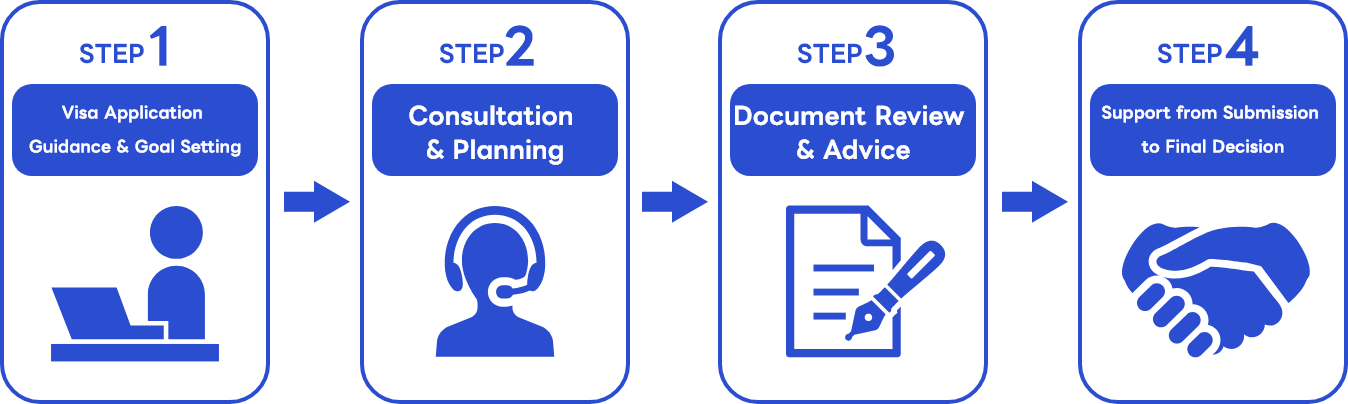
Consulting with an immigration consultant makes the process clearer and much smoother. You’ll feel more confident with document submissions and procedures, significantly reducing the risk of mistakes. Take the first step toward your Canadian dream with the guidance of an expert.