Work Permit Holders Can Now Study for Up to 6 Months Without a Study Permit in Canada [Effective September 2026]
Date Posted:September 10, 2026
Last Updated:September 24, 2026
Immigration, Refugees and Citizenship Canada (IRCC) introduced a new temporary public policy on September 4, 2026, allowing foreign nationals with a valid work permit to study in Canada for up to six months without obtaining a separate study permit, provided they meet the applicable requirements.
Under this new measure, eligible work permit holders who are already working in Canada may take short-term courses or training programs while continuing to work, without having to apply for a study permit.
This temporary public policy is scheduled to remain in effect until December 31, 2027.
Who is eligible?
To study without a study permit under this temporary public policy, you must meet the following two main requirements:
- You must have a valid work permit.
- Your study program must be six months or less in duration.
If you meet these requirements, you may study without a study permit for up to six months or until your current work permit expires, whichever comes first.
For example, if your work permit expires in four months, you may only study under this public policy until the expiry date of your work permit.
International Experience Canada (IEC) participants are also eligible
The temporary public policy is not limited to a particular type of work permit.
This means that individuals holding a valid work permit through International Experience Canada (IEC), including those in the Working Holiday and Young Professionals categories, may also be eligible, provided they meet the requirements of the temporary public policy.
For example, an IEC participant may be able to continue working in Canada while taking a short-term language course, career-related training or another eligible program of six months or less.
This provides greater flexibility for IEC participants who would like to improve their language skills or gain additional skills while continuing to work in Canada.
If your school asks for proof
A school or educational institution may ask you to provide proof that you are authorized to study in Canada without a study permit.
In this case, you can provide your valid work permit as proof that you are eligible to study under this temporary public policy.
Normally, foreign nationals must comply with the conditions printed on their work permits.
However, under this temporary public policy, conditions on a work permit that restrict studying do not apply to studies authorized under this measure.
If attending school requires you to reduce your working hours or otherwise change the terms of your employment, however, you will need to make the necessary arrangements with your employer.
If your program includes a Co-op or work placement
If the program you wish to take includes a Co-op, internship or other work placement, it is important to consider the type of work permit you currently hold.
If you have an open work permit, you do not need to apply for a new work permit in order to complete the work placement.
If you have an employer-specific work permit and the employer or occupation for your work placement is different from the employer or occupation specified on your current work permit, you must obtain a new employer-specific work permit before starting the work placement.
Alternatively, you may choose to obtain a study permit and study under the regular rules for international students.
As of April 1, 2026, eligible post-secondary students who meet the requirements for a student work placement may complete a mandatory Co-op or internship without obtaining a separate Co-op Work Permit.
Important considerations for those planning to apply for permanent residence
Work permit holders who plan to apply for permanent residence in Canada should pay particular attention if they intend to study full-time under this temporary public policy.
According to IRCC, Canadian work experience gained while studying full-time under this public policy does not count toward:
- the minimum Canadian work experience requirement for the Canadian Experience Class (CEC); or
- Canadian work experience points under the Express Entry Comprehensive Ranking System (CRS).
This means that even if you hold a valid work permit and continue working, work experience gained during a period in which you are studying full-time under this public policy may not be counted as Canadian work experience for these Express Entry purposes.
If you are currently accumulating Canadian work experience with the intention of applying for permanent residence through the CEC or another Express Entry pathway, it is important to consider how full-time study may affect your immigration plans before enrolling in a program.
Work permit holders in Quebec are also eligible
This temporary public policy also applies to eligible work permit holders in Quebec.
If you meet the requirements, you do not need a study permit or a Quebec Acceptance Certificate (CAQ) to study under this measure.
The temporary exemption from the CAQ requirement in Quebec also took effect on September 4, 2026.
Temporary measure in effect until December 31, 2027
This temporary public policy is scheduled to remain in effect until December 31, 2027.
For work permit holders who may previously have assumed that they needed a study permit to attend school in Canada, this measure provides greater flexibility to take programs of six months or less while continuing to work.
It may be particularly useful for Working Holiday participants who want to improve their English or French, as well as foreign workers interested in short-term career training, professional development or other educational programs.
However, there are important considerations, particularly for those studying full-time while accumulating Canadian work experience for permanent residence.
If your long-term goal is to obtain Canadian permanent residence, it is important to consider not only whether you are permitted to study without a study permit, but also how your studies may affect your future immigration options.
How Shiraishi Visa JP Canada Can Help
Shiraishi Visa JP Canada supports not only work permit and study permit applications, but also long-term planning with a future permanent residence application in mind. If you are considering studying under this temporary public policy, please contact us early so that we can review the conditions of your current permit and how your studies may affect your permanent residence plans.
This article is a summary prepared by Shiraishi Visa JP Canada based on official information from the Government of Canada, organized for clarity and ease of understanding.
Source: Public policy allowing some work permit holders to study without a study permit
Free Consultations and Inquiries
Feel free to get in touch!



Immigration Consultant
Yuki Shiraishi
Born in Japan. After earning a Bachelor's degree from the University of Michigan, she worked for six years in New York as a marketing consultant at a major travel agency, while also studying in an MBA program at the City University of New York. After returning to Japan, she managed the visa center of the same travel company, handling various international visa applications for foreign clients.
Related Columns




Related News
Looking to obtain permanent residence or a visa?
Consult with us now!

Applying for permanent residence or a visa to Canada on your own can be overwhelming due to the large number of required documents, and you may feel uncertain about whether everything is correct. However, if you're serious about immigrating to Canada, we strongly recommend seeking the support of an immigration consultant. There are many pathways to obtaining permanent residence, depending on factors such as your age, occupation, and family status. With the help of an expert, you can ensure that you plan the right approach tailored to your specific situation.
A professional immigration consultant will help solve your concerns
Get a free Counseling now
From immigration planning to application submission,
everything is completed with shiraishi Visa JP Canada
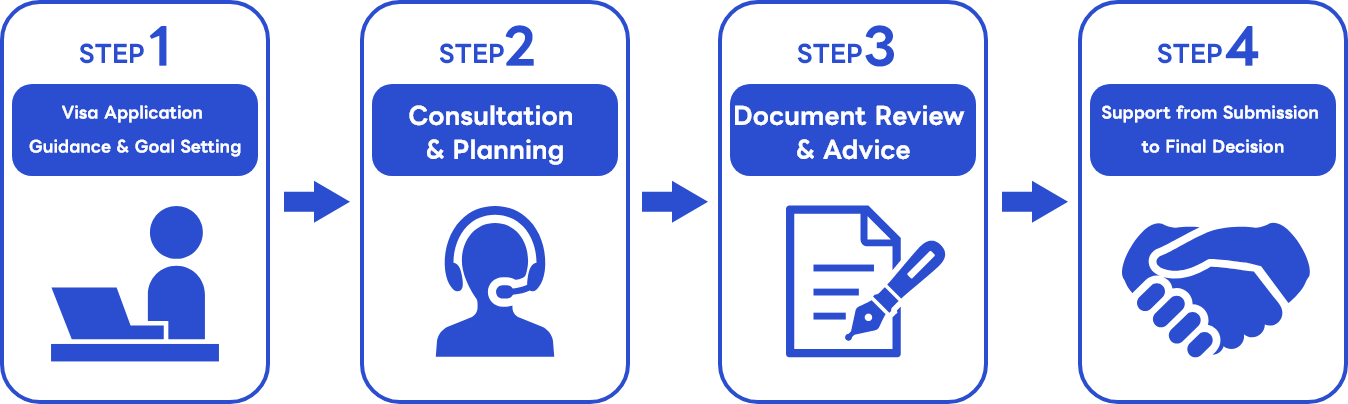
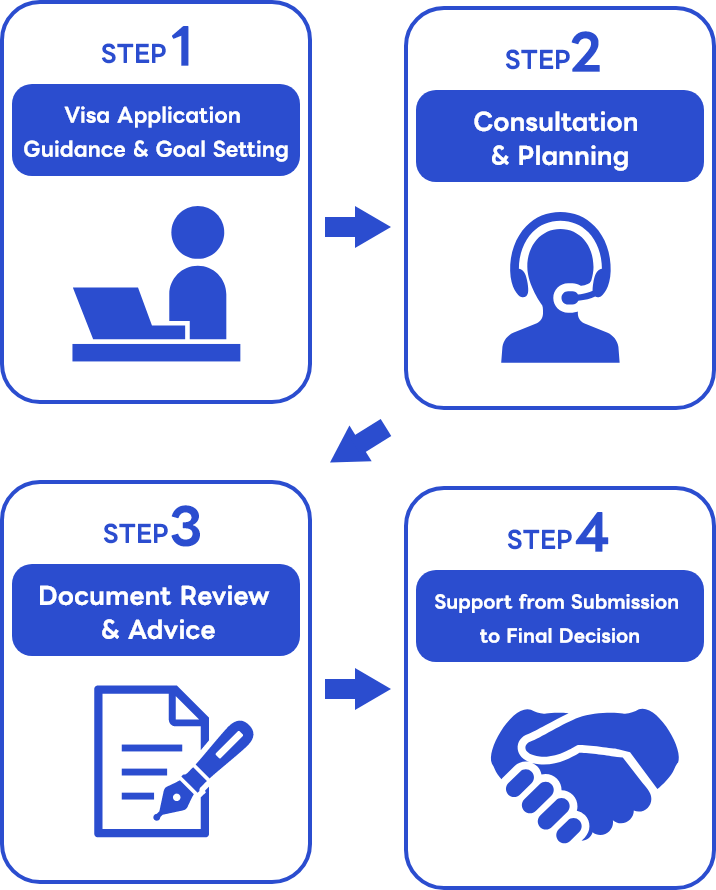
Consulting with an immigration consultant makes the process clearer and much smoother. You’ll feel more confident with document submissions and procedures, significantly reducing the risk of mistakes. Take the first step toward your Canadian dream with the guidance of an expert.