

What Is an RCIC? Immigration Consultants vs. Immigration Lawyers
Date Posted:September 24, 2026
Last Updated:September 24, 2026

What qualifications do you need to become an immigration consultant in Canada, and how do they differ from immigration lawyers? We are often asked these questions. In recent years the system has changed, and the bar for becoming qualified has risen.
Shiraishi Visa JP Canada has five immigration consultants well versed in immigration law. We explain the differences between the two and the benefits of hiring a consultant.
What Is an Immigration Consultant?
“What is the difference between an immigration lawyer and an immigration consultant?”
This is one of the questions we are asked most often.
In Japan, the word “consultant” may bring to mind a profession that solves business problems. In Canada, however, an “immigration consultant” is a government-authorized legal representative who provides advice on visas and permanent residence, prepares documents and submits applications on clients’ behalf. In Japanese terms, the role can be described as combining those of an administrative scrivener (gyoseishoshi) and a lawyer.
Qualifications for Canadian Immigration Consultants (RCICs) and License Classes
To become an immigration consultant, you must complete a specific program and pass an exam called the Entry-to-Practice Exam (EPE). After passing the exam, you are given a license number and can practise as an immigration consultant.
Four Steps to Becoming an RCIC
- Be 18 years of age or older
- Complete a designated education program
You must complete an education program at one of the following universities:
- Queen’s University: Graduate Diploma in Immigration and Citizenship Law (English)
- Université de Montréal: D.E.S.S. en réglementation canadienne et québécoise de l’immigration (French) - Pass the RCIC Entry-to-Practice Exam (EPE)
After completing the education program, you must pass the *EPE (Entry-to-Practice Exam) administered by the College of Immigration and Citizenship Consultants (CICC). - Complete the CICC licensing process
After passing the exam, you submit a formal application to the CICC and obtain a license (registration number). You can then officially practise as an RCIC.
RCIC License Classes and Scope of Practice
There are three classes of RCIC license, and the scope of what a consultant can handle as a representative differs by class.
| Class | Features | Representation at the IRB |
|---|---|---|
| Class L1 | Can handle general immigration applications | No |
| Class L2 | For those who hold a paralegal licence from the Law Society of Ontario | Partly (e.g., Immigration Appeal Division, IAD) |
| Class L3 | Can represent clients across the entire IRB (including refugee hearings and appeals) | Fully |
The IRB (Immigration and Refugee Board of Canada) is the tribunal you turn to when you disagree with a decision by IRCC. It is not often used for ordinary visa applications, but it is used when you cannot accept the reason for a refusal (for example, when a family class application is refused on the grounds that the relationship is not genuine). In such cases, an immigration consultant with a Class L3 license, who is authorized to represent clients at the IRB, can handle the matter.
Reference: Licensing Information
The Difference Between an RCIC and an RISIA
In Canada, there are two types of credentials that allow you to legally give advice on immigration and visas: RCIC (Regulated Canadian Immigration Consultant) and RISIA (Regulated International Student Immigration Advisor).
An RCIC can advise on, and submit applications for, all types of visa and immigration applications. An RISIA, on the other hand, is an advisor credential mainly for those working at educational institutions to support international students; RISIAs are only permitted to advise on matters such as study permits and short-term visitor visas, and cannot advise on or submit applications for other types of visas.
What Does an Immigration Consultant Do?
RCICs carry out work such as the following every day:
- Listening to clients’ circumstances and wishes
- Providing general information on visas and permanent residence
- Creating scenarios for obtaining a visa or PR, consultations and advice
- Explaining and providing guidance to employers
- Assessing eligibility, including calculating points for PR applications
- Helping obtain and prepare required and supporting documents
- Preparing application forms on the client’s behalf
- Submitting applications to IRCC as the client’s representative
- Handling communication and liaison with IRCC and other Canadian government bodies
- Monitoring and reporting on the progress of applications
- Resolving issues related to applications
Our Team
Our firm has five RCICs well versed in immigration law on staff, including two consultants holding an RCIC-IRB (Class L3) licence, who support clients’ visa and PR applications every day according to their individual circumstances. We provide attentive support from the first counselling session through to the completion of the application.
When Should You Use an Immigration Lawyer?
Lawyers in Canada belong to their provincial law society and can handle a wide range of fields beyond immigration law, such as criminal and civil law. Immigration consultants can only handle immigration law, whereas lawyers can handle other areas of law as well.
Cases Where a Lawyer Is the Right Choice
- If you have a criminal record (knowledge of criminal law is required)
- If you are appealing an IRCC refusal to the Federal Court
- Complex applications involving other areas of law
In these cases, an RCIC cannot help, so you will need to hire an immigration lawyer.
Benefits of Using an Immigration Consultant
Unless there are special circumstances involving laws other than immigration law or Canada’s federal courts, using an RCIC is the realistic and cost-effective choice for most people.
Benefits of Hiring an RCIC
- Lower fees than an immigration lawyer
Immigration lawyers often handle difficult cases. - Extensive track record with visa and PR applications
Because immigration consultants handle a large number of cases, they have a strong track record and experience with many different situations. - Service available in Japanese and English
All of our RCICs speak both Japanese and English. - Accurate interpretation of complex IRCC documents and precise advice
For example, even if IRCC emails you saying “We need additional supporting documents,” it can be hard for the average person to know which documents to submit and how. In situations like this, the strength of our RCICs is that they can understand your situation in Japanese and explain it carefully.
Summary
If a lawyer would be the better option for your situation, we will tell you so honestly. After hearing about your circumstances, we can also give you an estimate of the costs of your visa or PR application and let you know whether you need to consult an immigration lawyer. Please feel free to contact us first.
Free Consultations and Inquiries
Feel free to get in touch!



Immigration Consultant
Yuki Shiraishi
Born in Japan. After earning a Bachelor's degree from the University of Michigan, she worked for six years in New York as a marketing consultant at a major travel agency, while also studying in an MBA program at the City University of New York. After returning to Japan, she managed the visa center of the same travel company, handling various international visa applications for foreign clients.
Related Columns




Related News
Looking to obtain permanent residence or a visa?
Consult with us now!

Applying for permanent residence or a visa to Canada on your own can be overwhelming due to the large number of required documents, and you may feel uncertain about whether everything is correct. However, if you're serious about immigrating to Canada, we strongly recommend seeking the support of an immigration consultant. There are many pathways to obtaining permanent residence, depending on factors such as your age, occupation, and family status. With the help of an expert, you can ensure that you plan the right approach tailored to your specific situation.
A professional immigration consultant will help solve your concerns
Get a free Counseling now
From immigration planning to application submission,
everything is completed with shiraishi Visa JP Canada
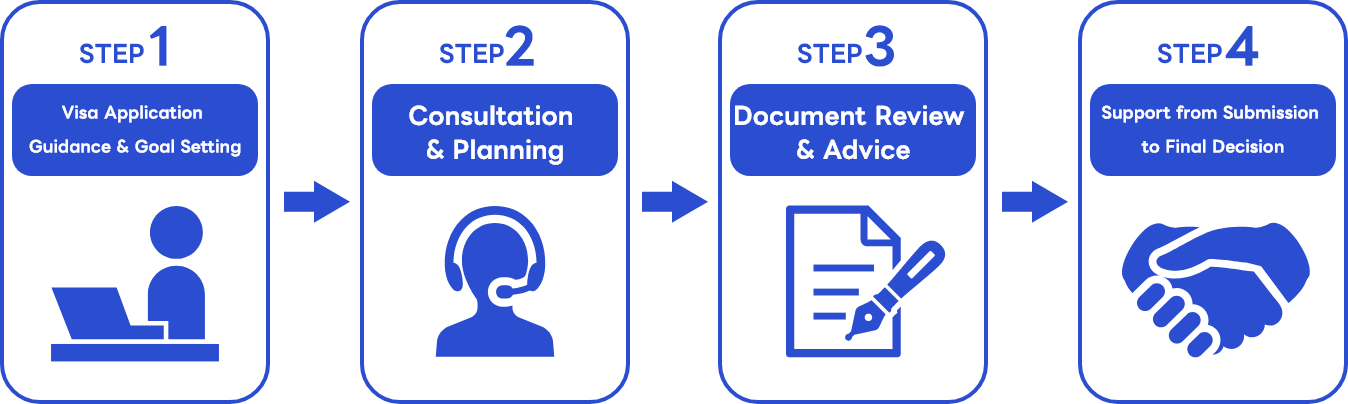
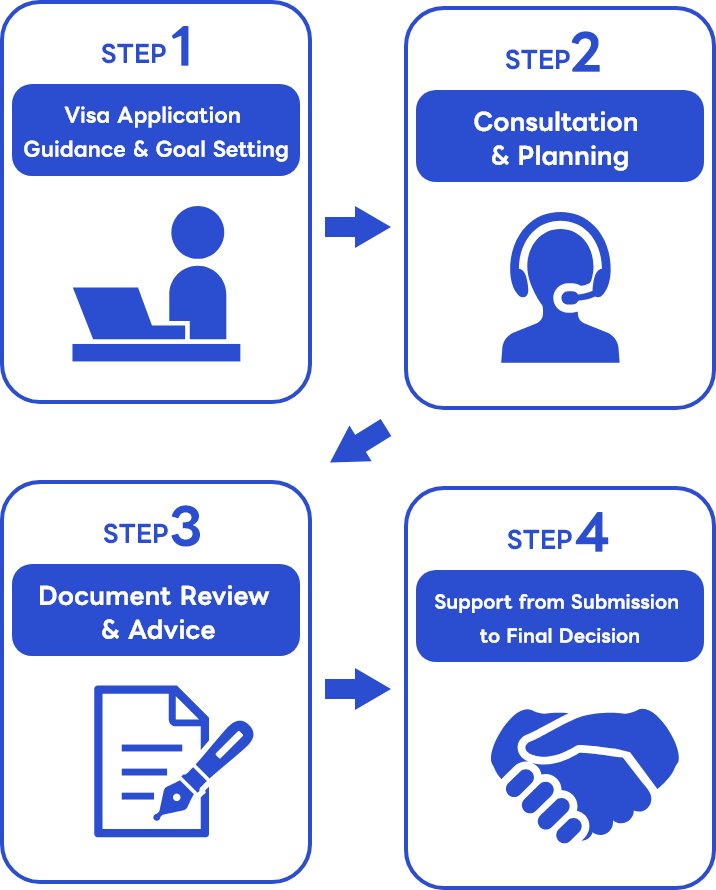
Consulting with an immigration consultant makes the process clearer and much smoother. You’ll feel more confident with document submissions and procedures, significantly reducing the risk of mistakes. Take the first step toward your Canadian dream with the guidance of an expert.
Tag list
Popular Rankings

September 24, 2026
Express Entry Jobs for Canadian PR: Easy-to-Start Occupations with No Experience
If you are aiming to fast-track your path to Canadian permanent residence, Express Entry’s category-

September 24, 2026
Provincial Nominee Programs to Expand Significantly in 2026
In December 2025, the Government of British Columbia announced its 2026 nomination allocation under

September 24, 2026
Stricter Screening for the Significant Benefit Work Permit (C10), Including the Entrepreneur Work Permit| Policy Changes and Application Strategies
On February 24, 2026, IRCC updated its guidelines for the Significant Benefit (C10) category, one of

September 24, 2026
PNP and AIP Program Updates: Growing Restrictions Across Canadian Provinces (As of July 2025)
In 2025, several Canadian provinces and territories have introduced new limits and priority criteria