

LMIA-Exempt Work Permits in Canada | Using Japan’s CPTPP Advantage
Date Posted:September 24, 2026
Last Updated:September 24, 2026

To work in Canada, you need a work permit. Work permits fall broadly into two types: those that require an LMIA and those that do not.
In this article, we explain the difference and the cases in which you can work without an LMIA.
What Is an LMIA?
An LMIA (Labour Market Impact Assessment) is a document that a Canadian employer must obtain when hiring a foreign national — essentially a “permit to employ a foreign worker.” After an assessment by Employment and Social Development Canada (ESDC), it confirms that hiring the foreign national will have only a positive or neutral impact on the Canadian labour market — in other words, no negative impact.
Occupations and Nationalities That Can Work Without an LMIA
On the other hand, under international agreements, foreign nationals who meet certain conditions may be able to obtain a work permit without an LMIA.
Traders
A trader is “a person who intends and is able to carry on trade in goods or services between Canada and the country of their nationality.” For this type of work, foreign workers with the following nationalities can be employed without an LMIA.
- United States
- Mexico
- Colombia
- Chile
- South Korea
- Peru
These countries have special LMIA-exempt frameworks based on several international agreements concluded with Canada, such as the Canada–United States–Mexico Agreement (CUSMA).
The Canada–United States–Mexico Agreement (CUSMA) replaced the North American Free Trade Agreement (NAFTA), and US citizens are exempt from obtaining a Temporary Resident Visa (TRV). However, since February 29, 2024, Mexican citizens travelling to Canada, including those who wish to work in Canada, must obtain a TRV unless they are eligible for an eTA by meeting all three of the following criteria set out by Immigration, Refugees and Citizenship Canada (IRCC).
- You are entering Canada by air, or entering Canada in transit to another destination.
- Your stay is short-term (usually a stay of 6 months or less).
- You have held a Canadian visitor visa, work permit or study permit within the past 10 years, or you hold a valid US non-immigrant visa of any kind at the time of application and at the time of travel.
Investors
An investor is a person who can show that they have made a substantial investment in a Canadian business and are involved in developing and directing that business. Investors with the following nationalities can work in Canada without an LMIA.
- United States
- Mexico
- Colombia
- Chile
- South Korea
- Peru
- European Union (CETA member states)
- United Kingdom
- Some member countries of the Comprehensive and Progressive Agreement for Trans-Pacific Partnership (CPTPP), including Japan
[Note]
- As of September 2026, the CPTPP has 12 parties: the 11 original signatories (Australia, Brunei, Canada, Chile, Japan, Malaysia, Mexico, New Zealand, Peru, Singapore and Vietnam) and the United Kingdom, for which the agreement entered into force on December 15, 2024.
Professionals
The definition of a professional differs depending on the international agreement. For example, under the agreement with Mexico (CUSMA), it is “a person who has pre-arranged employment or a contract with a Canadian enterprise and works in an eligible occupation.” Under the CPTPP, only people working in occupations at skill level TEER 0 or 1 who also meet the education and work experience requirements and the requirements for their nationality are eligible.
Eligible nationalities include the following:
- United States
- Mexico
- Colombia
- Chile
- Panama
- Peru
- Member countries of GATS (General Agreement on Trade in Services)
- Some CPTPP member countries, including Japan (same as the list in the Investors section above)
Technicians
Technicians with certain nationalities can also work in Canada without an LMIA. The eligible nationalities are as follows:
- Colombia
- Panama
- Peru
- CPTPP member countries, including Japan
Intra-Company Transferees (ICT)
Intra-company transferees (ICT = Intra-Company Transfers) are employees of a foreign company who are temporarily transferred to a related company or subsidiary in Canada. The intra-company transfer work permit is open to all nationalities, but certain international agreements set conditions specific to each country.
- Executives or senior managers: United Kingdom, CPTPP member countries including Japan, CETA member states, Peru, South Korea, Chile, Colombia, United States, Mexico
- Specialized knowledge workers: United Kingdom, CPTPP member countries including Japan, CETA member states, Peru, South Korea, Chile, Colombia, United States, Mexico
- Management trainees: United Kingdom, CPTPP member countries including Japan, Peru, South Korea, Colombia
- Graduate trainees: CETA member states
Other Foreign Nationals Who Can Work in Canada Without an LMIA
Foreign workers who meet certain conditions can work in Canada without an LMIA under international agreements. Here are some examples, grouped by occupation and by country.
Special Work Situations
If you fall under one of the following occupations, you can work in Canada without an LMIA.
- Airline personnel (flight operations, technical and ground staff)
- US government officials
Spouses of Foreign Workers
Under some international agreements, spouses of foreign workers can also work in Canada without an LMIA. The eligible nationalities are as follows:
- Colombia
- South Korea
- CPTPP member countries, including Japan
- European Union (CETA) – spouses of intra-corporate transferees
- United Kingdom – spouses of ICTs
Special Provisions by Country and Agreement
Under certain international agreements, people may also be employed without an LMIA. The eligible countries and conditions are as follows:
- South Korea: contractual service suppliers or independent professionals
- European Union (CETA): contractual service suppliers, engineering technologists, scientific technologists and independent professionals
- United Kingdom: independent professionals, contractual service suppliers, engineering technologists and scientific technologists
Advice from an Immigration Consultant
Since September 26, 2024, the Government of Canada has refused to process certain LMIA applications (for example, low-wage positions in census metropolitan areas with an unemployment rate of 6% or higher), and many employers and applicants who were considering a work permit have been affected. This makes it more important than ever to consider these “LMIA-exempt work permits.”
Fortunately, as a CPTPP member, Japan has several routes that are exempt from the LMIA. If you think you may qualify for one of these, or would like to explore them, please consult our firm first.
Free Consultations and Inquiries
Feel free to get in touch!



Immigration Consultant
Yuki Shiraishi
Born in Japan. After earning a Bachelor's degree from the University of Michigan, she worked for six years in New York as a marketing consultant at a major travel agency, while also studying in an MBA program at the City University of New York. After returning to Japan, she managed the visa center of the same travel company, handling various international visa applications for foreign clients.
Related Columns




Related News
Looking to obtain permanent residence or a visa?
Consult with us now!

Applying for permanent residence or a visa to Canada on your own can be overwhelming due to the large number of required documents, and you may feel uncertain about whether everything is correct. However, if you're serious about immigrating to Canada, we strongly recommend seeking the support of an immigration consultant. There are many pathways to obtaining permanent residence, depending on factors such as your age, occupation, and family status. With the help of an expert, you can ensure that you plan the right approach tailored to your specific situation.
A professional immigration consultant will help solve your concerns
Get a free Counseling now
From immigration planning to application submission,
everything is completed with shiraishi Visa JP Canada
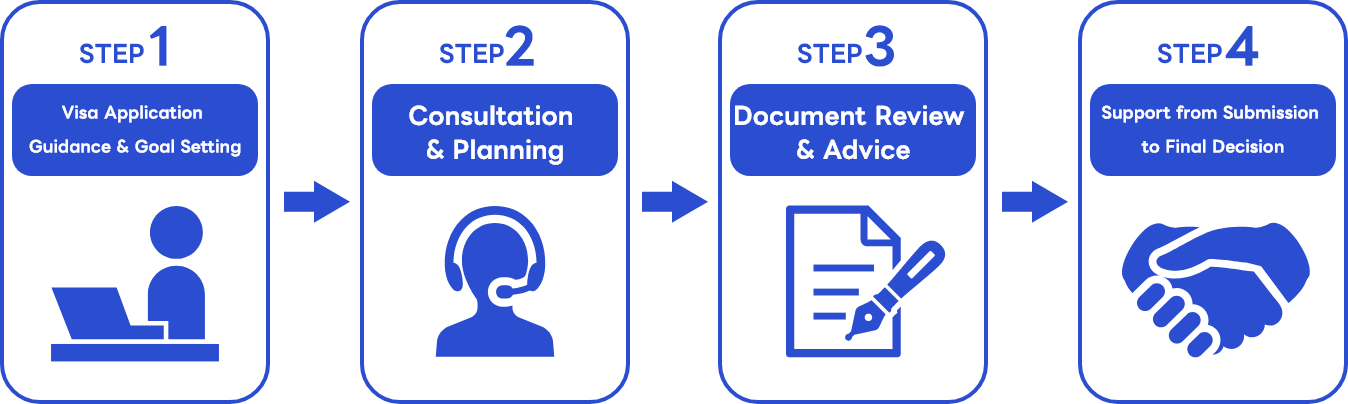
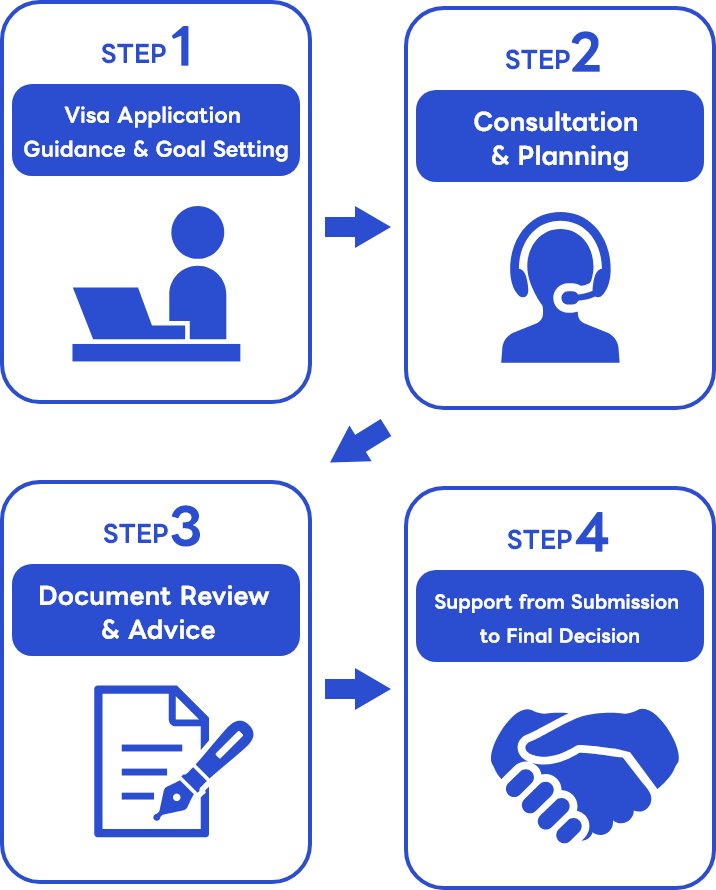
Consulting with an immigration consultant makes the process clearer and much smoother. You’ll feel more confident with document submissions and procedures, significantly reducing the risk of mistakes. Take the first step toward your Canadian dream with the guidance of an expert.
Tag list
Popular Rankings

September 24, 2026
Express Entry Jobs for Canadian PR: Easy-to-Start Occupations with No Experience
If you are aiming to fast-track your path to Canadian permanent residence, Express Entry’s category-

September 24, 2026
Provincial Nominee Programs to Expand Significantly in 2026
In December 2025, the Government of British Columbia announced its 2026 nomination allocation under

September 24, 2026
Stricter Screening for the Significant Benefit Work Permit (C10), Including the Entrepreneur Work Permit| Policy Changes and Application Strategies
On February 24, 2026, IRCC updated its guidelines for the Significant Benefit (C10) category, one of

September 24, 2026
PNP and AIP Program Updates: Growing Restrictions Across Canadian Provinces (As of July 2025)
In 2025, several Canadian provinces and territories have introduced new limits and priority criteria