

12 Recommended Jobs in Canada Where Japanese Speakers Have an Edge
Date Posted:September 24, 2026
Last Updated:September 24, 2026

Jinzai Canada, the job listings website run by Shiraishi Visa JP Canada’s recruitment division, receives a large number of job postings from across Canada every day.
Recently, there has been an increase in jobs where you can make use of strengths unique to Japanese people, and the range of jobs in which Japanese people can succeed in Canada is steadily expanding.
Some of the occupations where you have a chance of being hired precisely because you speak Japanese as your native language can also more easily lead to a work permit or permanent residence (immigration). Here are 12 recommended occupations.
Related Reading
We have put together an overview comparing three immigration routes you can pursue through studying in Canada, based on enrolling in a public college, a private college, or graduate school. For details: Permanent Residence Through School
Occupations Where Japanese Skills Are in Demand
In Canada, Japanese people’s fine technical skills, hospitality with attention to the smallest details, and disciplined, conscientious character are highly valued, and there is demand in a wide range of occupations such as early childhood educators, hairstylists, carpenters, cooks, gardeners, and beauty salon work. These jobs not only allow you to make the most of strengths unique to Japanese people, but are also attracting attention as fields that may lead to a work permit or permanent residence.
Early Childhood Educator
As the population grows, the number of children is increasing, and as a result demand for daycare and childcare facilities is rising rapidly. Japanese early childhood educators are highly regarded in Canada, with particular strengths in learning through play and individual guidance. A Canadian early childhood educator licence is required, and English ability is also needed.
Since 2025, it has also been designated as a priority occupation in Express Entry, the system used when applying for Canadian permanent residence.
>> Feature: Obtaining permanent residence as an early childhood educator
Hairstylist
In major cities, there have long been many Japanese hair salons, and the high skill level of Japanese hairstylists is widely recognized. Some provinces require a Canadian hairstylist licence to work as a hairstylist, and English ability is also needed.
Recently, many Japanese people can also be seen working at Japanese hair salons on a Working Holiday visa.
Carpenter
The number of people who love Japanese-style architecture is growing every year. Carpenters with Japanese techniques are also active in areas such as the interior finishing of Japanese restaurants. There is a Canadian licence, but you can work without one. Even if your English is not strong, you can succeed if your skills are recognized.
Canada is facing a serious housing shortage, and there are moves to introduce new permanent residence pathways for foreign workers in construction-related jobs. In addition, construction-related skilled trades were recently designated as priority occupations in Express Entry.
Cook
Sushi and Japanese cuisine have become established favourites around the world. Recently, izakaya and ramen shops have also grown in popularity, and people who can cook Japanese food are in high demand. There is a Canadian licence, but you can work without one. Even if your English is not strong, you can succeed if your skills are recognized.
In 2025, cooks were also included in the trade occupations category of Express Entry, the system used when applying for Canadian permanent residence, although they are not among the Express Entry categories for 2026.
>> Feature: Obtaining permanent residence as a cook
If you plan to learn sushi chef skills in Japan beforehand, take a look at “Sushi Chef School Inshokujin Daigaku.”
Gardener
More and more people, especially wealthy households, are creating Japanese-style gardens on their property or on condominium patios. Requests to create Japanese gardens in parks and other public spaces are also reportedly increasing. Especially as summer approaches, job postings aimed at Japanese people increase, and you can even see Japanese gardening companies recruiting apprentices with no experience. There is a Canadian licence, but you can work without one. Even if your English is not strong, you can succeed if your skills are recognized.
Beauty Salons (Esthetics, Eyelash Extensions, Nails)
Hospitality and attention to detail are skills Japanese people possess. In the beauty industry, including estheticians, nail technicians, and eyelash technicians, Japanese people have gained an established reputation for high skill. No licence is required, but English ability is needed. Since 2021, these occupations have been classified as skilled work, making them occupations through which you can aim for permanent residence. Recently, many Japanese people are also working at beauty salons on a Working Holiday visa, making use of work experience gained in Japan.
Industries Targeting the Japanese Market
There are also many jobs aimed at Japanese people living in Canada or visiting for tourism, study, and so on. There is always a need among people who want to consult in Japanese with peace of mind, such as for travel and study support or professional services related to housing and money. For people whose English is not yet sufficient, services available in Japanese are very reassuring, so in these fields “being able to speak Japanese” is itself a major strength.
Travel Agencies
There are many Japanese travel agencies that attend to travellers from Japan in Japanese once they arrive in Canada. Some of these travel agencies also provide services for tourists travelling from Canada to Japan (outbound).
Study Abroad Agencies
Every year, a large number of international students come to Canada from Japan: more than 10,000. Study abroad agencies provide services that support these students’ daily lives in Canada and help with enrollment procedures for local language schools, career colleges, and so on. Being able to receive support in Japanese in a faraway country makes them a reassuring presence for international students.
Services Japanese People in Canada Want to Receive in Japanese
Even if you live in Canada and become reasonably comfortable in English (or French), there are still some services you probably want to receive in your native language. These seem to be services involving a lot of technical terms or complicated matters, or ones you want to understand with certainty and accuracy, and in these industries, specialists advertising Japanese-language services are thriving.
Medical Interpreter
This is a Japanese-language medical interpreting service that accompanies you to clinics and hospitals. The cost is often covered by travel insurance and the like, and it seems to be used especially by international students and travellers who are worried about their English.
Financial Planner
When it comes to important matters such as money, insurance, loans, and investments, I think many people want to hear a thorough explanation in Japanese so they can understand it.
Realtor
Your own home is the biggest purchase of your life. Japanese people, it seems, want a Japanese realtor and service in Japanese.
Immigration and Visa Consulting
For visa and immigration applications, which involve complex, difficult procedures and a large number of documents, leave it to Shiraishi Visa JP Canada, where Japanese (or Japanese-speaking) immigration consultants are on staff. All of them hold a government-authorized licence. We can fully respond to clients’ wishes such as “I want accurate information explained to me in Japanese so that I can understand it properly myself” and “I want them to understand circumstances specific to Japanese people (such as remaining Working Holiday spots and timing, family register certificates, etc.).”
>> For visas and immigration, start with a free consultation
Final Thoughts
In these occupations, being Japanese is an advantage when looking for work. Please use this information to help you overcome the high hurdle of working in Canada (a foreign-language environment) when looking for a part-time job during a Working Holiday or study, and to build a long-term career with permanent residence in mind.
Occupations like the ones introduced here are frequently posted on Jinzai Canada, a Japanese-language job website in Canada. Be sure to check it out.
Free Consultations and Inquiries
Feel free to get in touch!



Immigration Consultant
Yuki Shiraishi
Born in Japan. After earning a Bachelor's degree from the University of Michigan, she worked for six years in New York as a marketing consultant at a major travel agency, while also studying in an MBA program at the City University of New York. After returning to Japan, she managed the visa center of the same travel company, handling various international visa applications for foreign clients.
Related Columns



Related News
Looking to obtain permanent residence or a visa?
Consult with us now!

Applying for permanent residence or a visa to Canada on your own can be overwhelming due to the large number of required documents, and you may feel uncertain about whether everything is correct. However, if you're serious about immigrating to Canada, we strongly recommend seeking the support of an immigration consultant. There are many pathways to obtaining permanent residence, depending on factors such as your age, occupation, and family status. With the help of an expert, you can ensure that you plan the right approach tailored to your specific situation.
A professional immigration consultant will help solve your concerns
Get a free Counseling now
From immigration planning to application submission,
everything is completed with shiraishi Visa JP Canada
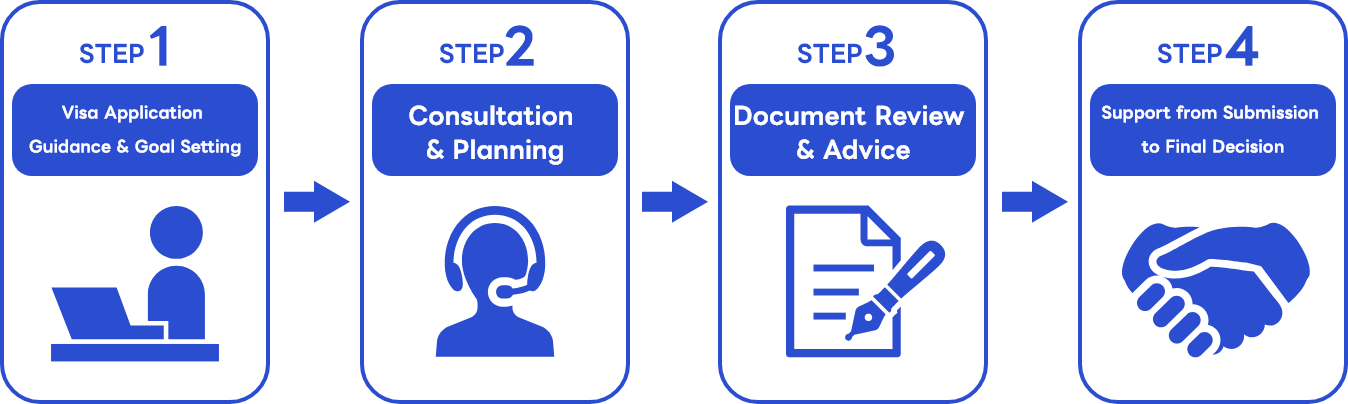
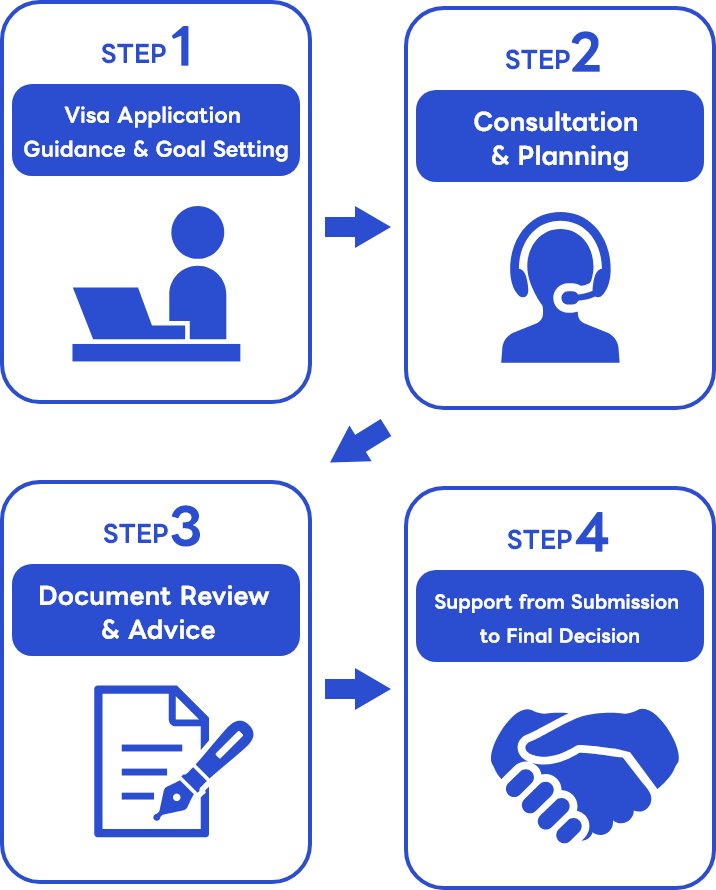
Consulting with an immigration consultant makes the process clearer and much smoother. You’ll feel more confident with document submissions and procedures, significantly reducing the risk of mistakes. Take the first step toward your Canadian dream with the guidance of an expert.
Tag list
Popular Rankings

September 24, 2026
Express Entry Jobs for Canadian PR: Easy-to-Start Occupations with No Experience
If you are aiming to fast-track your path to Canadian permanent residence, Express Entry’s category-

September 24, 2026
Provincial Nominee Programs to Expand Significantly in 2026
In December 2025, the Government of British Columbia announced its 2026 nomination allocation under

September 24, 2026
Stricter Screening for the Significant Benefit Work Permit (C10), Including the Entrepreneur Work Permit| Policy Changes and Application Strategies
On February 24, 2026, IRCC updated its guidelines for the Significant Benefit (C10) category, one of

September 24, 2026
PNP and AIP Program Updates: Growing Restrictions Across Canadian Provinces (As of July 2025)
In 2025, several Canadian provinces and territories have introduced new limits and priority criteria