Canada PR After 40 | How to Get an ITA Through Express Entry
Date Posted:September 24, 2026
Last Updated:September 24, 2026

Many people hoping to immigrate to Canada feel that their chances are slim because they are already over 40. However, that is not necessarily the case.
It is still possible to receive a permanent residence Invitation to Apply (ITA) through the Express Entry system.
In this article, we use past cases to outline how people aged 40 and over can improve their chances of getting an ITA.
Express Entry and CRS Score Basics
In Express Entry, candidates are compared using scores based on the Comprehensive Ranking System (CRS). To receive an ITA, your CRS score must be above the cut-off score for that particular draw. The cut-off changes depending on the profiles of the candidates in the pool at that time (skills, language scores, education, work experience, etc.) and on which category the draw targets (application programs such as FSW, FST and CEC, or priority categories such as French-language proficiency, education occupations and healthcare occupations).
For example, in 2025, CRS cut-off scores for Canadian Experience Class (CEC) draws ranged from 518 to 547 points, while category-based draws (health and social services, French-language proficiency, education, etc.) ranged from 379 to 510 points.
In other words, to obtain an ITA it is essential to always keep track of the latest cut-off scores and prepare so that your CRS score exceeds them.
Real Examples of Candidates Selected at Age 40 or Older
Shiraishi Visa JP Canada has handled many cases over the years. Below, let’s look at the profiles of some people who received an ITA at age 40 or older. The key is how the points lost due to age can be made up with other factors.
Example 1: Early 40s, with Canadian experience, education and strong language ability
A 44-year-old who earned a master’s degree (graduate degree) at a Canadian university and then worked in Canada for three years as a data analyst on a PGWP (Post-Graduation Work Permit). Very high English level, intermediate-or-higher French scores, and a long work history outside Canada. Thanks to these factors, their CRS score was around 530 points and they received an ITA through the CEC.
Example 2: Making use of a spouse’s strengths
The applicant was 43 and had a long work history outside Canada but no Canadian experience. Their spouse (40) had four years of experience as a librarian in Canada and held an advanced degree, so the couple raised their score by making the spouse the principal applicant. With this strategy they achieved a CRS score of over 500 points.
Example 3: Success in a category-based draw (occupation categories, French-language focus, etc.)
An applicant aged 50 or older scored 403 CRS points thanks to high French-language ability of CLB 7 or above, and received an ITA in a draw focused on French-language proficiency.
Who Should Be the Principal Applicant: You or Your Spouse?
Whether you have a spouse, and your spouse’s abilities, have a major impact on your CRS score. The following points are worth considering.
- Carefully decide who will be the principal applicant (choose the person whose age, education, language ability, etc. result in a higher score).
- It is also possible to register two profiles in the Express Entry pool with different principal applicants. However, even if both receive an ITA, you submit only one application, and permanent residence (PR) is granted to the applicant and spouse on that application.
Strategies to Raise Your CRS Score
To make up for the points lost due to age, it is effective to strengthen your score in the following areas.
- Raise your level of education
Having a higher level of education, including a degree earned in Canada, has a big impact on your CRS score, especially bachelor’s, master’s and doctoral degrees. Don’t forget to have your education from outside Canada assessed (ECA: Educational Credential Assessment). - Improve your language ability
English and French (both official languages) are extremely important in the CRS. Achieving higher levels on language tests is a big plus, including for additional points. French at CLB 7 or above is a major advantage. - Gain work experience in Canada
Canadian work experience earns a lot of points and directly boosts your score. Getting a work permit and working in Canada, so that you can add “Canadian work experience” to your background, puts you at an advantage. - Take advantage of additional factors
For example, check whether you have factors that can earn CRS “additional points,” such as education from a recognized Canadian institution, a Canadian licence (certificate) in a skilled trade, or a sibling in Canada who is already a Canadian citizen or permanent resident.
Summary
- Even if you are over 40, you still have a chance to receive an ITA through Express Entry. Past results show that cut-off scores vary quite widely, especially in CEC and category-based draws (French language, and priority occupations such as education and healthcare).
- To make up for the points lost due to age, the key is how well you can strengthen other factors such as education, language ability and Canadian work experience.
- Because your spouse’s education and language ability also affect your score, it is important to build your profile strategically, including deciding which of you will be the principal applicant.
At Shiraishi Visa JP Canada, we can hear about your specific situation (age, education, language ability, work experience, etc.) and estimate the score you would need to receive an ITA. We can also discuss ways to pursue permanent residence other than Express Entry. If you are interested, please feel free to contact us.
Free Consultations and Inquiries
Feel free to get in touch!



Immigration Consultant
Yuki Shiraishi
Born in Japan. After earning a Bachelor's degree from the University of Michigan, she worked for six years in New York as a marketing consultant at a major travel agency, while also studying in an MBA program at the City University of New York. After returning to Japan, she managed the visa center of the same travel company, handling various international visa applications for foreign clients.
Related Columns

Date Posted:September 24, 2026
How to Check Processing Times and Status for Canadian Visa and PR Applications


Date Posted:September 24, 2026
Canada Immigration Policy Trends 2025 | What Fewer Newcomers Mean for PR

Related News
Looking to obtain permanent residence or a visa?
Consult with us now!

Applying for permanent residence or a visa to Canada on your own can be overwhelming due to the large number of required documents, and you may feel uncertain about whether everything is correct. However, if you're serious about immigrating to Canada, we strongly recommend seeking the support of an immigration consultant. There are many pathways to obtaining permanent residence, depending on factors such as your age, occupation, and family status. With the help of an expert, you can ensure that you plan the right approach tailored to your specific situation.
A professional immigration consultant will help solve your concerns
Get a free Counseling now
From immigration planning to application submission,
everything is completed with shiraishi Visa JP Canada
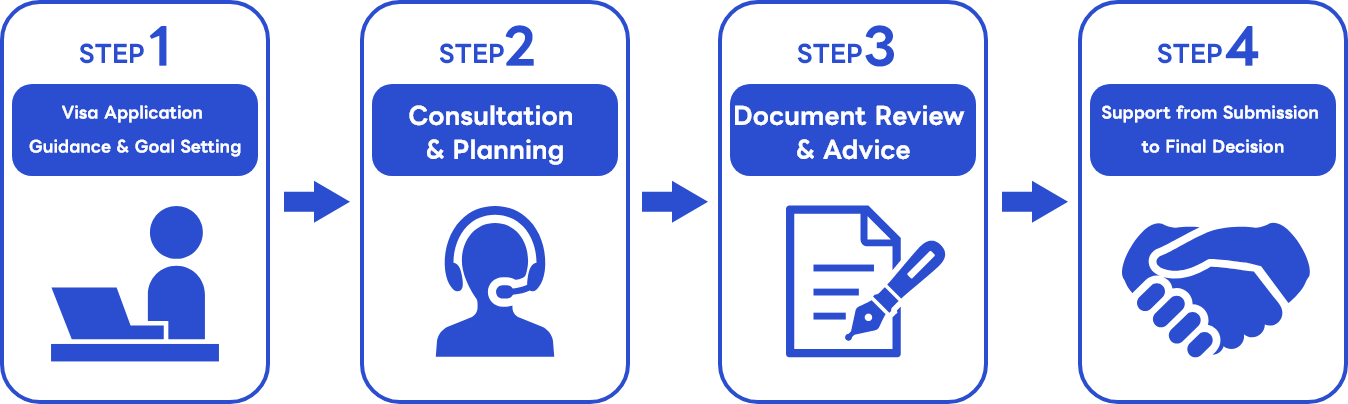
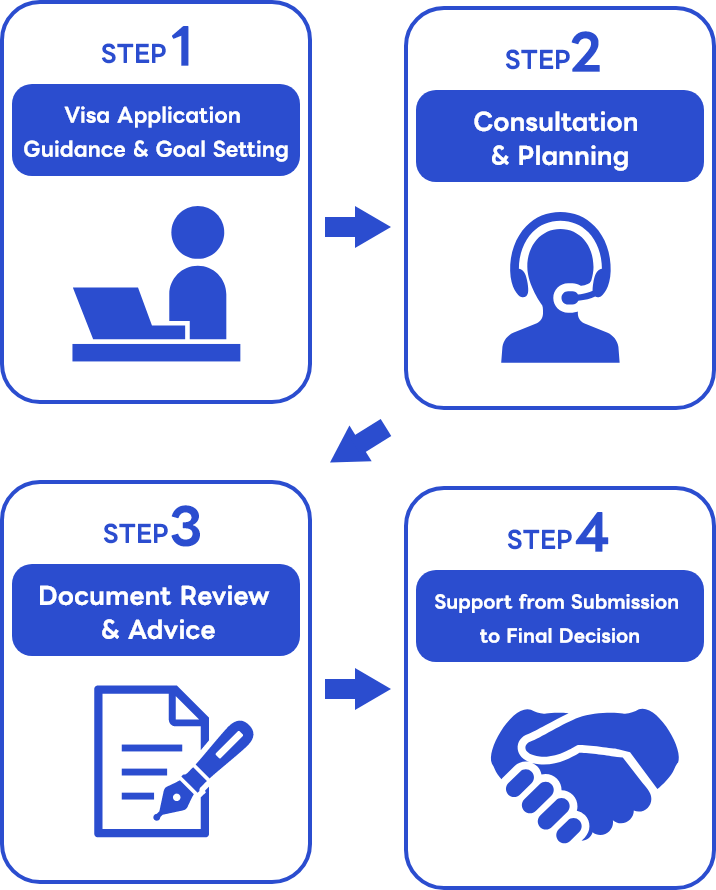
Consulting with an immigration consultant makes the process clearer and much smoother. You’ll feel more confident with document submissions and procedures, significantly reducing the risk of mistakes. Take the first step toward your Canadian dream with the guidance of an expert.
Tag list
Popular Rankings

September 24, 2026
Express Entry Jobs for Canadian PR: Easy-to-Start Occupations with No Experience
If you are aiming to fast-track your path to Canadian permanent residence, Express Entry’s category-

September 24, 2026
Stricter Screening for the Significant Benefit Work Permit (C10), Including the Entrepreneur Work Permit| Policy Changes and Application Strategies
On February 24, 2026, IRCC updated its guidelines for the Significant Benefit (C10) category, one of

September 24, 2026
Provincial Nominee Programs to Expand Significantly in 2026
In December 2025, the Government of British Columbia announced its 2026 nomination allocation under

September 24, 2026
PNP and AIP Program Updates: Growing Restrictions Across Canadian Provinces (As of July 2025)
In 2025, several Canadian provinces and territories have introduced new limits and priority criteria