

Common-Law vs. Marriage in Canada | How It Affects PR and Visa Applications
Date Posted:September 24, 2026
Last Updated:September 24, 2026

In Canada, there is a system that “legally recognizes you as partners even if you are not married”: the common-law partner.
In fact, while common-law partners are treated almost the same as married couples in permanent residence and spousal visa applications, there are important differences in the conditions for establishing the relationship and in the burden of proof.
In this article, we explain “what common-law is,” “how it differs from marriage,” and “how it relates to permanent residence applications” from the perspective of immigration practice.
Common-law and marriage are “similar but not the same”
In Canada, both common-law relationships and marriage are legally recognized partnerships. In applications for permanent residence (PR) or spousal visas, they are also, in principle, handled under the same “Family Class” framework. However, the two are not exactly the same system. The biggest differences lie in “how the relationship is established” and “how it is proven.”
A marriage is clearly demonstrated through a government procedure and a marriage certificate. A common-law relationship, on the other hand, is established through the accumulated fact of “living together continuously for at least one year,” so the partners themselves must keep proving that the relationship is genuine.
As a result, while the two are treated almost identically under visa and PR rules, the reality is that the burden and responsibility of proof is greater for common-law partners. If documents or explanations are insufficient, it is not uncommon for the relationship itself to go unrecognized and for the application to stall.
Common-law is not a “casual alternative to marriage” but a genuine legal status that comes with responsibilities.
That is exactly why it is so important not to choose it casually, but to understand it correctly and make your choice in light of your situation and plans for the future.
What is a common-law partner?
A common-law relationship is a system in which the Government of Canada recognizes a partnership that meets certain conditions as “equivalent to a spousal relationship,” even if the couple has not gone through a legal marriage.
In immigration, tax, social programs and other areas, common-law partners are treated in almost the same way as “married couples.”
However, unlike marriage, there is no “registration” or “certificate,” so a key feature is that whether the relationship is recognized is determined by its actual substance.
It may be unfamiliar in Japanese culture, but thanks to Canada’s understanding of LGBTQ+, it is a legal partnership and a “form of family” recognized for both opposite-sex and same-sex couples.
So, if you are in a relationship with a Canadian citizen or permanent resident and your situation qualifies as common-law, you gain the right to apply for Canadian permanent residence as their partner. The application falls under the Family Class, the same category as people who marry a Canadian partner.
IRCC’s official definition
Immigration, Refugees and Citizenship Canada (IRCC) defines a common-law partner as follows:
- Not legally married
- At least 18 years old
- Have lived together continuously for at least 12 months
- No major interruptions during that period
(*temporary, short absences are allowed, such as business trips or family matters) - If at least one partner declares their intention to end the relationship, the relationship is considered to have ended at that point
In other words, the criterion is not formality but “whether you are partners who share a life together.”
This content was organized and summarized in an easy-to-understand way by Shiraishi Visa JP Canada based on official IRCC information.
Source: IRCC Help Centre (English)
Of course, to meet the conditions for common-law recognition, you must gather various documents proving that your relationship is “equivalent to a marriage.” But once it is recognized, you gain the same social rights in Canada as a married couple. For this reason, some couples, even when both partners are Canadian, choose a common-law relationship rather than marriage.
That is why being a common-law partner is also an important status that comes with responsibilities. If you are seriously thinking about a future with a Canadian partner, we recommend that you first obtain thorough, accurate information so you can make the right decision.
Who is eligible?
Common-law is not a system reserved for particular people. Its key features are:
- It is recognized for both opposite-sex and same-sex couples
- The partners’ nationalities do not matter (it can apply even when both are foreign nationals)
- If your partner is a Canadian citizen or permanent resident, they can sponsor you for permanent residence based on the relationship
In other words, common-law is not a “special exception” but has been institutionalized as one of the ordinary forms of family in modern Canada.
Differences from marriage
Common-law relationships and marriage are both treated in Canada as “spouse-equivalent relationships,” but there are important differences in how they are established, how they are proven and how they are treated legally.
Understanding these correctly is very important for your future visa applications and for avoiding problems.
Differences in how the relationship is established
A marriage is established by obtaining a Marriage Licence issued by the provincial government, holding a ceremony with an authorized officiant, and registering it with the government. In other words, it is a system in which the relationship comes into being “officially” through a procedure.
A common-law relationship, on the other hand, involves no such procedure.
It is a relationship that is “recognized” after the fact through the accumulated fact of living together continuously for 12 months or more.
Put another way, the differences are as follows:
- Marriage: the legal framework comes first, and life together begins afterward
- Common-law: life together comes first, and the legal framework is applied afterward
Differences in how the relationship is proven
This difference leads directly to a difference in how the relationship is proven. With marriage, there is an official document, the Marriage Certificate, which serves as proof of the relationship.
A common-law relationship, on the other hand, has no such single certificate. Instead, you must submit a combination of multiple pieces of “evidence of your life together,” such as the following:
- Jointly signed lease agreements and housing documents
- Utility and mobile phone bills
- Joint bank accounts, insurance and beneficiary designations
- Photos and messages showing your relationships with family and friends
- Statutory declarations, etc.
With common-law, you explain that your relationship is genuine through a bundle of documents.
Differences in legal protection
For immigration and tax purposes, marriage and common-law are almost equivalent. However, in areas such as separation, inheritance and division of property, treatment may differ depending on provincial law.
For example, even in cases where a married spouse would be automatically protected, a common-law partner may not be protected without a separate agreement or will.
In this way, there can be differences in how you are treated “if the worst happens.”
Small differences can make a big difference
In daily life, you may not feel much of a difference between marriage and common-law.
However, when it comes to visa applications, breakups, disputes or inheritance, the difference suddenly takes on real significance.
That is why, rather than thinking “either is the same,” it is important to consider calmly which one suits your situation before choosing.
Relationship to permanent residence and spousal open work permits
When it comes to understanding the difference between common-law and marriage, the point people are most interested in is probably “how does it affect permanent residence or spousal visas?”
To get straight to the point, whether you are married or common-law, you can apply for permanent residence through sponsorship under the same “Family Class”. Under the rules, neither has an advantage or disadvantage over the other.
In practice, however, even within the “same framework,” there are differences in “how you prepare” and “how the application is assessed.”
Both can apply under the “Family Class”
Canadian citizens and permanent residents can sponsor their spouse or partner for permanent residence. This covers the following relationships:
- Legally married spouse (Spouse)
- Common-law partner
- Conjugal partner (*exceptional cases)
In other words, even a common-law relationship is recognized as a formal immigration category, just like marriage.
Key points in common-law applications
Although the rules are the same, the following points are given particular weight in common-law applications:
(1) Proof of 12 months of living together
The most important point is “whether you really lived together continuously for 12 months or more.”
If this is unclear, you will not be recognized as common-law in the first place.
(2) Genuineness of the relationship
Officers look not merely at whether you formally lived together, but at whether you actually lived as partners.
Points such as the following are assessed comprehensively from your documents and explanations:
- Whether you support each other financially
- Whether you discuss your future together
- Whether the people around you recognize you as a couple
(3) Continuity and exclusivity
Another important factor is whether the relationship is a continuous and exclusive partnership, rather than temporary cohabitation or a relationship that could be ended at any time.
It is not a matter of “marriage is easy, common-law is hard”
People often say that “it is easier if you get married” or “common-law applications are assessed more strictly,” but in reality it is not that simple.
Even with marriage, if the genuineness of the relationship is in doubt, you may be investigated or asked to submit additional documents, and even with common-law, there are many cases that proceed smoothly when the evidence is well prepared.
What matters is not “which system you choose” but how carefully you can explain and prove your relationship.
Think about strategy before choosing a system
Whether to be common-law or married is not just a lifestyle choice; it is also part of your Canadian immigration strategy.
- When do you want to apply?
- What visa are you currently staying on?
- Have you lived together long enough?
- Are procedures in Japan also required?
The best choice will vary depending on conditions like these.
That is exactly why choosing with an understanding of what each system means, rather than “just moving in together for now” or “just getting married for now,” leads to peace of mind in the future.
If you have anything you are unsure about or any questions, be sure to consult a Canadian government-licensed immigration consultant.
Common misconceptions and points to watch out for
There is a lot of information online about common-law relationships and spousal visas, and it is not uncommon for people to make decisions based on misunderstandings. Here we sort out the most common misconceptions and the points to watch out for.
“If we live together, we automatically become common-law”
This is one of the most common misconceptions. Simply living at the same address does not make you common-law partners.
What matters is the reality of “whether you lived together as partners.”
For example, points such as the following are assessed comprehensively:
- How you shared rent and living expenses
- Whether you introduced each other to family and friends as partners
- Whether you discussed your future together
Even if you share an address, you will not be recognized as common-law if the substance of the relationship is lacking.
“After 12 months, we can apply for PR right away”
This is another common misconception.
Twelve months of living together is the “minimum requirement,” not “sufficient in itself.” You need to prepare documents proving that you actually lived together and explain your relationship.
Also, if the starting point of the 12 months is unclear, or if there are periods that are considered interruptions, the count may have to start over.
“If we get married, the application will almost certainly be approved”
Even with a marriage certificate, the assessment becomes stricter if the genuineness of the relationship is in doubt. This is because officers look at whether it might be a sham marriage, a so-called “marriage for a visa.”
More weight is placed on “whether it is a genuine partnership” than on whether you are married.
“Common-law is a relationship with fewer responsibilities”
Common-law is not a “casual relationship.” Because you are legally recognized partners, responsibilities and obligations may arise if you separate.
Obligations may arise regarding taxes, support and, depending on the province, property and child support, and the weight of the relationship is essentially no different from marriage.
“If we break up, everything is reset”
Even after a common-law relationship ends, that fact can affect immigration applications and legal procedures.
In particular, if the relationship ends partway through a sponsorship application, the application itself may become invalid.
Correct information is the best way to avoid risk
Many problems arise from “not knowing” or “misunderstanding.”
Both common-law and marriage are important choices that involve both your life and the legal system. That is why the best way to avoid risk is not to decide based on fragments of information found online, but to gain a correct understanding in light of your own situation.
How to think about which to choose
Common-law or marriage? This is not just a difference in form but a choice that affects both your life plan and your immigration plan. Neither is the right answer; what matters is to think based on “your current situation” and “what you want to do from here.”
Cases where marriage is a good fit
In situations like the following, marriage is often the practical choice:
- You have already firmly decided to marry
- You need to file a marriage registration in Japan or update your family register (koseki)
- You want to keep your supporting documents as simple as possible
- You want to be clear when explaining things to your family and planning for the future
Once the procedures are complete, marriage makes “proof of the relationship” very clear. It therefore suits people who value simplicity in paperwork and peace of mind.
Cases where common-law is the practical choice
On the other hand, in cases like the following, common-law can be the natural choice:
- You have already lived together for 12 months or more
- You choose not to marry for cultural or religious reasons
- You are already effectively living as a family
- It is difficult to make the decision to marry right away
In such cases, you can receive the protections of the system as common-law partners without forcing yourselves into marriage.
“How you prepare” matters more than “which you choose”
What matters more than marriage versus common-law is how well prepared you are for the system you choose.
- Do you have proof of living together?
- Can you put your relationship into words?
- Are your future plans clearly organized?
If these points are in order, the chances are high that things will go smoothly whichever you choose.
Think in terms of “your life,” not “the system”
The immigration system is ultimately a mechanism to support your life.
What matters is not adapting yourselves to the system, but looking at how to fit the system into your own life plan.
When in doubt, think not just about “right now” but about “where you want to be in a few years.” That perspective will lead to a choice you will not regret.
Summary | Using the system “without knowing it” is the biggest risk
In Canada, both common-law and marriage are officially recognized forms of partnership. In applications for permanent residence and spousal visas, they are also handled within almost the same framework.
However, how they are established, how they are proven and the weight of the responsibilities involved are by no means the same.
- Common-law is established through “the reality of your life together”
- Marriage is established through “procedures”
And for that reason, common-law always comes with the responsibility of explaining and proving that the relationship is genuine.
If you choose without knowing this difference, you may later find that your documents are insufficient, that you do not meet the conditions, or that unexpected responsibilities have arisen.
The system itself is not the risk; using it without understanding it well is the biggest risk.
That is why you should understand before you choose. This is the surest way to avoid regrets.
A message from Shiraishi Visa JP Canada
Applying as common-law or married partners, and for spousal visas or permanent residence, marks a major milestone in your life. It is very important not only to understand the system, but also to work out “what is best in your current situation.”
At Shiraishi Visa JP Canada, we provide careful support in Japanese for matters such as the following. We also work in English, so those with English-speaking partners can rest assured.
- Assessing whether you can apply as common-law partners
- Reviewing your period of living together and supporting documents
- Clarifying whether marriage or common-law is better suited to you
- Application support for spousal/partner visas and permanent residence
If you are thinking, “We don’t know whether we qualify as common-law,” “We’re unsure whether we should get married,” or “I’m worried whether my current visa is OK,” please start by consulting us, the immigration consultants who are experts in this field.
It doesn’t matter what stage you are at. Let us think it through together, starting with sorting out your situation. We look forward to hearing from you.
Free Consultations and Inquiries
Feel free to get in touch!



Immigration Consultant
Yuki Shiraishi
Born in Japan. After earning a Bachelor's degree from the University of Michigan, she worked for six years in New York as a marketing consultant at a major travel agency, while also studying in an MBA program at the City University of New York. After returning to Japan, she managed the visa center of the same travel company, handling various international visa applications for foreign clients.
Related Columns

Date Posted:September 24, 2026
How to Check Processing Times and Status for Canadian Visa and PR Applications


Date Posted:September 24, 2026
Canada Immigration Policy Trends 2025 | What Fewer Newcomers Mean for PR

Related News
Looking to obtain permanent residence or a visa?
Consult with us now!

Applying for permanent residence or a visa to Canada on your own can be overwhelming due to the large number of required documents, and you may feel uncertain about whether everything is correct. However, if you're serious about immigrating to Canada, we strongly recommend seeking the support of an immigration consultant. There are many pathways to obtaining permanent residence, depending on factors such as your age, occupation, and family status. With the help of an expert, you can ensure that you plan the right approach tailored to your specific situation.
A professional immigration consultant will help solve your concerns
Get a free Counseling now
From immigration planning to application submission,
everything is completed with shiraishi Visa JP Canada
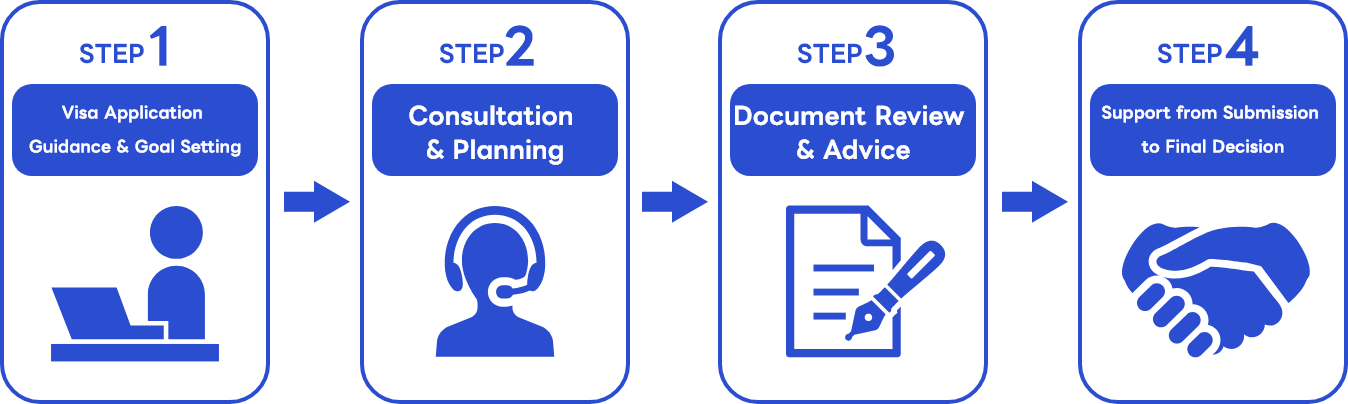
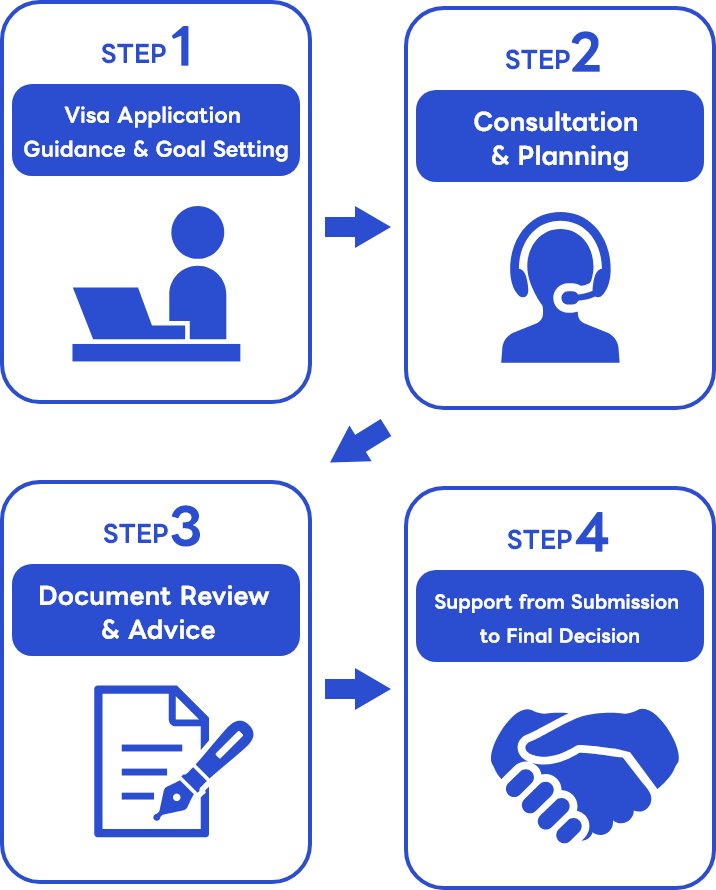
Consulting with an immigration consultant makes the process clearer and much smoother. You’ll feel more confident with document submissions and procedures, significantly reducing the risk of mistakes. Take the first step toward your Canadian dream with the guidance of an expert.
Tag list
Popular Rankings

September 24, 2026
Express Entry Jobs for Canadian PR: Easy-to-Start Occupations with No Experience
If you are aiming to fast-track your path to Canadian permanent residence, Express Entry’s category-

September 24, 2026
Stricter Screening for the Significant Benefit Work Permit (C10), Including the Entrepreneur Work Permit| Policy Changes and Application Strategies
On February 24, 2026, IRCC updated its guidelines for the Significant Benefit (C10) category, one of

September 24, 2026
Provincial Nominee Programs to Expand Significantly in 2026
In December 2025, the Government of British Columbia announced its 2026 nomination allocation under

September 24, 2026
PNP and AIP Program Updates: Growing Restrictions Across Canadian Provinces (As of July 2025)
In 2025, several Canadian provinces and territories have introduced new limits and priority criteria