Canada’s First-Generation Limit on Citizenship by Descent Explained
Date Posted:September 24, 2026
Last Updated:September 24, 2026

Under Canada’s Citizenship Act, a child born outside Canada can acquire Canadian citizenship if either parent is a Canadian citizen.
Since it came into force in 1947, this law has been amended many times. This article explains the “first-generation limit” introduced in 2009, the court ruling that found it unconstitutional, and the new rules that took effect under Bill C-3 on December 15, 2025.
Update (September 2026): This article was originally written while the court challenge to the first-generation limit was still under way. In December 2023, the Ontario Superior Court of Justice ruled that the limit was unconstitutional, and Bill C-3, An Act to amend the Citizenship Act (2025), received Royal Assent on November 20, 2025 and came into force on December 15, 2025. The sections below have been updated to reflect the current rules. For the latest details, see IRCC’s page on the 2025 changes.
2009: Introduction of the First-Generation Limit
However, in 2009 the government introduced the “first-generation limit,” under which only the first generation born outside Canada could acquire Canadian citizenship by descent. Diane Finley, the Minister of Immigration at the time, stated that the change was introduced to limit the growth of “Canadians of convenience” and to ensure that only those with a genuine connection to Canada hold citizenship.
Court Challenge to the First-Generation Limit
A lawsuit brought by 23 people from seven families argued that the first-generation limit introduced in 2009 discriminates on the basis of place of birth, infringes mobility and liberty rights, and unreasonably disadvantages women who have unavoidable reasons for giving birth outside Canada.
In December 2023, the Ontario Superior Court of Justice ruled that the first-generation limit was unconstitutional for many people because it violated the Canadian Charter of Rights and Freedoms.
When the new rule was introduced in 2009, Minister Finley raised concerns about “Canadians of convenience”: people who seek Canadian citizenship simply to keep the option of living in Canada, without ever setting foot in Canada or having any real connection to the country. However, Sujit Choudhry, counsel in this lawsuit, said: “The people bringing this lawsuit are not Canadians of convenience. They returned to Canada at a young age and spent their formative years here.”
Canadians born in Canada, or Canadians who became citizens through naturalization, could pass Canadian citizenship on to their children even if those children were born abroad, yet Canadian parents who were themselves born abroad could not. The legal team argued that this is an artificial distinction and a textbook example of discrimination.
The New Rules Under Bill C-3 (Since December 15, 2025)
Following the court ruling, Parliament passed Bill C-3, which came into force on December 15, 2025. Under the new rules:
- Born abroad before December 15, 2025: People born outside Canada in the second generation or later to a Canadian parent before this date automatically became Canadian citizens when the law came into force (anyone who does not wish to be a citizen can apply to renounce it).
- Born or adopted abroad on or after December 15, 2025: A Canadian parent who was themselves born or adopted outside Canada can pass on citizenship if they have a “substantial connection” to Canada, meaning at least 1,095 days (three years) of cumulative physical presence in Canada before the child’s birth or adoption.
Proof That You Are Canadian: The Canadian Citizenship Certificate
The official process by which the Government of Canada recognizes whether a person holds Canadian nationality (i.e., is a Canadian citizen) is to apply for a Canadian citizenship certificate.
The citizenship certificate is issued by Immigration, Refugees and Citizenship Canada (IRCC) and, like a Canadian birth certificate, serves as proof that you are a Canadian citizen. You can apply for a citizenship certificate at any time, and you can submit the application whether or not your Canadian parent is still living.
How to Apply for a Canadian Citizenship Certificate
To apply for a Canadian citizenship certificate, you need to download the application package from the IRCC website.
When applying, you must prove that at least one of your parents (biological or legal parent) was a Canadian citizen at the time of your birth. The application can be submitted online. Once IRCC receives the application, you will be sent an “Acknowledgement of Receipt,” and your application will then be reviewed and processed.
Free Consultations and Inquiries
Feel free to get in touch!



Immigration Consultant
Yuki Shiraishi
Born in Japan. After earning a Bachelor's degree from the University of Michigan, she worked for six years in New York as a marketing consultant at a major travel agency, while also studying in an MBA program at the City University of New York. After returning to Japan, she managed the visa center of the same travel company, handling various international visa applications for foreign clients.
Related Columns




Related News
Looking to obtain permanent residence or a visa?
Consult with us now!

Applying for permanent residence or a visa to Canada on your own can be overwhelming due to the large number of required documents, and you may feel uncertain about whether everything is correct. However, if you're serious about immigrating to Canada, we strongly recommend seeking the support of an immigration consultant. There are many pathways to obtaining permanent residence, depending on factors such as your age, occupation, and family status. With the help of an expert, you can ensure that you plan the right approach tailored to your specific situation.
A professional immigration consultant will help solve your concerns
Get a free Counseling now
From immigration planning to application submission,
everything is completed with shiraishi Visa JP Canada
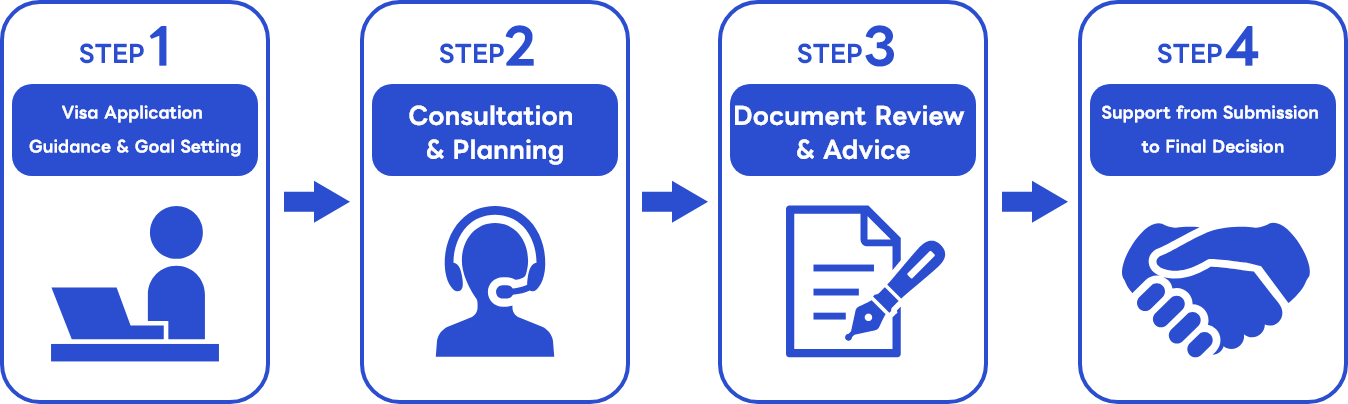
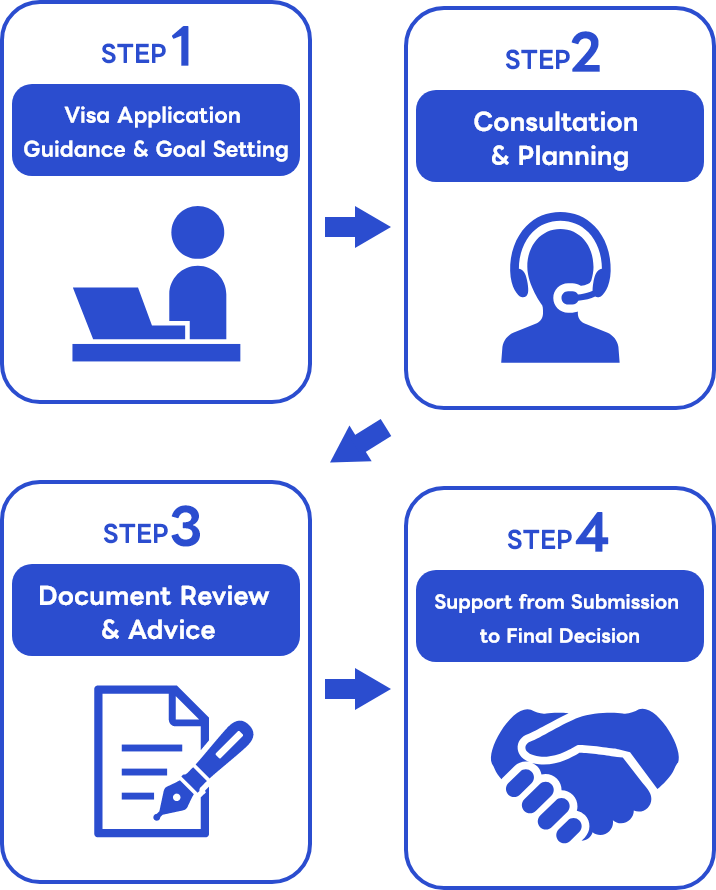
Consulting with an immigration consultant makes the process clearer and much smoother. You’ll feel more confident with document submissions and procedures, significantly reducing the risk of mistakes. Take the first step toward your Canadian dream with the guidance of an expert.
Tag list
Popular Rankings

September 24, 2026
Express Entry Jobs for Canadian PR: Easy-to-Start Occupations with No Experience
If you are aiming to fast-track your path to Canadian permanent residence, Express Entry’s category-

September 24, 2026
Stricter Screening for the Significant Benefit Work Permit (C10), Including the Entrepreneur Work Permit| Policy Changes and Application Strategies
On February 24, 2026, IRCC updated its guidelines for the Significant Benefit (C10) category, one of

September 24, 2026
Provincial Nominee Programs to Expand Significantly in 2026
In December 2025, the Government of British Columbia announced its 2026 nomination allocation under

September 24, 2026
PNP and AIP Program Updates: Growing Restrictions Across Canadian Provinces (As of July 2025)
In 2025, several Canadian provinces and territories have introduced new limits and priority criteria