

Top 20 Most Livable Cities in Canada for Newcomers
Date Posted:September 24, 2026
Last Updated:September 24, 2026

A survey by The Globe and Mail has published a ranking of the cities where newcomers to Canada most want to live.
Data was collected from 439 cities with populations of 10,000 or more, focusing on people who moved to Canada in the past five years.
We introduce the top 20 cities based on an analysis of 43 factors in 10 categories, including housing, healthcare, safety, education, community, transportation and climate.
Top 20 cities where newcomers to Canada most want to live
Here is the ranking, published by The Globe and Mail, of the cities where newcomers most want to live. Cities that suit a wide range of values, mainly in BC, are at the top. The ranking is as follows:
- Pitt Meadows (British Columbia)
- Victoria (British Columbia)
- Winnipeg (Manitoba)
- North Vancouver (British Columbia)
*Comments from our staff who live here - Saanich (British Columbia)
- Wellesley (Ontario)
- Burlington (Ontario)
- Regina (Saskatchewan)
- Delta (British Columbia)
- Maple Ridge (British Columbia)
- West Vancouver (British Columbia)
*Comments from our staff who live here - Oak Bay (British Columbia)
- Abbotsford (British Columbia)
- Colwood (British Columbia)
- Norwich (Ontario)
- Parksville (British Columbia)
- Fort St. John (British Columbia)
- Port Coquitlam (British Columbia)
- Middlesex Centre (Ontario)
- Coldstream (British Columbia)
This news item was organized and summarized in an easy-to-understand way by Shiraishi Visa JP Canada based on public data and various media reports.
Source: The Globe and Mail – Most livable cities in Canada for newcomers (English)
Main factors used in the ranking
This survey analyzed 43 factors in 10 categories that shape livability. Below is a summary of how each was assessed.
Housing (the most important factor)
The survey made it clear that housing is the most important consideration when choosing a new city to move to. Conversely, it found that climate is not given much weight.
An overall score was calculated for each city by averaging its scores on each factor, but no city is perfect. Even Victoria, BC, which ranks at the top, was only average on the housing and healthcare factors.
Employment and the economy
For the economic factors, each city’s financial health was assessed by examining the job market, income levels, taxes and overall economic stability. In cities such as Oak Bay, Colwood, Norwich, Middlesex Centre and Port Coquitlam, the unemployment rate is below 6%.
Is it a comfortable place to live in retirement?
The housing factors assessed affordable housing prices and the availability of housing options for seniors. The survey looked at averages for first-time property purchases, property taxes and household housing costs, and also examined seniors’ housing per capita.
Social diversity
In the demographics category, the stability and sustainability of cities in terms of population growth, diversity and cultural richness were examined. The Globe used a diversity index based on three factors: the percentage of the population whose mother tongue is neither English nor French, the percentage of first- or second-generation immigrants, and the percentage of visible minorities.
Port Coquitlam, Abbotsford, West Vancouver, Delta, North Vancouver (all in BC) and Winnipeg (Manitoba) are more diverse than the Canadian average.
Healthcare
For healthcare, The Globe examined the accessibility and quality of medical services, as well as residents’ general perception of their own health. It used indicators such as the percentage of the population who can get immediate treatment within 3 days for minor illnesses or injuries, and the percentage who have a regular healthcare provider. In Maple Ridge, Pitt Meadows and North Vancouver in BC, more than 88% of the population has access to a regular healthcare provider.
Safety
For safety, the survey examined the likelihood of crime and residents’ overall confidence in public safety. The crime rate in Wellesley, Ontario, was 88% lower than the Canadian average, the lowest of all the cities. Other cities with crime rates below the Canadian average were Pitt Meadows, North Vancouver and Saanich in BC, and Burlington, Ontario.
Living environment: education, community and recreation
For education, the survey assessed the education levels in the area and the types of schools, universities and other educational institutions available.
For community, it examined opportunities for social participation, community events and volunteering in each city or town, as well as residents’ sense of belonging and connection to the local area. West Vancouver and Coldstream in BC were the top two cities, with more than 74% of residents reporting a sense of belonging.
The amenities factor was determined by the number of recreational facilities, entertainment options, shopping centres and other leisure opportunities available to local residents. This included whether there are legal cannabis stores, gyms, movie theatres, daycares, grocery stores, libraries and parks nearby.
Public transportation
For transportation, the survey examined public transit systems, accessibility and overall ease of getting around the city. This included looking at the percentage of households within 45 minutes of an airport and the percentage of the population living within 1 kilometre of public transit.
Few areas where you can live within walking distance
Compared with other Canadian cities, only North Vancouver and Victoria in BC and Winnipeg in Manitoba were considered places where you can live within walking distance.
Areas so cold it’s hard to go out
Finally, The Globe examined each city’s climate, classifying past climate extremes and overall seasonal conditions. It looked at how many days a year the humidity-adjusted temperature exceeds 35°C and how many days the daytime low falls below -15°C. Winnipeg and Regina had the most days with lows below -15°C.
Comments from Shiraishi Visa JP Canada staff who actually live there
Our staff members who live in these areas share what they really love about them from a local’s perspective.
What’s great about North Vancouver (staff member who has lived in North Vancouver for 15 years)
It’s a place full of nature, typical of Canada. You can enjoy mountain outdoor sports such as skiing, snowboarding and trekking, and at the same time enjoy water sports on the ocean and lakes.
The Shipyards area (where you get off the SeaBus), which has been developing recently, has plenty of restaurants.
There are events every weekend, markets in summer, and even free live music. Transportation to Downtown is convenient: take the SeaBus, which has the best views, and you can be in Downtown across the water in 15 minutes.
Driven by its popularity, there is a rush of high-rise construction. Properties with great ocean and mountain views are expensive, but there are many of them.
It’s basically a family-friendly community, and people who live around Lonsdale, the main street, can get by on foot. I really love the view of walking down the hill and seeing the ocean!

What’s great about West Van (staff member who has lived in West Vancouver for 20 years)
This is my 20th year living in West Vancouver. West Vancouver was apparently once used as a vacation home area, and it is a quiet residential community. There is one village where you can do a bit of shopping and eat out, and a large shopping mall (Park Royal) near the Lions Gate Bridge, but otherwise it is a quiet place full of nature.
That said, access to major places is easy! Downtown Vancouver is about 30 minutes by car, Cypress Mountain, where you can ski, is just under 30 minutes away, and you can even get to Whistler in about an hour.
There are also hiking trails everywhere. The public schools (elementary, middle and high school) are ranked quite highly, too. The average age of residents may be on the higher side (lol), but it’s a great place!

Free Consultations and Inquiries
Feel free to get in touch!



Immigration Consultant
Yuki Shiraishi
Born in Japan. After earning a Bachelor's degree from the University of Michigan, she worked for six years in New York as a marketing consultant at a major travel agency, while also studying in an MBA program at the City University of New York. After returning to Japan, she managed the visa center of the same travel company, handling various international visa applications for foreign clients.
Related Columns



Related News
Looking to obtain permanent residence or a visa?
Consult with us now!

Applying for permanent residence or a visa to Canada on your own can be overwhelming due to the large number of required documents, and you may feel uncertain about whether everything is correct. However, if you're serious about immigrating to Canada, we strongly recommend seeking the support of an immigration consultant. There are many pathways to obtaining permanent residence, depending on factors such as your age, occupation, and family status. With the help of an expert, you can ensure that you plan the right approach tailored to your specific situation.
A professional immigration consultant will help solve your concerns
Get a free Counseling now
From immigration planning to application submission,
everything is completed with shiraishi Visa JP Canada
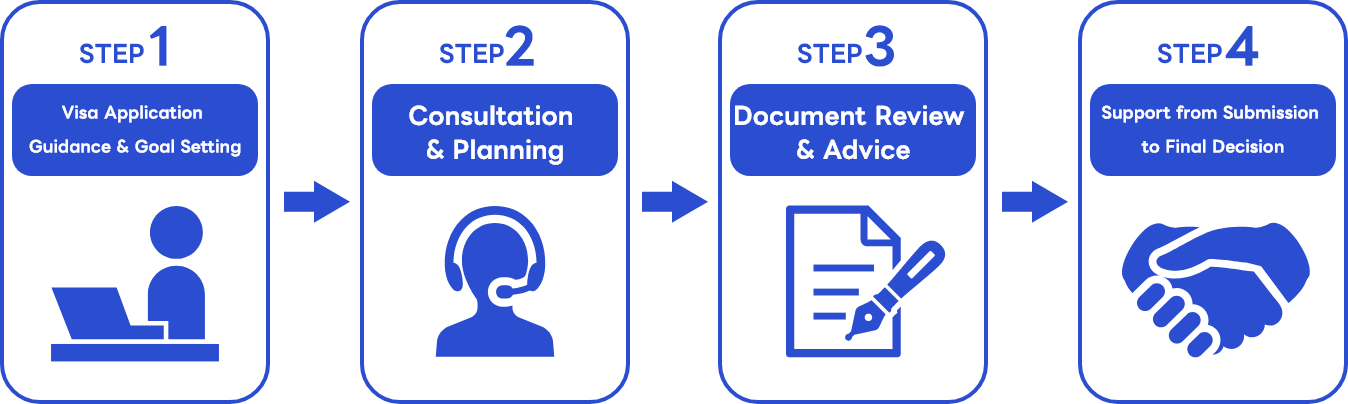
Consulting with an immigration consultant makes the process clearer and much smoother. You’ll feel more confident with document submissions and procedures, significantly reducing the risk of mistakes. Take the first step toward your Canadian dream with the guidance of an expert.
Tag list
Popular Rankings

September 24, 2026
Express Entry Jobs for Canadian PR: Easy-to-Start Occupations with No Experience
If you are aiming to fast-track your path to Canadian permanent residence, Express Entry’s category-

September 24, 2026
Provincial Nominee Programs to Expand Significantly in 2026
In December 2025, the Government of British Columbia announced its 2026 nomination allocation under

September 24, 2026
Stricter Screening for the Significant Benefit Work Permit (C10), Including the Entrepreneur Work Permit| Policy Changes and Application Strategies
On February 24, 2026, IRCC updated its guidelines for the Significant Benefit (C10) category, one of

September 24, 2026
PNP and AIP Program Updates: Growing Restrictions Across Canadian Provinces (As of July 2025)
In 2025, several Canadian provinces and territories have introduced new limits and priority criteria