

Mark Carney, Canada’s New Prime Minister | His Immigration Policy
Date Posted:September 24, 2026
Last Updated:September 24, 2026

On March 14, 2025, Mark Carney was sworn in as Canada’s 24th Prime Minister.
He took office just one hour after the formal resignation of former Prime Minister Justin Trudeau, marking what is likely to be a major turning point in Canadian politics.
We explain the immigration policies he set out when he took office. (Update: after the April 28, 2025 federal election, Lena Metlege Diab became Minister of Immigration, Refugees and Citizenship.)
Update (September 2026): This article was written in March 2025, shortly after Mark Carney became Prime Minister and before the federal election of April 28, 2025. The Liberal Party led by Carney won that election, and since May 13, 2025 the Minister of Immigration, Refugees and Citizenship has been Lena Metlege Diab (Rachel Bendayan held the post from March to May 2025). The figures below are from the 2025–2027 Immigration Levels Plan; the 2026–2028 Immigration Levels Plan, announced in November 2025, sets a permanent resident target of 380,000 per year and further reduces temporary resident arrivals. Please check IRCC for the latest policies.
Setting a Cap on Immigration
Immigration to Canada has surged in recent years, and new Prime Minister Mark Carney views “immigration growth beyond Canada’s capacity to absorb it” as a problem in the country’s immigration system. He has therefore made clear his intention to cap immigration until it returns to sustainable levels. A policy document released in February 2025 states that “temporary caps will be put in place until levels return to pre-pandemic levels.”
However, specific figures and details of which permanent residence programs will be affected have not yet been made public.
Prioritizing Permanent Residence for People Already in Canada
Carney has pointed out that more than 4 million people have entered Canada over the past few years. The new government will prioritize permanent residence for foreign nationals who are already in Canada, and plans to admit 82,980 people through the Canadian Experience Class (CEC) in 2025. This policy is a continuation of the previous Trudeau government’s “In-Canada Focus” policy.
Curbing the Inflow of Foreign Workers
The number of foreign workers admitted grew rapidly during the pandemic, and Carney says he will limit this trend. Under the 2025–2027 immigration levels plan, the number of LMIA-required work permits will be maintained at 82,000 per year.
Meanwhile, LMIA-exempt work permits are scheduled to be reduced in stages, to 285,750 in 2025 and 128,700 in 2026.
Reviewing the International Student System and Providing Financial Support
Carney has not made any clear statement about limiting the number of international students, but he has raised the issue of “whether Canada’s post-secondary institutions are receiving enough support from the government.”
Since the government announced limits on international student numbers in 2024, many educational institutions have been facing financial difficulties. For example, Seneca College closed a campus, Sheridan College suspended 40 programs, and the University of Waterloo implemented a hiring freeze. In light of these problems, Carney has proposed strengthening government financial support so that institutions can operate without relying excessively on international students.
Stronger Measures to Address the Housing Crisis
Canada’s housing shortage is becoming more serious. Carney has said he will “supercharge” the housing plan and intends to increase investment in the construction industry. Specifically, he plans the following initiatives:
- Strengthening the development and training of construction workers
- Expanding apprenticeship programs
- Financial support for the construction industry
However, it has not yet been decided whether the federal government will provide funding for the direct construction of public housing.
Immigration as Part of Canada’s National Identity
Carney has said that “Canada is a country that welcomes immigrants and a country that integrates immigrants smoothly.” He emphasized that immigrants are important not only for Canada’s economic growth but also for shaping the nation’s identity. He has stated clearly that he will continue to pursue a proactive immigration policy, and he views welcoming immigrants in a positive light.
Background of New Prime Minister Mark Carney
Carney was born in the Northwest Territories and raised in Edmonton, Alberta. His parents were teachers. He majored in economics at Harvard University and then earned his master’s and doctoral degrees at the University of Oxford.
His main career highlights are as follows:
- Worked at Goldman Sachs for more than 10 years
- Governor of the Bank of Canada (2008–2013)
- Governor of the Bank of England (2013–2020)
- UN Special Envoy on Climate Action and Finance (2020–)
- Informal adviser to the Justin Trudeau government
- Ran for the Liberal Party leadership in January 2025 and became Prime Minister in March of the same year
The Political Outlook
When this article was written, it was unclear how long Prime Minister Carney would be able to stay in power: the next federal election had to be held by October 20, 2025, and an early dissolution was considered possible. An early federal election was in fact held on April 28, 2025, and the Liberal Party led by Carney won, so he continues to serve as Prime Minister.
Summary
New Prime Minister Mark Carney will be tackling a range of issues, including a review of immigration policy. Setting caps on immigration, prioritizing permanent residence for people already in Canada, reducing the number of foreign workers and addressing the housing crisis are likely to be the key focus areas going forward.
It will be important to keep watching how Canada’s immigration policy changes from here.
Free Consultations and Inquiries
Feel free to get in touch!



Immigration Consultant
Yuki Shiraishi
Born in Japan. After earning a Bachelor's degree from the University of Michigan, she worked for six years in New York as a marketing consultant at a major travel agency, while also studying in an MBA program at the City University of New York. After returning to Japan, she managed the visa center of the same travel company, handling various international visa applications for foreign clients.
Related Columns




Related News
Looking to obtain permanent residence or a visa?
Consult with us now!

Applying for permanent residence or a visa to Canada on your own can be overwhelming due to the large number of required documents, and you may feel uncertain about whether everything is correct. However, if you're serious about immigrating to Canada, we strongly recommend seeking the support of an immigration consultant. There are many pathways to obtaining permanent residence, depending on factors such as your age, occupation, and family status. With the help of an expert, you can ensure that you plan the right approach tailored to your specific situation.
A professional immigration consultant will help solve your concerns
Get a free Counseling now
From immigration planning to application submission,
everything is completed with shiraishi Visa JP Canada
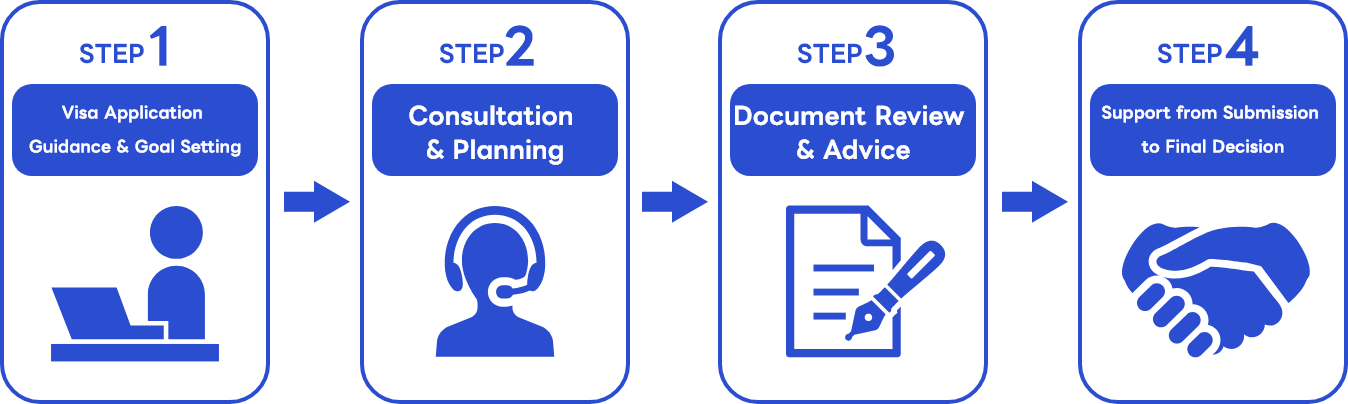
Consulting with an immigration consultant makes the process clearer and much smoother. You’ll feel more confident with document submissions and procedures, significantly reducing the risk of mistakes. Take the first step toward your Canadian dream with the guidance of an expert.
Tag list
Popular Rankings

September 24, 2026
Express Entry Jobs for Canadian PR: Easy-to-Start Occupations with No Experience
If you are aiming to fast-track your path to Canadian permanent residence, Express Entry’s category-

September 24, 2026
Provincial Nominee Programs to Expand Significantly in 2026
In December 2025, the Government of British Columbia announced its 2026 nomination allocation under

September 24, 2026
Stricter Screening for the Significant Benefit Work Permit (C10), Including the Entrepreneur Work Permit| Policy Changes and Application Strategies
On February 24, 2026, IRCC updated its guidelines for the Significant Benefit (C10) category, one of

September 24, 2026
PNP and AIP Program Updates: Growing Restrictions Across Canadian Provinces (As of July 2025)
In 2025, several Canadian provinces and territories have introduced new limits and priority criteria