

Immigrating to Canada from Japan: The Latest Guide (2026 Edition)
Date Posted:September 24, 2026
Last Updated:September 24, 2026

The fastest route to making immigration to Canada a reality is to “quickly identify the program that suits you.” Whether you are aiming for permanent residence or want to live in Canada while working, there are several options.
Express Entry, the Provincial Nominee Programs (PNP), the Family Class, and routes via work or study each have different requirements and strengths, and suit different people.
We outline the features, advantages, and disadvantages of the main immigration routes and explain realistic criteria for making your decision.
The Current State of and Background to Immigrating to Canada
Canada has maintained an immigration policy for many years and is attracting attention as an immigration option for Japanese people as well. However, with many policy changes in recent years, the situation is shifting from an era when you could “simply immigrate,” through an era of “assessing the requirements and taking on the challenge,” to one where you need to “become the kind of talent Canada needs.”
Canada, which faces an aging population and labour shortages, will continue its policy of welcoming a diverse range of talent, while application requirements and screening standards are becoming stricter every year. In other words, Canada is shifting from “a country anyone can immigrate to right away” to “a country where people who choose the right route and prepare thoroughly can make immigration a reality.”
Why Canada Welcomes Immigrants
The reasons Canada has actively pursued immigration policies for many years are both economic and social-structural. To make up for a shrinking working-age population due to the declining birth rate and aging population, shortages of skilled workers, and imbalances in population between regions, immigration is regarded as a pillar supporting the sustainability of Canadian society.
Severe labour shortages continue, especially in the healthcare, construction, and education sectors, and policies have been put in place to actively welcome people with diverse backgrounds from around the world.
In addition, the Canadian government upholds the principle that “immigration is the force that supports the nation’s development,” and admits several hundred thousand new immigrants each year through multiple programs covering economic immigrants, family immigrants, refugees, and more.
Trends Among Japanese Immigrants in Recent Years
The number of Japanese people hoping to immigrate to Canada is increasing year by year. In particular, many people come to Canada through a Working Holiday, high school or university study, or Co-op study, and then go on to pursue permanent residence. Behind this are aspirations such as “building an international career using English,” “raising children in a society that respects diversity, with education-driven immigration as the goal,” and “a more flexible way of working that values work-life balance more than in Japan.”
Also, as remote work has become commonplace, a growing number of people are considering immigration in search of more freedom in their careers and lifestyles. In fact, the Canadian government also allows people to stay in Canada and work as digital nomads. On the other hand, economic hurdles such as rising prices and soaring rents are increasing every year, so “which city you choose” and “which program you use” are what determine success.
Changes to the System (from the 2020s Onward)
Since the start of the 2020s, Canada’s immigration system has changed significantly.
Since the pandemic, the government has strengthened its online application system and introduced “Category-Based Selection,” which gives priority invitations to people with specific occupations and skills. This has made it easier for people working in fields such as healthcare and social services, education, trades (including construction), STEM, transport, and for French speakers, to obtain permanent residence.
Programs to encourage settlement in regional areas have also been expanded, creating a system for welcoming newcomers that is not concentrated in major cities. In recent years, community-driven immigration programs such as the “Atlantic Immigration Program (AIP),” the “Rural Community Immigration Pilot (RCIP),” and the “Francophone Community Immigration Pilot (FCIP)” have also been attracting attention.
These changes show a shift not simply toward increasing numbers, but toward emphasizing people who can settle in Canadian society over the long term and contribute to the economy and local communities.
Immigration Programs Accessible to Japanese Applicants (5 Main Routes)
If you are aiming to immigrate, it is important to first determine which application route suits you.
Canada offers multiple programs depending on your financial background, family situation, career, and so on, and if you meet the requirements, it is possible to obtain permanent residence in a short period of time.
Here, we introduce five representative immigration programs that are relatively accessible to Japanese applicants, along with their features, eligibility requirements, and advantages.
Express Entry
Canada’s flagship economic immigration program, and the one used by the largest number of people, is “Express Entry (EE).”
Your skills, work experience, language ability, education, and so on are converted into points (CRS score) and managed online, and candidates with high scores regularly receive an invitation to apply (ITA) for permanent residence.
The three main permanent residence categories that use EE are:
- Canadian Experience Class (CEC): for people with work experience in Canada
- Federal Skilled Worker (FSW): for professionals who want to use work experience and skills gained abroad
- Federal Skilled Trades (FST): for tradespeople and skilled trades workers
The appeal of Express Entry lies in its fair and transparent selection system and fully online review process.
However, applications require a certain minimum language test score (such as IELTS), proof of work experience, and an educational credential assessment (ECA), so careful planning at the preparation stage is key to success.
In 2026, Immigration, Refugees and Citizenship Canada (IRCC) announced plans to reform Express Entry within the next 12–18 months. The details of the reform are currently under consideration within the government, but based on this system, it is expected to adjust how points are allocated and consolidate the permanent residence application categories.
Family Class (Spouse / Common-Law Partner)
Canada has a well-established system in which permanent residents or citizens can sponsor their family members and support their immigration. Those eligible are mainly “spouses,” “common-law partners,” “children,” “parents,” and “grandparents.” It is a very Canadian program that places importance on family ties, and it is the main way for permanent residents to bring their families to Canada.
Basic Flow of the Family Class
- The permanent resident (or citizen) who will be the sponsor is assessed first
- After approval, the permanent residence review for the applicant (family member) begins
- The whole process often takes about 1 to 3 years
Real Case: Moving from Working Holiday and Work Experience to the Family Class
In one case, a client came to Canada from Japan on a Working Holiday, then switched to a work permit and built up practical work experience in Canada with the aim of applying for permanent residence (PR).
The original plan was to obtain permanent residence through Express Entry using the Canadian Experience Class (CEC), which recognizes work experience in Canada. However, along the way, the client met a Canadian partner, and after living together, their relationship was established as that of common-law partners. The client then reviewed their plans and decided to switch to an application under the Family Class (spousal/partner sponsorship).
As a result, instead of the originally planned “work-based immigration route,” the client proceeded with a permanent residence application under a different category, “family sponsorship.” This case shows how immigration route options can change depending on life encounters and changes in life stage.
In this way, immigration to Canada does not always proceed according to the original plan, and it is not uncommon for the best application route to change in response to changes in work, study, relationships, and so on.
Provincial Nominee Program (PNP)
The PNP (Provincial Nominee Program) allows each Canadian province to select immigrants based on its own criteria. For example, British Columbia (BC) has the “BC PNP” and Ontario has the “OINP,” and each program is run to meet the province’s economic and industry needs.
If you receive a “nomination” from a provincial government, you get extra points in Express Entry (usually 600 points), so it can be a shortcut to permanent residence. For Japanese applicants, a common route is to work in a province for a certain period after studying, a Working Holiday, or employment, and then, with the cooperation of an employer, move on to a permanent residence application using the PNP.
The PNP is a “regional contribution” immigration system, and it also aims to encourage settlement not only in major cities but in smaller regional cities.
Home Care Worker Immigration Pilots
This immigration program originally began as the Live-in Caregiver Program and targets people who care for seniors, people with disabilities, or children in private households. In recent years, the live-in requirement was abolished. The Home Child Care Provider Pilot and Home Support Worker Pilot accepted their last applications on June 17, 2024, and were followed by the Home Care Worker Immigration Pilots.
These pilots have two streams, child care and home support (elder and personal care), and applicants who met certain requirements could aim to obtain permanent residence. However, on December 19, 2025, IRCC announced that intake for the Home Care Worker Immigration Pilots would not reopen in March 2026 and is paused until further notice.
For people with experience in childcare, caregiving, or social welfare, this has been one of the more realistic immigration routes, but as of September 2026 no new applications are being accepted, so be sure to check IRCC’s website for the latest information.
Route for Graduate School Students and Ph.D. Holders
International students who earn a degree from a Canadian graduate school can work for up to three years on a Post-Graduation Work Permit (PGWP). By gaining work experience during this period, they can move on to a permanent residence route such as the CEC or a PNP. Ph.D. holders in particular are in high demand in research and education, and tend to be favoured in the permanent residence review.
In addition, Ontario used to offer a special PNP stream for Ph.D. graduates, which made it possible to clearly map out the path from “study → work → permanent residence.” However, this stream was closed in 2026 as part of Ontario’s redesign of the Ontario Immigrant Nominee Program (OINP), so check each province’s currently available streams before choosing where to study.
Note that in recent years, the study permit system and the Post-Graduation Work Permit (PGWP) system have been reviewed. If you are aiming for permanent residence through study, choosing where to study is more important than ever.
Application Process and Requirements
Whichever route you choose, it is important to understand the basic steps and requirements before applying.
Understanding the procedures correctly and following them properly can help shorten processing times and avoid problems.
Here, using Express Entry as a representative example, we outline the process leading up to the application and points to watch out for.
Meet the Requirements of a Permanent Residence Category
First, check which category (FSW, CEC, or FST) you can apply under.
You must meet the requirements of the relevant program, such as language scores, education, and work experience.
Create an Express Entry Profile
Once you meet the requirements, you register a profile in the online system of IRCC.
At this point, your score (CRS) is calculated automatically.
Score Calculation and Entry into the Pool
Once your profile is complete, you enter the candidate pool.
Your score is made up of factors such as age, education, work experience, and language ability, and the higher your score, the more likely you are to receive an invitation.
Receive an Invitation to Apply (ITA)
IRCC regularly holds draws and sends invitations to apply for permanent residence (Invitation to Apply / ITA) to the highest-scoring candidates.
Only those who receive an ITA can move on to the next step.
Submit Your Permanent Residence Application
After receiving an ITA, you submit your permanent residence application online within 60 days.
You gather and upload the required documents (medical exam, police certificates, proof of funds, etc.).
IRCC Review and Approval
IRCC reviews your application, and if it is approved, a “Confirmation of Permanent Residence (CoPR)” is issued.
This is the final stage of obtaining permanent residence.
Landing and Receiving Your PR Card
When you enter Canada with your CoPR (or, for in-Canada applicants, complete the online process), you officially become a permanent resident.
Your PR card is then mailed to your registered address within a few months.
Common Pitfalls and Procedural Points to Watch
Applying to immigrate to Canada is a process in which documents, deadlines, and requirements are intricately intertwined. Pay attention to the following points:
- Watch for changes in your circumstances at the time of application
→ Your score may change during the application process, for example because you get older or your language test score expires. - Incomplete documents or missing translations
→ All Japanese documents must be translated into English or French, with a translation certification attached. - Timing of proof of funds
→ Plan ahead when preparing your bank balance certificate. - Confusion between categories
→ There are subtle differences, such as different requirements for FSW and CEC.
With all this in mind, rather than proceeding with an application based on your own judgment, consulting a professional immigration consultant at least once can greatly reduce your risk.
Strategic planning is essential, especially if you are considering immigrating via several different visas or statuses.
Advantages and Disadvantages of Immigrating
While immigrating to Canada has many attractions, life there also comes with challenges.
In this section, we outline the main advantages and disadvantages of living in Canada and summarize the key points to keep in mind when actually considering immigration.
Main Advantages
- A stable social system and a high standard of living
Public services such as healthcare and education are well developed, and the quality of life across society as a whole is high. In particular, the public health insurance system (Medicare) also covers permanent residents, so you can live with peace of mind. - A multicultural society where you can live freely
A culture of coexistence regardless of race or religion is deeply rooted, and it is a society where Japanese people are also readily accepted. There is little discrimination, and there are plenty of opportunities to work while learning English. - Career opportunities and flexible working styles
In Canada, which values results-based evaluation and work-life balance, people are assessed on their “experience” and “skills” rather than their age or academic background. Highly flexible working styles such as remote work and flextime are also common. However, in recent years, unemployment has been rising, particularly in major cities and regions (Vancouver, Toronto, Alberta, etc.), and more people are finding it hard to land a job. - Natural surroundings and a safe way of life
There are many parks and green spaces even within cities, and public safety is among the highest in the world. On weekends, you can enjoy trekking, camping, and more, living close to nature.
Main Disadvantages
- High cost of living
Especially in big cities such as Toronto and Vancouver, rents and food prices are rising year after year. Depending on the area, you may need to rethink your household budget. - Harsh winters and climate differences
In some regions winters are long, and in some places temperatures drop below −20°C. Until you get used to life in a cold climate, preparing your clothing, heating, and transportation is essential. - Language and cultural barriers
Because daily life is basically conducted in English or French, many people struggle at first with communication and administrative procedures. Improving your language skills makes a big difference to your quality of life. - Distance from family and Japan
Because Japan is geographically far away and you cannot easily go back, you may feel lonely living apart from family and friends. It is important to have an emotional support network. That said, the low-cost carrier ZIPAIR recently launched flights to Vancouver, and in low seasons a round trip to Japan can cost less than 100,000 yen.
Key Points Japanese Applicants Should Pay Special Attention To
When immigrating to Canada, three things are especially important: “English ability,” “financial planning,” and “keeping up with the latest information.”
Programs and screening standards change every year, so acting on outdated information can stall your application.
Also, securing enough funds for initial costs and living expenses will help you get settled smoothly once you arrive.
Pre-Departure “Preparation” Checklist
Immigration does not end once you get your visa; preparing in advance so you can start your new life smoothly is essential.
In this section, we organize the basic checklist items to confirm before you leave into five steps.
The quality of your preparation greatly affects how easy your start in Canada will be.
Language Preparation and Test Prep
English (or French) is an important skill that is directly connected not only to your application but also to daily life in Canada. Scores from tests such as IELTS (General) and CELPIP are required for visa applications, and focusing in particular on speaking and listening will help you adapt faster once you start working.
If you don’t have time to attend a language school, create an environment where you are exposed to English every day, for example through online lessons or watching English-language news.
Organizing Your Work History, Education, and Skills
Your application documents must accurately prove your past work experience and education. Be sure to obtain employment certificates, graduation certificates, reference letters, and so on while you are still in Japan.
Also, some occupations require licensing or registration in Canada, so it is important to research the qualification requirements in advance.
Housing, Living Costs, and Moving Preparations
Typical rents and living costs vary greatly from city to city. In Toronto and Vancouver, a one-bedroom unit can exceed $2,000 a month, so prepare your initial funds with a comfortable margin.
It is also reassuring to plan in advance whether to send your belongings from Japan by air or by sea, and how many daily necessities you will buy locally.
Job Hunting and Networking in Canada
In Canada, personal connections (networking) often lead directly to job-hunting success, and making use of online networks such as LinkedIn is effective.
It is a good idea to join the Japanese community and professional networking events to gather local information early. Don’t forget to rewrite your resume in the Canadian style.
Planning Your Life After Immigration (Taxes, Healthcare, Insurance, Parenting, etc.)
Canada’s tax system differs by province, so it is important to understand how income tax and GST/HST work.
Permanent residents are covered by public health insurance, but there is a waiting period right after arrival, so some people use private insurance for a short period.
Also check the education system for children and the school term schedules, and plan the timing of enrollment or transfers.
By carefully completing this advance preparation, you can reduce anxiety after arrival and get your life in Canada off to a smooth start.
“Immigration” does not begin on the day you depart; it has already begun on the day you start preparing.
How to Choose a City or Region That Suits You
Canada is a vast country, and the climate and lifestyle vary greatly from region to region. Where you live affects how easy it is to find work, your cost of living, the educational environment, and more, so when considering immigration it is important to choose a region that matches “your own priorities.” Here, we outline cities popular with Japanese people and the features of each.
Toronto (Ontario)
Canada’s largest city is home to a wide range of industries, including business, finance, IT, and education. It is an ideal environment for people who want to build a career in an English-speaking country or who want an urban lifestyle.
On the other hand, rents are among the highest in the country and the winters are harsh, so it is important to weigh finances against living conditions.
Vancouver (British Columbia)
Thanks to its mild climate and beautiful natural surroundings, Vancouver is one of the most popular cities among Japanese immigrants. It is a highly multicultural society with many residents of Asian heritage, so you won’t have trouble finding Japanese food or cultural communities.
The IT, tourism, and film industries are thriving, and while the mild climate makes it comfortable to live in year-round, rents and living costs are among the highest in Canada.
Montreal (Quebec)
A city with a unique culture where French and English coexist, Montreal has a European atmosphere. Rents are relatively low, and it is also known as a city of art and culture.
However, French language skills are often required for employment, so language preparation is necessary.
Calgary (Alberta)
An economic hub centred on the oil and natural gas industry, Calgary has high average incomes and a lower cost of living than Toronto or Vancouver. Its appeal includes easy access to nature and to national parks such as Banff and Lake Louise. Winters are cold, but the climate offers long hours of sunshine and many clear days.
The Appeal of Smaller Cities and Communities
Recently, a growing number of immigrants are aiming to settle in regional areas rather than concentrating in big cities. For example, Manitoba and Nova Scotia offer lower living costs and warm, welcoming local communities.
In addition, using programs that support regional settlement, such as the Rural Community Immigration Pilot (RCIP), launched in January 2025 to build on the Rural and Northern Immigration Pilot (RNIP, which ended on August 31, 2024), may shorten your path to permanent residence.
Points to Consider When Choosing a Region
It is important to compare regions not only on the appeal of the city itself, but from multiple perspectives such as work, education, climate, and cost.
- Work: Are there industries where you can use your occupation?
- Education: Schools for children and language support
- Climate: How well you can tolerate cold winters and humidity
- Cost: Overall living costs, including rent, prices, and transportation
Choosing a region that fits your and your family’s life plans will greatly affect how satisfied you are after immigrating.
Choosing “a city where you can live for the long term” rather than “the city of your dreams” is the first step to successfully immigrating to Canada.
Summary and How Shiraishi Visa JP Canada Can Help
The key to successfully immigrating to Canada is to understand the programs correctly and identify the route that suits you as early as possible. It is important to organize your language skills, work experience, education, and so on, check the latest program information, and consult a professional to clarify your direction.
At Shiraishi Visa JP Canada, immigration consultants authorized by the Canadian government provide careful support in Japanese, from counselling through to your application. Whether you are aiming to study, work, or obtain permanent residence, we propose the best plan for your situation and help you prepare for your move with peace of mind.
The first step toward immigration is gathering information. Why not start with a free consultation and explore your possibilities together with us?
Free Consultations and Inquiries
Feel free to get in touch!



Immigration Consultant
Yuki Shiraishi
Born in Japan. After earning a Bachelor's degree from the University of Michigan, she worked for six years in New York as a marketing consultant at a major travel agency, while also studying in an MBA program at the City University of New York. After returning to Japan, she managed the visa center of the same travel company, handling various international visa applications for foreign clients.
Related Columns

Date Posted:September 24, 2026
How to Check Processing Times and Status for Canadian Visa and PR Applications


Date Posted:September 24, 2026
Canada Immigration Policy Trends 2025 | What Fewer Newcomers Mean for PR
Related News
Looking to obtain permanent residence or a visa?
Consult with us now!

Applying for permanent residence or a visa to Canada on your own can be overwhelming due to the large number of required documents, and you may feel uncertain about whether everything is correct. However, if you're serious about immigrating to Canada, we strongly recommend seeking the support of an immigration consultant. There are many pathways to obtaining permanent residence, depending on factors such as your age, occupation, and family status. With the help of an expert, you can ensure that you plan the right approach tailored to your specific situation.
A professional immigration consultant will help solve your concerns
Get a free Counseling now
From immigration planning to application submission,
everything is completed with shiraishi Visa JP Canada
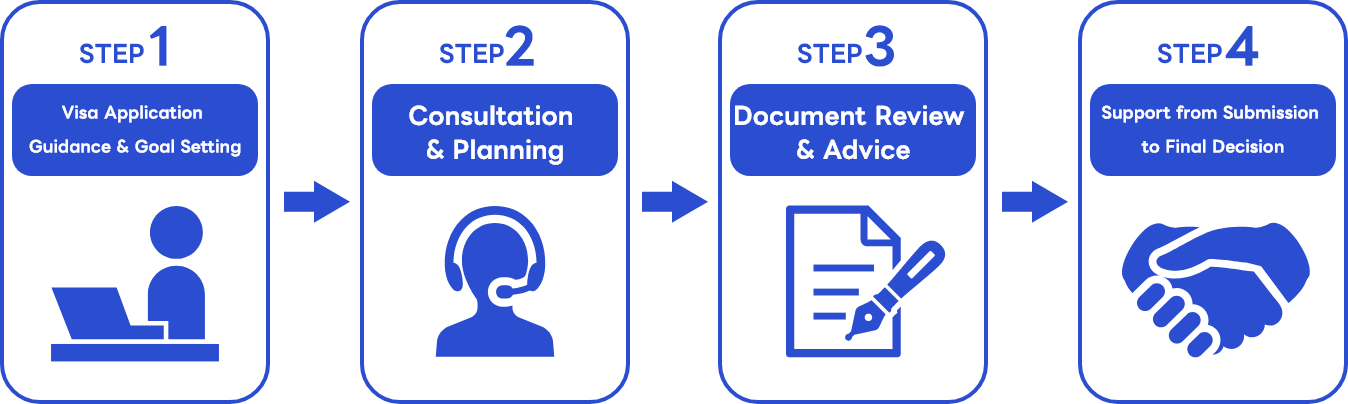
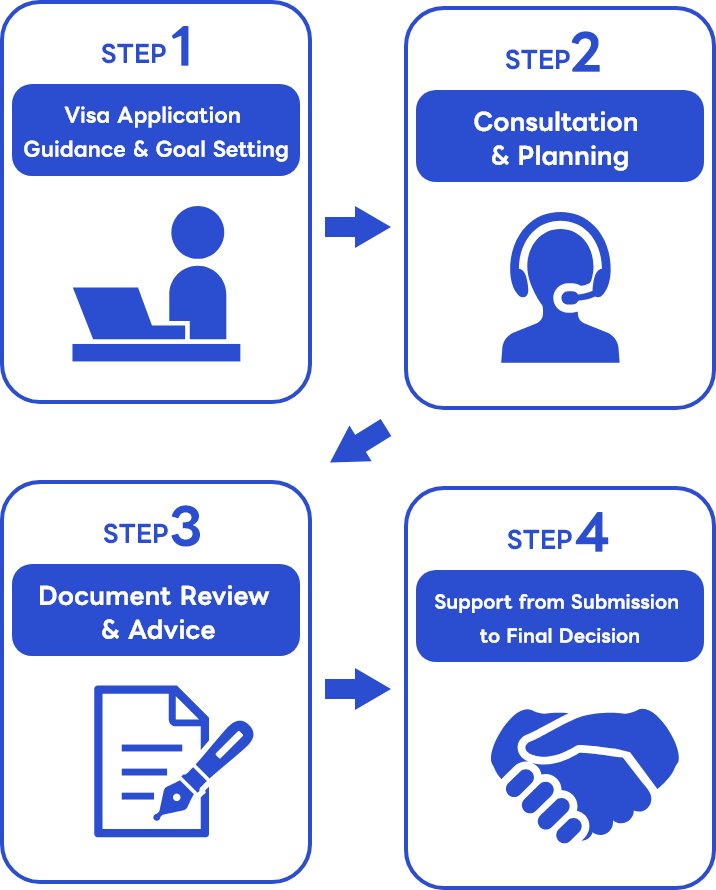
Consulting with an immigration consultant makes the process clearer and much smoother. You’ll feel more confident with document submissions and procedures, significantly reducing the risk of mistakes. Take the first step toward your Canadian dream with the guidance of an expert.
Tag list
Popular Rankings

September 24, 2026
Express Entry Jobs for Canadian PR: Easy-to-Start Occupations with No Experience
If you are aiming to fast-track your path to Canadian permanent residence, Express Entry’s category-

September 24, 2026
Stricter Screening for the Significant Benefit Work Permit (C10), Including the Entrepreneur Work Permit| Policy Changes and Application Strategies
On February 24, 2026, IRCC updated its guidelines for the Significant Benefit (C10) category, one of

September 24, 2026
Provincial Nominee Programs to Expand Significantly in 2026
In December 2025, the Government of British Columbia announced its 2026 nomination allocation under

September 24, 2026
PNP and AIP Program Updates: Growing Restrictions Across Canadian Provinces (As of July 2025)
In 2025, several Canadian provinces and territories have introduced new limits and priority criteria