

Six Industries Where Canada Will Need Workers: Career Choices in an Era of Reduced Immigration
Date Posted:August 26, 2026
Last Updated:September 24, 2026

On August 24, 2026, the Government of Canada announced the launch of the Transportation and Supply Chain Workforce Alliance, bringing together employers, educational institutions, labour organizations and Indigenous partners to address labour and skills shortages across the sector.
At first glance this may look like a labour market announcement, but seen alongside recent immigration changes it points to the industries Canada will need workers in.
Labour shortages in transportation and supply chains
The Transportation and Supply Chain Workforce Alliance is the third Workforce Alliance launched by the Government of Canada.
Canada’s transportation and warehousing sector directly contributed $96.5 billion to GDP in 2024 and supports approximately one million jobs, directly and indirectly.
The sector extends far beyond truck transportation. It includes:
- Road transportation
- Rail
- Aviation
- Marine transportation
- Warehousing
- Logistics
These industries are essential not only to domestic transportation, but also to Canada’s international trade and supply chains.
At the same time, the sector faces several workforce challenges, including an aging workforce, persistent labour shortages and the need to adapt to technological change.
The new Alliance, led by Trucking HR Canada in partnership with CIFFA (Canada’s Association of Logistics Providers), will bring together employers, educators, labour organizations and other stakeholders to identify skills needs, strengthen workforce development and attract new workers to the sector.
Six Government Designated Priority Sectors Overview
The Transportation and Supply Chain Workforce Alliance is not an isolated initiative.
In February 2026, the federal government announced that Workforce Alliances would be established for six sectors considered important to Canada economic resilience, sovereignty and long term competitiveness.
| Sector Name | Main Target Areas and Background |
|---|---|
| Housing and Construction | This includes residential construction, commercial and public infrastructure, building materials and skilled trades. Canada is expected to need more than 1.4 million new trades workers by 2033. |
| Transportation and Supply Chains | This includes road, rail, air, marine transportation, warehousing and logistics. The sector is critical to both domestic commerce and Canada international trade. |
| Advanced Manufacturing | This includes industries such as automotive and aerospace manufacturing, clean technology, robotics, artificial intelligence and automation. |
| Energy and Electricity | This includes conventional energy such as oil and gas, as well as clean electricity, power grids and renewable energy. |
| Mining and Minerals | This includes mineral exploration, extraction and processing. Critical minerals in particular are becoming increasingly important to clean energy, advanced manufacturing and national security. |
| Care Economy | This includes services that provide care to children, seniors, persons with disabilities and others requiring support. Occupations such as Early Childhood Educators (ECEs) and Personal Support Workers are part of this broader sector. |
Together, these six sectors account for more than one-third of Canada’s GDP and employ approximately eight million people.
In other words, the government is not simply identifying occupations that happen to have job vacancies today. It is identifying industries that it considers strategically important to Canada’s future economy.
Reducing immigration does not mean Canada no longer needs workers
Canada has significantly changed the direction of its immigration policy in recent years, including measures to reduce the number of international students and other temporary residents.
This may create the impression that:
“Canada no longer needs immigrants.”
The reality of Canada’s labour market is more complicated.
In its background information on the Workforce Alliances, the federal government states that Canada will need more than 1.4 million new trades workers by 2033. Interestingly, the government also identifies “reduced immigration” as one of the factors that could further tighten the labour market.
This is an important point when considering the direction of Canadian immigration policy.
Canada may be reducing the overall number of immigrants and temporary residents, but that does not mean the country no longer needs workers in key sectors.
Instead, we may increasingly see greater emphasis on what skills newcomers have and where those skills are needed in the Canadian economy.
We can already see a similar direction in Express Entry
This trend is already visible in Canada’s Express Entry system.
In 2026, Transport occupations became one of the categories used for category-based selection under Express Entry.
The category currently includes four occupations:
- Aircraft mechanics and aircraft inspectors
- Air pilots, flight engineers and flying instructors
- Aircraft instrument, electrical and avionics mechanics, technicians and inspectors
- Automotive service technicians, truck and bus mechanics, and mechanical repairers
An important distinction should be made here.
The Transportation and Supply Chain Workforce Alliance covers a much broader sector than the current Express Entry Transport category. Working in logistics, warehousing or supply chain management, for example, does not automatically mean that an individual qualifies for preferential selection under Express Entry.
Nevertheless, when introducing the 2026 Express Entry categories, the federal government specifically emphasized the need for transportation workers to move goods to domestic and international markets and to support trade, supply chains and economic resilience.
The language is remarkably similar to the rationale behind the new Transportation and Supply Chain Workforce Alliance.
This suggests a broader policy direction in which Canada’s industrial, labour market and immigration policies are increasingly focused on ensuring that economically important sectors have access to the workers they need.
Priority sector does not automatically mean immigration priority
There is an important limitation to keep in mind.
The six Workforce Alliances are not immigration programs.
The fact that an industry is included among the six priority sectors does not mean that:
“Working in one of these sectors will make it easier to obtain permanent residence.”
Nor does it mean that all six sectors will necessarily become priority categories under Express Entry or Provincial Nominee Programs.
The purpose of the Workforce Alliances is to bring employers, workers, educators and other stakeholders together to identify workforce and skills needs and coordinate training and workforce investments.
However, Express Entry category-based selection is also informed by labour market information, projections and consultations with provinces, territories and stakeholders.
For that reason, understanding which industries the federal government believes will need workers in the future can provide useful context when considering the possible longer-term direction of Canadian immigration policy.
Think about your career from an industry perspective, not only an immigration-program perspective
For people considering studying, working and eventually immigrating to Canada, there is another important lesson in this announcement.
Traditionally, many prospective immigrants have approached career planning by asking questions such as:
- “Which program should I study to qualify for a PGWP?”
- “Which occupation gives me an advantage under Express Entry?”
- “Which province has a PNP pathway that may work for me?”
These remain important questions.
However, Canada’s immigration programs are changing frequently, and there is no guarantee that a program available today will remain unchanged several years from now.
For someone who is planning to study in Canada, graduate, gain Canadian work experience and eventually apply for permanent residence, the actual PR application may still be several years away.
That is why it may be increasingly important to consider not only:
“Which immigration program is advantageous today?”
but also:
“What kinds of workers will Canada need five or ten years from now?”
The six priority sectors identified by the federal government—
- Housing and Construction
- Transportation and Supply Chains
- Advanced Manufacturing
- Energy and Electricity
- Mining and Minerals
- Care Economy
—may provide an important clue.
In an era of lower immigration, becoming a worker Canada needs may matter even more
Canada’s immigration policy has changed significantly from the period when the primary focus was on increasing immigration levels.
But it would be premature to conclude that the era of immigration to Canada is over.
Canada will continue to face demographic aging, retirement of skilled workers, housing shortages, major infrastructure needs, energy transition, pressure on transportation and supply chains, and growing demand for care services.
All of these challenges require workers.
At the same time, if Canada accepts fewer newcomers overall, it is reasonable to expect that the country may become increasingly selective about which skills and workers it prioritizes within those limited immigration spaces.
The Workforce Alliances are not immigration programs, and their creation does not guarantee future immigration advantages for workers in these sectors.
Nevertheless, they provide a useful indication of where the federal government believes Canada’s future workforce needs will be.
For those planning to build a future in Canada, it may therefore be increasingly important not only to follow changes to immigration programs, but also to ask:
“What kind of career can I build that will make my skills valuable to Canada in the years ahead?”
That perspective may become increasingly important when planning education, career development and a long-term pathway toward permanent residence in Canada.
Free Consultation Current Status and Future Goals Assessment
Many people may be struggling with medium to long term career planning, wondering which field they should major in or choose now to aim for permanent residence in Canada in the future, or whether their work history and desired career match future Canadian demand.
At the Shiraishi Visa JP Canada free consultation, we carefully listen to your current educational background, work history, English proficiency, and future goals, and clearly organize and guide you through your career pathway options based on the latest overall picture of the Canadian labour market and immigration system.
- You want to know the general relationship between the priority sectors Canada emphasizes, such as construction, IT and manufacturing, and care occupations, and the visa system
- You want to organize a basic roadmap from studying abroad to working and obtaining permanent residence in the future
If this applies to you, please feel free to utilize our free consultation.
Please note that the free consultation is limited to listening to your current situation and providing general information about the system. Specific condition checks for individuals, individual permanent residence and visa application strategy design, and concrete advice on school and application preparation are provided through paid individual counseling by our government authorized consultants. Please start by organizing your current situation with our free consultation.
Please note that this article is based on information published by the Government of Canada as of August 25, 2026. Inclusion in a Workforce Alliance sector does not guarantee preferential treatment under Express Entry, Provincial Nominee Programs or any other Canadian immigration program.
This article is based on information published by the Government of Canada as of August 25, 2026. Inclusion in a Workforce Alliance sector does not guarantee preferential treatment under Express Entry, Provincial Nominee Programs or any other Canadian immigration program.
Free Consultations and Inquiries
Feel free to get in touch!



Immigration Consultant
Yuki Shiraishi
Born in Japan. After earning a Bachelor's degree from the University of Michigan, she worked for six years in New York as a marketing consultant at a major travel agency, while also studying in an MBA program at the City University of New York. After returning to Japan, she managed the visa center of the same travel company, handling various international visa applications for foreign clients.
Related Columns

Date Posted:September 24, 2026
How to Check Processing Times and Status for Canadian Visa and PR Applications


Date Posted:September 24, 2026
Canada Immigration Policy Trends 2025 | What Fewer Newcomers Mean for PR

Related News
Looking to obtain permanent residence or a visa?
Consult with us now!

Applying for permanent residence or a visa to Canada on your own can be overwhelming due to the large number of required documents, and you may feel uncertain about whether everything is correct. However, if you're serious about immigrating to Canada, we strongly recommend seeking the support of an immigration consultant. There are many pathways to obtaining permanent residence, depending on factors such as your age, occupation, and family status. With the help of an expert, you can ensure that you plan the right approach tailored to your specific situation.
A professional immigration consultant will help solve your concerns
Get a free Counseling now
From immigration planning to application submission,
everything is completed with shiraishi Visa JP Canada
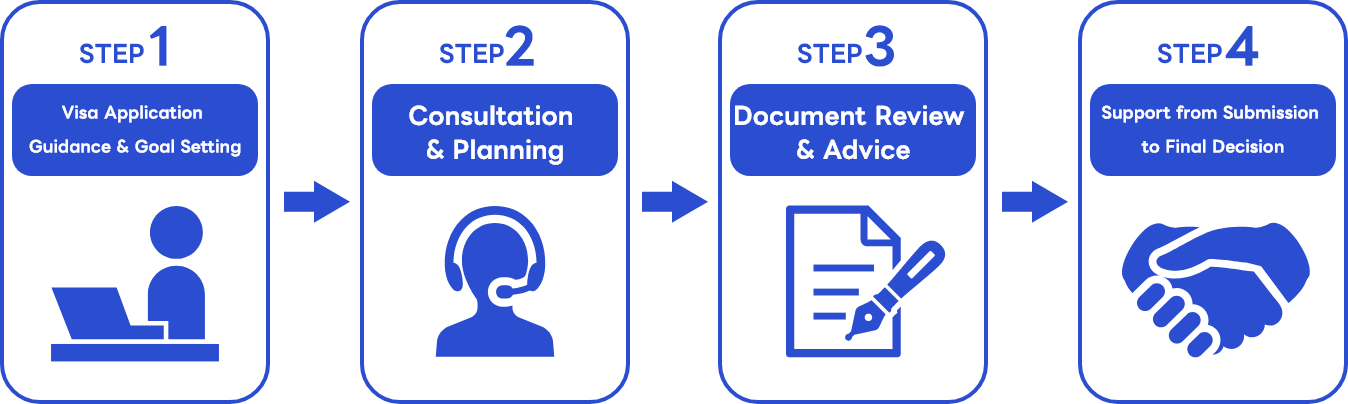
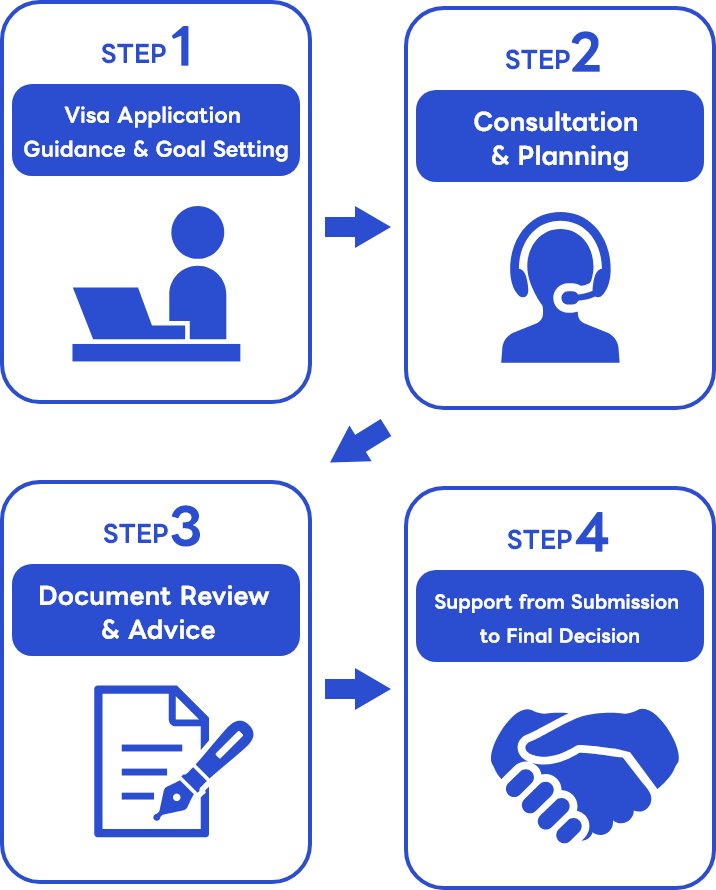
Consulting with an immigration consultant makes the process clearer and much smoother. You’ll feel more confident with document submissions and procedures, significantly reducing the risk of mistakes. Take the first step toward your Canadian dream with the guidance of an expert.
Tag list
Popular Rankings
September 24, 2026
Express Entry Jobs for Canadian PR: Easy-to-Start Occupations with No Experience
If you are aiming to fast-track your path to Canadian permanent residence, Express Entry’s category-

September 24, 2026
Stricter Screening for the Significant Benefit Work Permit (C10), Including the Entrepreneur Work Permit| Policy Changes and Application Strategies
On February 24, 2026, IRCC updated its guidelines for the Significant Benefit (C10) category, one of

September 24, 2026
Provincial Nominee Programs to Expand Significantly in 2026
In December 2025, the Government of British Columbia announced its 2026 nomination allocation under

September 24, 2026
PNP and AIP Program Updates: Growing Restrictions Across Canadian Provinces (As of July 2025)
In 2025, several Canadian provinces and territories have introduced new limits and priority criteria